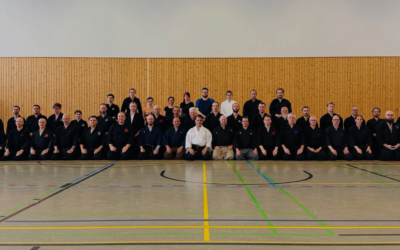
In the practice of Iaido (居合道), Battodo (抜刀道), and Kenjutsu (剣術), we often focus on the physical alignment of the blade or the precision of a cut. But for the practitioner of Mugai-ryū (無外流), the ultimate challenge lies within...
INSIGHTS
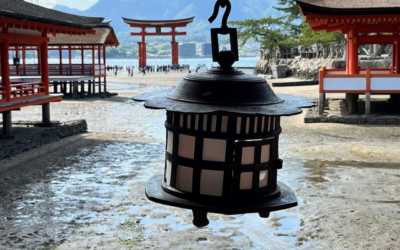
One day in Hiroshima
Most travelers visit Hiroshima to witness the scars of history—an essential pilgrimage for anyone visiting Japan. Walking through the city is an experience beyond "emotional"; it is difficult to pin down a single feeling when the mood shifts like a tide. Yet, as a...
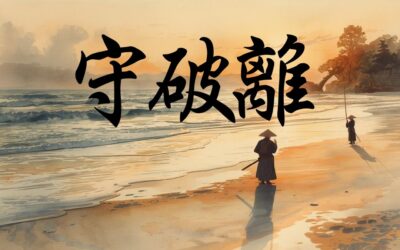
The Invisible Rhythm of the Blade and the Soul
If you have ever watched a Mugai-ryū master perform a kata, or if you have attended a tea ceremony (Chanoyu), you have likely sensed an invisible progression. It isn’t a constant speed, but rather a wave that builds, breaks, and stops dead. This ternary...
Shiraito Falls, a Masterpiece of “White Threads”
Whenever I visit my Japanese family’s hometown near Mount Fuji, there’s one place I always try to go back to. It’s not a big city, not a famous temple, and not one of the crowded viewpoints of Fuji. It’s a quiet waterfall hidden in the forest called Shiraito Falls....
Reigyo and Ego
In the modern world, the act of bowing to a weapon can appear—at least to the uninitiated—as a curious form of reverence, even idolatry. Yet for a practitioner of Mugai-ryū or Battōdō, the ritual of Reigyō (礼行, etiquette in action) is not symbolic theater. It is one...
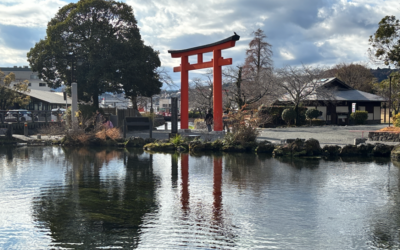
Finding Peace at the Foot of Fuji
A Walk Through Arigatayama, the Mountain of Gratitude Recently, I was in Gotemba in Shizuoka.Most travelers passing there have one of two goals in mind.Some come to shop at the vast Gotemba Premium Outlets, one of the largest outlet complexes in Japan, while others...
LioMugai is now available on YouTube
12,000 Views: Sharing the Path of Mugai-ryu Iaihyodo Since returning from Japan, I’ve been overwhelmed by the curiosity and support from the community on Instagram. To better document and share my journey in Mugai-ryu Iaihyodo, I decided to launch my YouTube...
Tsuji Gettan Sukemochi: From Swordsman to Zen Monk
In the history of Japanese martial traditions (budō, 武道), few figures embody the union of swordsmanship and Zen Buddhism as completely as Tsuji Gettan Sukemochi (辻月丹資茂, 1648–1728), founder of Mugai-ryū (無外流). Gettan’s life traces a rare and profound arc: from samurai...
The immovable mind – Fudōshin
In the face of chaos, most people react like a leaf in the wind—tossed by praise, broken by criticism, or paralyzed by fear. The Japanese martial tradition offers an alternative: Fudōshin (不動心). Translated literally as "Immovable Mind," Fudōshin is a state of...
The Concept of ‘Mu’ (無)
In the name Mugai-ryu, the first character is Mu (無). It is a word that echoes through the halls of Zen temples and the history of Japanese swordsmanship, yet it remains one of the most elusive concepts for a practitioner to grasp. In 1693, when the founder Tsuji...
Decoding the strange name of Iaido in Mugai-Ryu
A few months ago, I received my first Mugai-ryū certificate. It was, of course, a great honor to be recognized by a school with such a profound samurai lineage. I found myself feeling that same spark of excitement my own students feel when they receive their...
Understand the Japanese Kamon
The word Kamon translates literally to "house mark." Unlike European heraldry, which is often complex and colorful, Kamon are almost always circular and designed in a single color (usually white on black or vice versa). Originally, these marks were used by the...