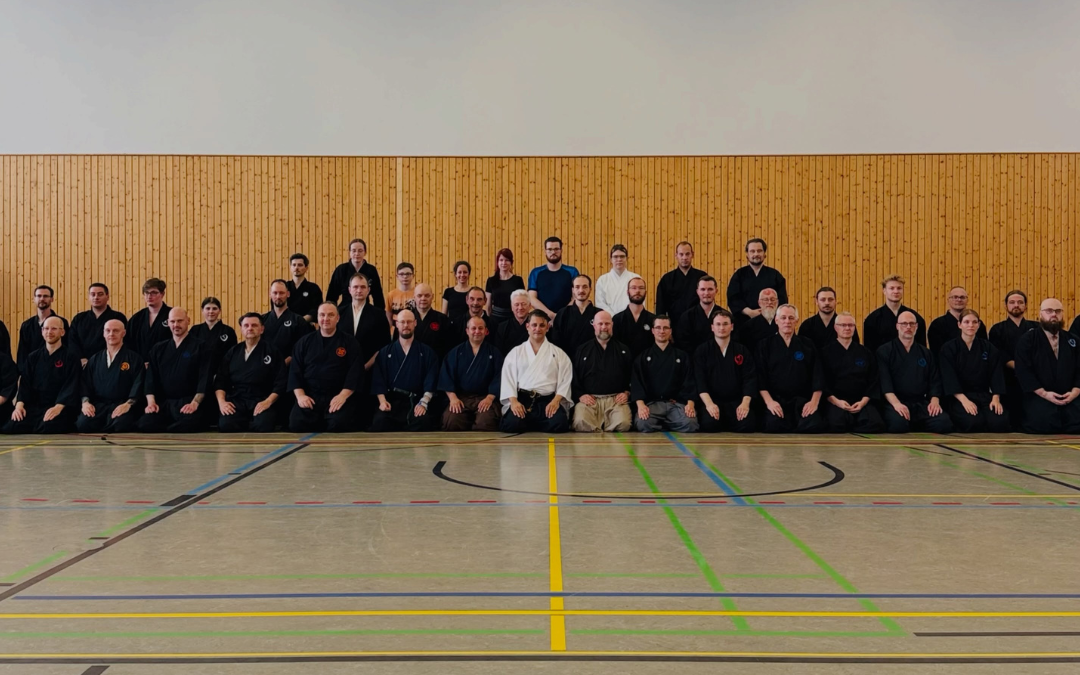
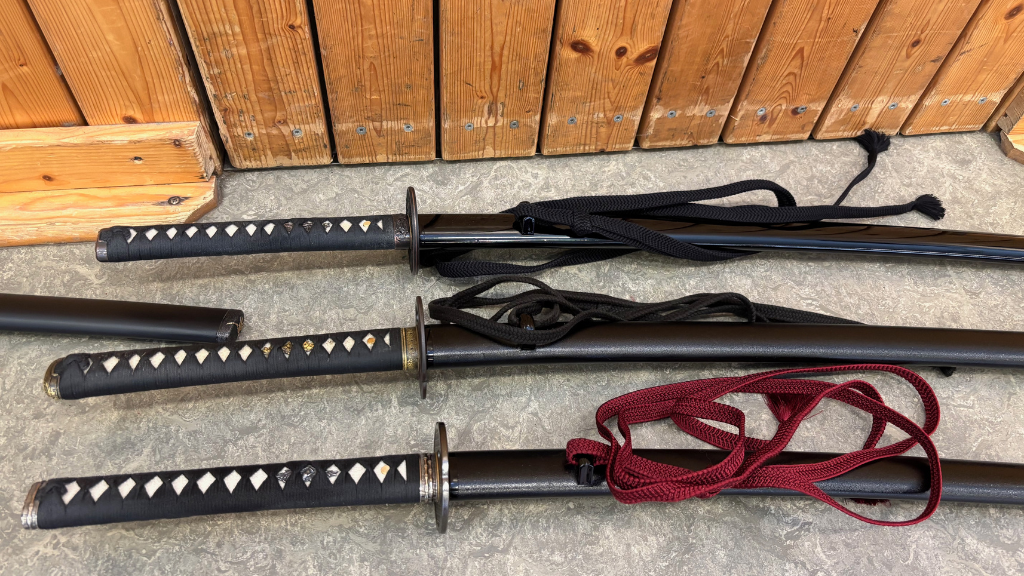
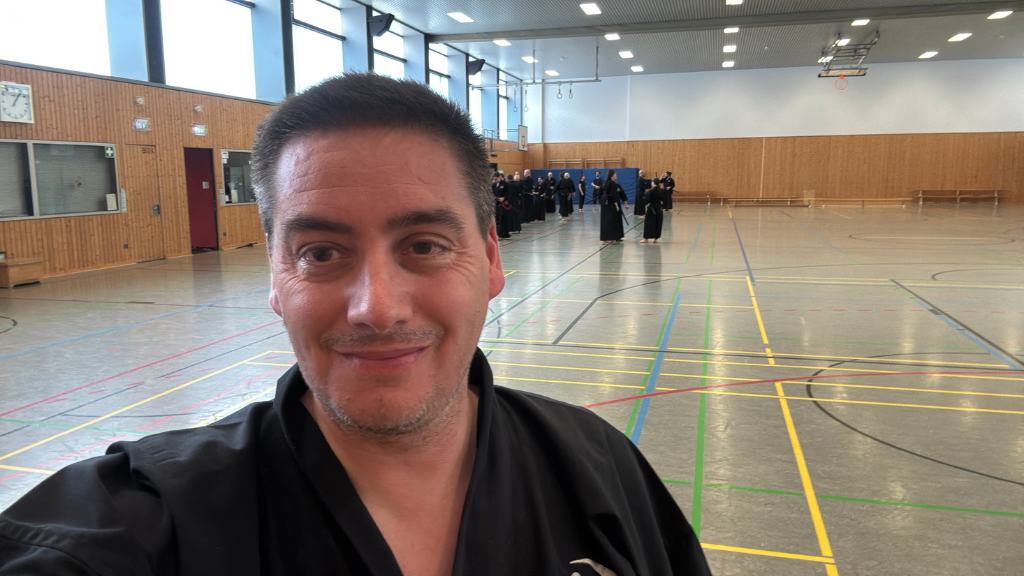
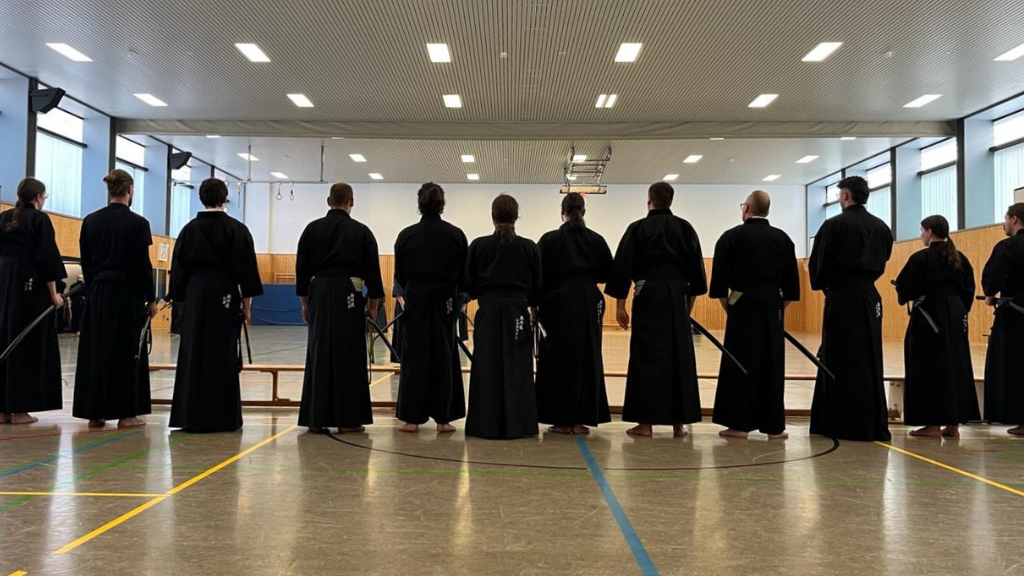
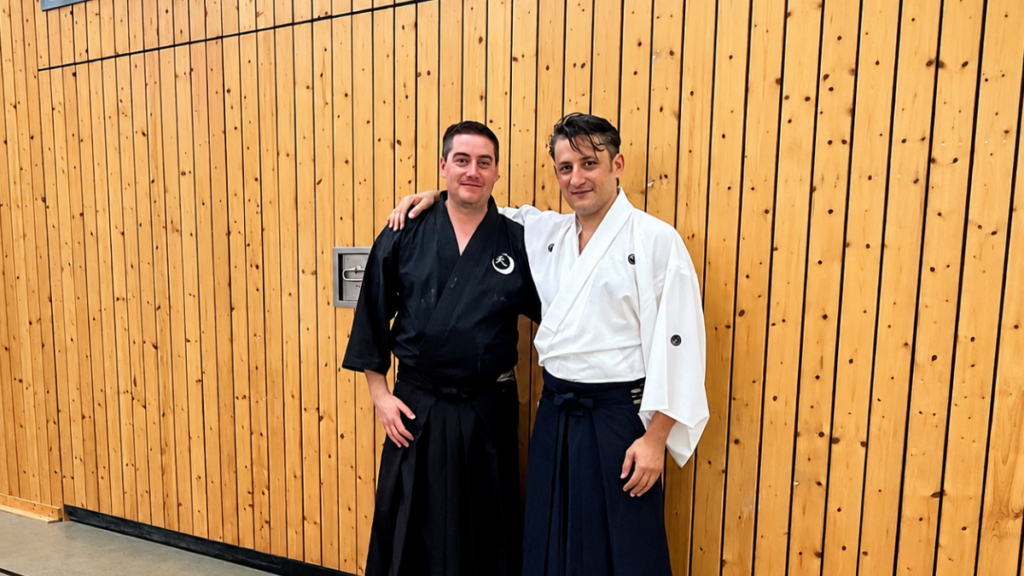
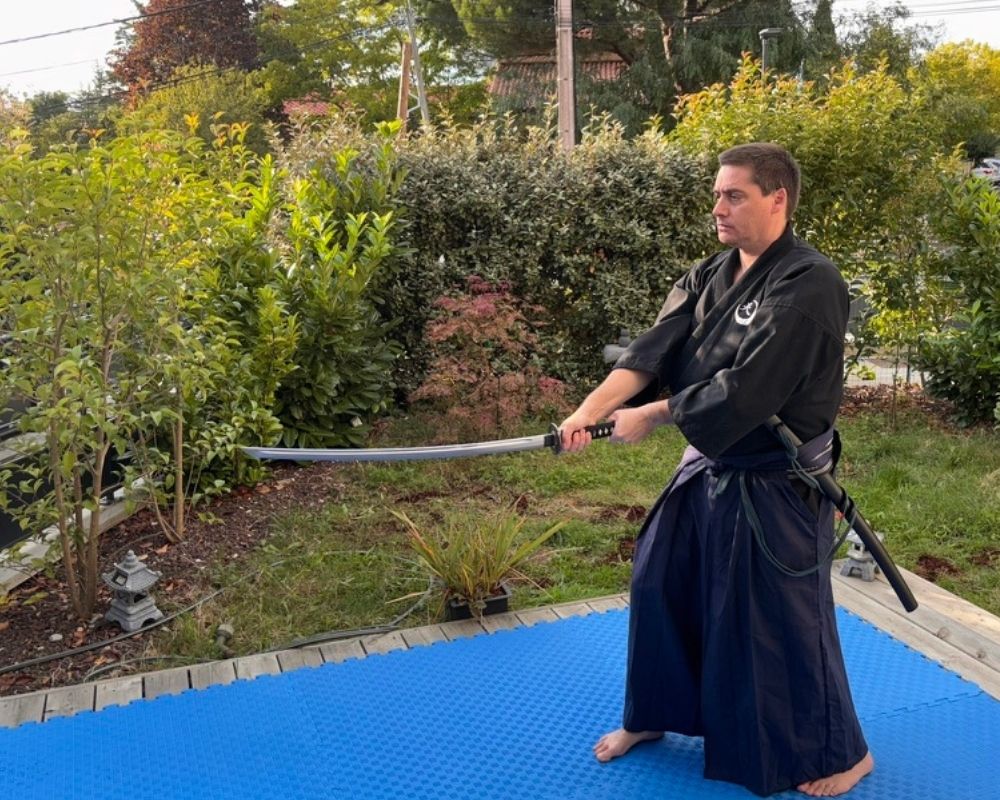
Last week, I had the honor of being invited by Luciano Morgenstern (Chairman of Mugai-ryū Europe and Representative of the Mugai-ryū Meishi Ha in Europe) to the summer seminar in Cologne, Germany. Despite the scorching heatwave sweeping across Europe, over 60 practitioners gathered for two days of intensive training.
The first day focused on technical work, as the gymnasium was sweltering under the summer sun. The senseis covered a wide range of topics, including maintaining flow, power generation, and the execution of all Mugai-ryū basic katas—with special attention to Ryōguruma, one of the most challenging forms for shodan candidates. The final hour was dedicated to exam preparation, a critical aspect of the seminar.
As I’ve mentioned in previous posts, To Rei (刀礼, sword etiquette) in Mugai-ryū is highly ritualized. For beginners, performing a test in front of such esteemed masters for the first time can be intimidating—an experience I know all too well. We wrapped up the day in Cologne’s city center at the Tenshinkai Dojo, where I was pleasantly surprised to find my name displayed on the wall alongside other students of Luciano Sensei. To cap off the evening, Sensei organized a barbecue, offering a wonderful opportunity to connect with everyone outside of training.
After 5hrs of training in Cologne
The second day began with one hour of Zazen (座禅, seated meditation), guided by a Zen monk. This set the tone for the most anticipated moment of the seminar: the examinations, ranging from sankyū to sandan. The atmosphere was intense and deeply emotional for all the candidates. What made it even more special was the presence of practitioners from other schools, including Genkō Nitō-ryū (two-sword fighting) and Tōsei-ryū (stick fighting). Observing these different traditions gave me a fascinating glimpse into the techniques and precision I’ll need to master as I progress through the ranks.
Candidates ready for test
Despite the oppressive heat, the weekend was a refreshing experience for the mind and spirit. It allowed me to assess my progress on my learning journey, but more importantly, it gave me the chance to meet this incredible community—a group of truly impressive individuals who share the same passion for the Way of the Sword.
Why In-Yō (Yin-Yang) is About Collaboration, Not Opposition
Every practitioner of the Japanese sword eventually encounters the concept of In-Yō (陰陽)—the Japanese reading of Yin and Yang. Frequently, it is explained as a simple list of opposites: dark and light, soft and hard, passive and active.
But if we treat In-Yō merely as a switch we flip back and forth, we miss its true power.
In-Yō is not a battle between two opposing forces. It is a relationship of absolute codependency and mutual support. In Iaido, Battodo, and Kenjutsu, In and Yō do not compete; they serve each other. One generates the other; one protects the other. To master the sword, we must stop seeing them as opposites and start seeing them as a single, unified engine.
Here is how this vital partnership supports every layer of our training.
1. Iaido: The Hidden Seed of Movement
Iaido is often described as the transition from stillness to explosive action. But true mastery reveals that the stillness (In) is actively supporting the action (Yō), and vice versa.
Stillness Generates Action: When you sit in seiza or stand in shizentai, your exterior is calm and hidden (In). But this isn’t dead inertia. Deep within that stillness, your focus is sharpening and your breath is dropping to your core. This quietude is the literal launchpad for your nukitsuke (drawing cut). Without the profound calmness of In, your explosive Yō will be tense, erratic, and telegraphed.
Action Returns to Protect Stillness: Conversely, after the decisive cut (Yō), you return the blade to the scabbard via noto. This return to In is protected by zanshin—a state of heightened, active awareness (Yō). The physical passivity of sheathing the sword is only safe because it is cradled by an active, vigilant mind.
The Interlocking Reality: You cannot have a fast draw without a relaxed starting posture. The “soft” In gives birth to, and structurally supports, the “hard” Yō.
2. Battodo: The Mechanics of Supported Power
In Battodo, we test our form against physical targets like tatami omote. Here, the illusion of pure power (Yō) is shattered. We quickly learn that power is completely dependent on its opposite: softness and structural relaxation (In).
Softness Drives the Hard Edge: If you try to cut a target using pure muscle power (pure Yō), your body tightens, your shoulders rise, and your blade will likely stall or bend in the mat. True power requires the muscles of the arms and shoulders to remain incredibly loose, heavy, and receptive (In). This softness allows the blade to achieve maximum velocity.
The Partnership of Tenouchi: Look closely at your grip (tenouchi). If your hands are clamped tightly onto the tsuka (hilt) throughout the entire swing, the cut fails. Instead, the grip must be soft and yielding (In) during the arc of the swing, tightening into a firm, supportive squeeze (Yō) only at the exact microsecond of impact, before immediately melting back into In.
The Interlocking Reality: The “hard” impact of the sword is entirely fueled by the “soft” velocity of the swing. Yō cannot do its job of cutting the target unless In provides the relaxed speed. They are two sides of the same physical coin.
3. Kenjutsu: Tactically Feeding the Opponent
When facing a live partner in Kenjutsu, In-Yō becomes a tactical dance of mutual support. A strike is never just a strike; it is an invitation, and a defense is never just a block; it is the birth of an attack.
Yielding to Redirect: When an opponent launches a fierce, aggressive attack (Yō), meeting it with equal brute force creates a collision that risks breaking your blade. Instead, you accept their force by yielding, slipping, or absorbing their strike with a receptive posture (In). By being the “soft” to their “hard,” you control their balance.
Creating the Void: By offering your opponent an opening—showing them emptiness (In)—you actively draw out their attack (Yō). The moment they commit their energy to that void, they exhaust themselves, leaving a vacuum. Your defense instantly becomes the offense.
The Interlocking Reality: In partner work, you use your In to manipulate their Yō, and your Yō to exploit their In. You flow between them seamlessly because you recognize that their attack is actually giving you the exact energy you need to defeat them.
The Unified Body and Mind
When In and Yō support each other perfectly, your martial arts become effortless. You begin to realize this balance is present in every fundamental mechanic:
Your Posture: Your upper body, shoulders, and chest are relaxed, open, and calm (In), while your lower body, hips, and feet are rooted, powerful, and driven into the floor (Yō). The upper body cannot be free to move unless the lower body provides a rock-solid foundation.
Your Breath: The inhalation (In) gathers energy and centers your mass, directly preparing the body for the exhalation (Yō) which expresses that energy through the tip of the sword. One cannot exist without the other.
Ultimately, In-Yō teaches us that we do not try to eliminate weakness to become strong, nor do we eliminate stillness to become fast. We use our stillness to feed our speed, and our relaxation to power our strength.
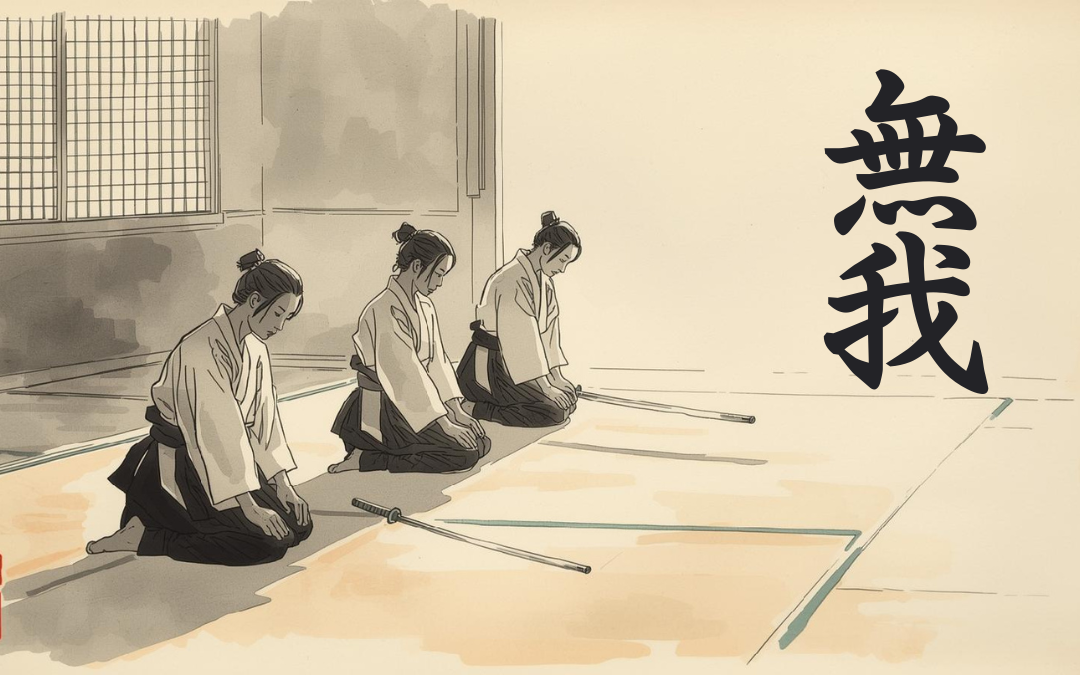
In the practice of Iaido (居合道), Battodo (抜刀道), and Kenjutsu (剣術), we often focus on the physical alignment of the blade or the precision of a cut. But for the practitioner of Mugai-ryū (無外流), the ultimate challenge lies within the mind. At the core of our lineage is the concept of Muga (無我).
The Origin: A Poem of Enlightenment
The name of our school itself is rooted in a profound spiritual realization. The founder, Tsuji Gettan Sukemochi (辻月丹資茂), reached enlightenment after years of deep Zen meditation at the Kyōun-ji (慶運寺) temple.
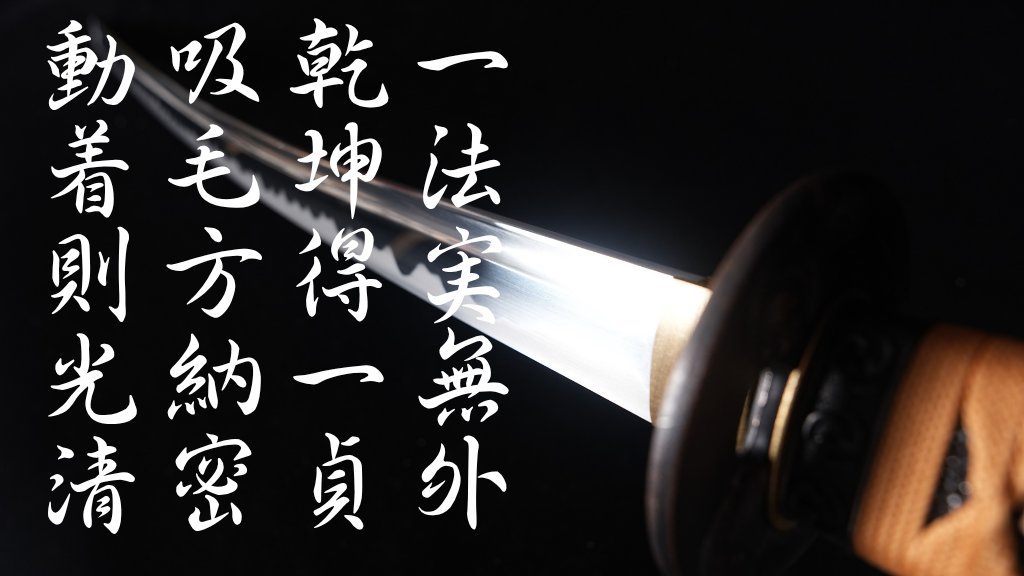
The name “Mugai” comes from a verse in a poem he received from his master:
Ippō mugai nashi (一法無外)
Nyoze dō dō dō (如是道同)
This translates to: “There is no law outside the One Truth; It is everywhere the same.” The word Mugai (無外) means “Nothing Outside.” It implies that there is no separation between the self and the universe. From this flows Muga (無我) — the state of Non-Self.
The famous poem that helped found Mugai-ryu
What is Muga (無我)?
In Japanese, Mu (無) means “nothingness” or “void,” and Ga (我) means “self” or “ego.”
In our daily lives, our Ego (我) is always busy. It judges our performance, fears failure, and seeks praise. In Budō (武道), this ego is an obstacle. It creates tension in the shoulders and hesitation in the spirit.Muga is the process of stripping away this “I.” When the ego is absent, there is no “me” trying to cut; there is only the movement happening in perfect synchronicity.
Muga in Battodo (抜刀道): The Pure Cut
In Battodo, when facing a Wara (藁 – straw mat), the ego often whispers: “Don’t miss,” or “Make a perfect angle.” This thought creates a physical “hitch.”
By seeking Muga, we aim for Mushin (無心 – empty mind). In this state, the Tenouchi (手の内 – the grip) and the Maai (間合い – the distance) are not calculated by the brain, but felt by the soul. The sword becomes an extension of your nervous system, and the cut becomes an effortless expression of reality.
Muga in Kenjutsu (剣術): The Absence of the Opponent
While Iaido is often a solitary pursuit, it is in Kenjutsu (the art of the sword in combat) that Muga undergoes its most intense test. When facing an opponent in Kumitachi (組太刀), the ego naturally reacts with fear or aggression.
In a state of Muga, the opponent is no longer viewed as an enemy to be defeated, but as a mirror. You do not “react” to a strike; instead, your body moves in Shizen-tai (自然体 – natural posture) before a conscious thought even arises. This is the expression of Munami (無波 – “no waves”), where the mind remains undisturbed. By losing the “Self” (Ga), you also lose the “Other.” The dualism of winning and losing simply ceases to exist.
My conclusion with the Ken Zen Ichi Nyo (剣禅一如) Concept
My Liomugai journey is a journey toward this “Non-Self.” Each Kata (型) is an opportunity to shed a layer of vanity. We do not polish the steel to see our reflection; we polish it to understand the void behind the reflection.
As the old saying goes: Ken Zen Ichi Nyo (剣禅一如) — The Sword and Zen are one. Through the discipline of the blade, we find the silence within.
Buying your first iaito is always a puzzle and as most of you I made the common mistakes. The most important is to select the right length.
The First-Time Buyer’s Puzzle: A Warning on Blade Measurements
Buying your first Iaito often feels like solving a complex puzzle. Like many of you, I navigated this process alone and made a classic mistake that I want to help you avoid.
The most critical decision you will make is selecting the correct blade length. However, there is a hidden trap when ordering online: not all measurements are created equal.
WARNING: Know Where the Measurement Starts
If you are ordering your sword from the internet, you must verify exactly how the site measures the length of the blade.
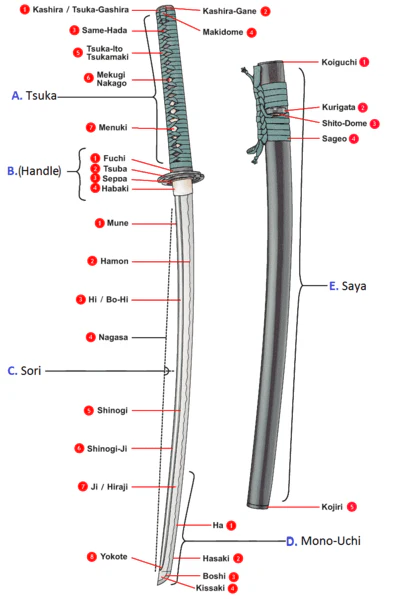
The Japanese Standard: Traditional manufacturers in Japan (like Nosyudo in Seki) and experienced practitioners always measure the blade length from the tip (Kissaki) to the Habaki (the metal collar).
The Western Variation: Some European or American websites measure from the tip all the way to the Tsuba (the handguard).
My “Shorter” Story
Imagine my disappointment when I received my very first Iaito only to find it was significantly shorter than I had anticipated. Because the site I used included the Habaki in the total length, the actual “cutting” surface of the blade was much smaller than I needed for my height.
To ensure your blade fits your body and your iaido practice perfectly, always confirm that you are measuring from the tip to the Habaki. Don’t let your first investment become a “short” story like mine!
The different parts of a Sword
You said Shaku ?
In Japan, sword length is measured in Shaku, Sun, and Bu.
1 Shaku ≈ 30.3 cm (approx. 1 foot)
1 Sun ≈ 3.03 cm
1 Bu ≈ 0.3 cm
When you visit a workshop like Nosyudo in Seki, you will see blades categorized by these units. Most practitioners will fall between 2.30 and 2.55 Shaku.
As your Iaito is an extension of your body, if the blade is too short, your techniques may lack grace and reach. If it is too long, you risk developing poor form or even injuring your shoulder during Saya-biki (drawing and unsheathing).
Some tips to define the right length
The most common way to determine your blade length is based on your height. While individual arm length varies, this chart serves as the industry standard used by master smiths in Seki and this is the official used by Nosyudo I visited some weeks ago.
Men’s Height (cm)
Blade Length (in Shaku)
Women’s Height (cm)
145 – 150 cm
2,15 – 2,20
150 – 155 cm
150 – 155 cm
2,20 – 2,25
155 – 160 cm
155 – 160 cm
2,25 – 2,30
160 – 165 cm
160 – 165 cm
2,30 – 2,35
165 – 170 cm
165 – 170 cm
2,35 – 2,40
170 – 175 cm
170 – 175 cm
2,40 – 2,45
165 – 170 cm
175 – 180 cm
2,45 – 2,50
180 – 185 cm
180 – 185 cm
2,50 – 2,65
Beyond the Chart: Adjusting for Style and Real Steel
While measurement charts provide a solid baseline, they are merely a guide. To find your true length, you must consider the specific demands of your practice and the physical reality of the blade you are wielding.
The Gap Between Iaito and Shinken
Take my own experience as an example. Based on my height (1.80m), a standard chart suggests a blade length of 2.50 Shaku. However, practical application tells a different story:
For Mugai-ryu Iaihyodo (居合兵道): Our style is defined by direct, close-range techniques that embody the “One Draw, One Cut” principle. To maintain the speed and explosive precision required for these movements, I transitioned to a 2.40 Shaku—the same length I use for my Shinken.
For Battodo (Cutting Practice): I found that a 2.45 Shaku blade was more effective. In actual sword manufacturing, Shinken (live blades) often feel and handle differently than their Iaito counterparts; they are tools of weight and gravity, often requiring a slightly shorter reach for better control during the cut.
The Ultimate Rule: Consult Your Sensei
The most important advice I can give is this: Your Sensei is your best resource.
Charts cannot see your posture, your arm span, or the specific constraints of your style. Your teacher understands the mechanics of your movement and the traditions of your school. Before you click “buy” on that beautiful polished blade, have a conversation with your Sensei. She/he will ensure that your Iaito is not just a beautiful object, but a functional tool for your path in the martial arts.
The Perfect Fit: Aligning your steel with the spirit of your training
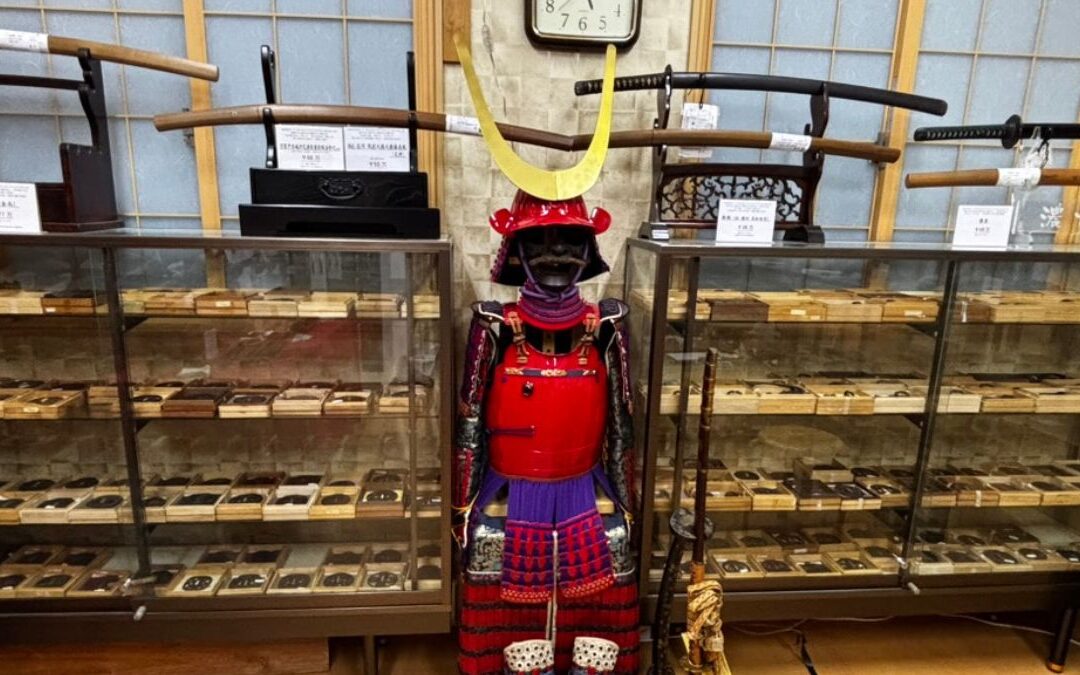
These past days were very busy in term of training, anyway I found the time to go to Seki City considered as “City of Blades.” For over 800 years, this small city located in Gifu Prefecture has been the heart of Japanese swordsmanship.
The history of Seki as a sword-making hub began in the Kamakura Period (1185–1333). Master swordsmiths were drawn to the region because it possessed the “perfect trinity” for blade manufacturing:
High-quality iron sand: Essential for creating the raw steel (tamahagane).
Pine charcoal: Needed to reach the extreme temperatures required for forging.
Pure water: Provided by the Nagara and Itadori Rivers for the crucial tempering process.
The most famous figure in Seki’s early history was Motoshige, a smith who moved to the area and established the techniques that would make Seki swords famous for being “unbreakable, unbendable, and incredibly sharp.”
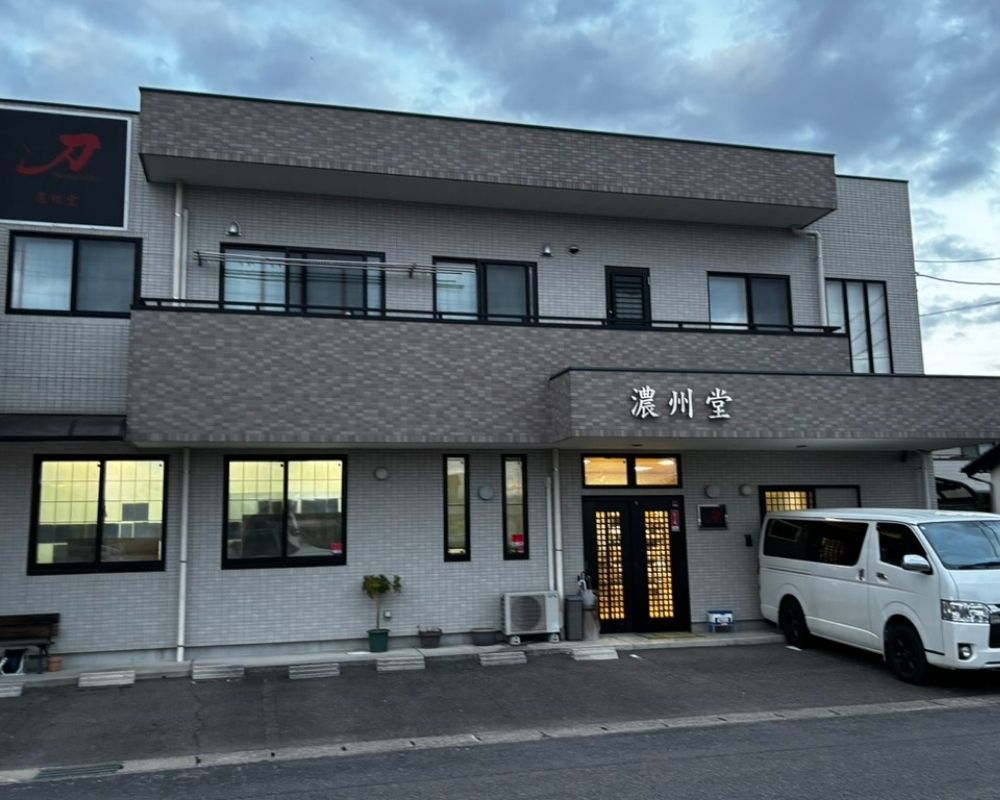
Nosyudo
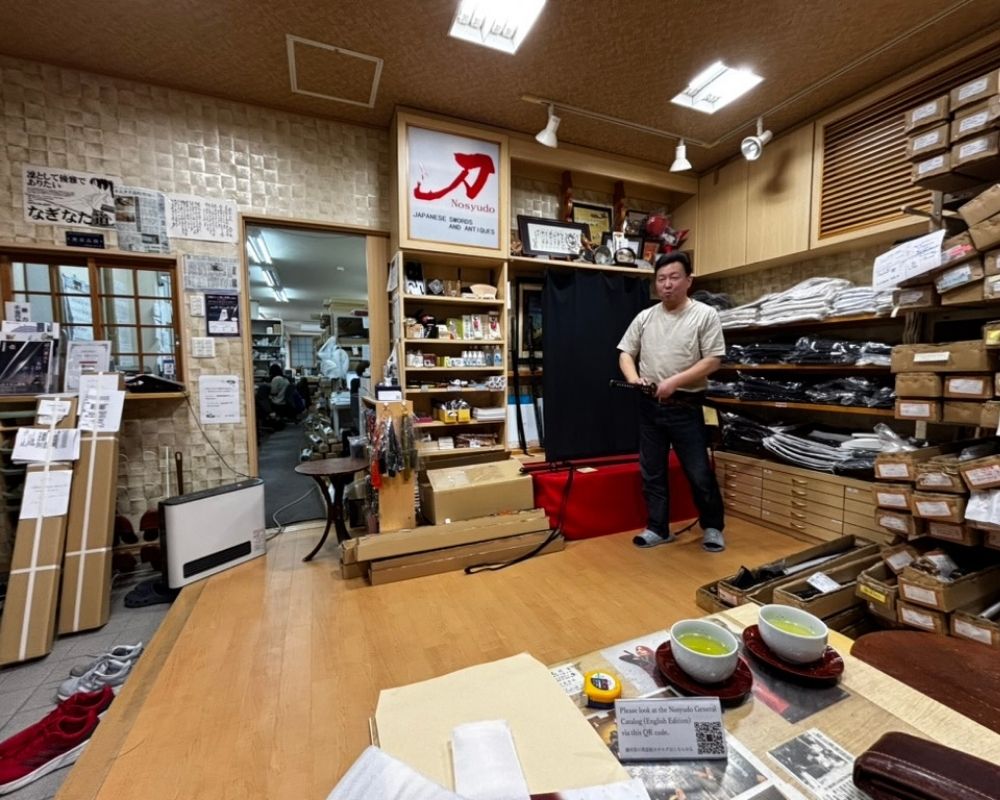
I’ve been warmly welcomed by Nosyudo CEO Keiji Igarashi who is continuing the lineag of his familiy was the former president of Nosyudo. Keiji-san was happy to share with me his passion and after some tea we spent some hours visiting the plant, discussing with the opearor and for m discovering the high complexity of blade manufacturing and the passion of the people working there.
Located close to the City Center, Nosyudo is very easy to access and has as well a parking ion front of their main gate. Exact address : 1-chōme-11-14 Sannōdōri, Seki, Gifu 501-3252, Japan
Keiji-san is not only the president of Nosyudo he has well a very experienced practitioner
Inside the plant
My visit to the Nosyudo plant in Seki City was more than just a tour; it was a front-row seat to the birth of a masterpiece. As a brand that supplies martial artists across the globe, seeing the scale and precision of their operation is a humbling experience for any practitioner.
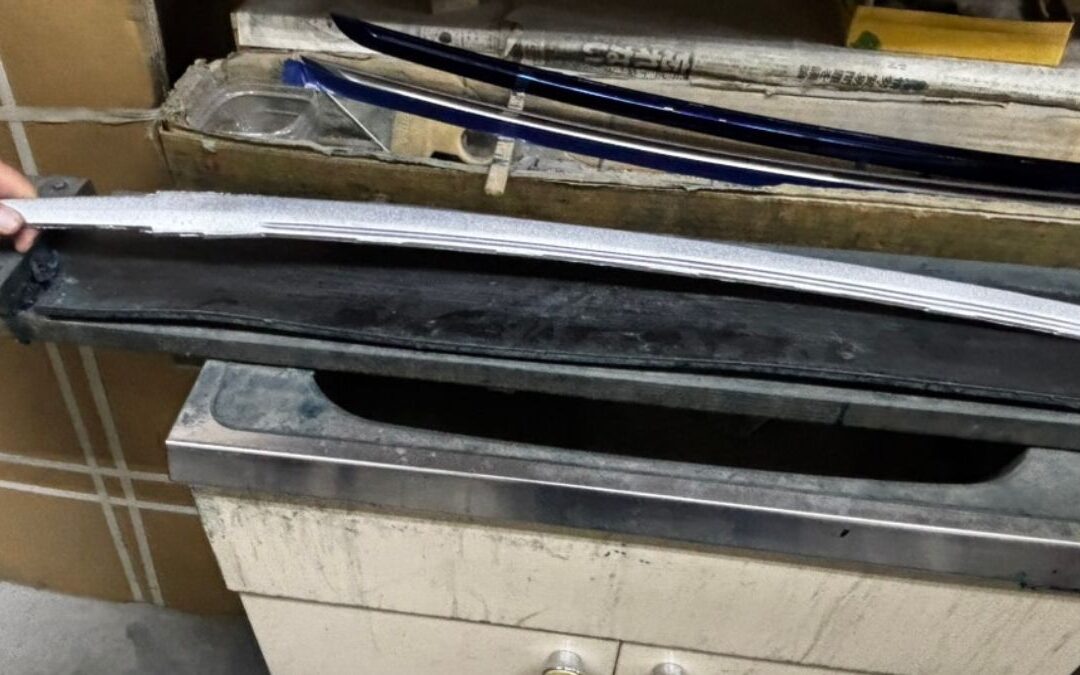
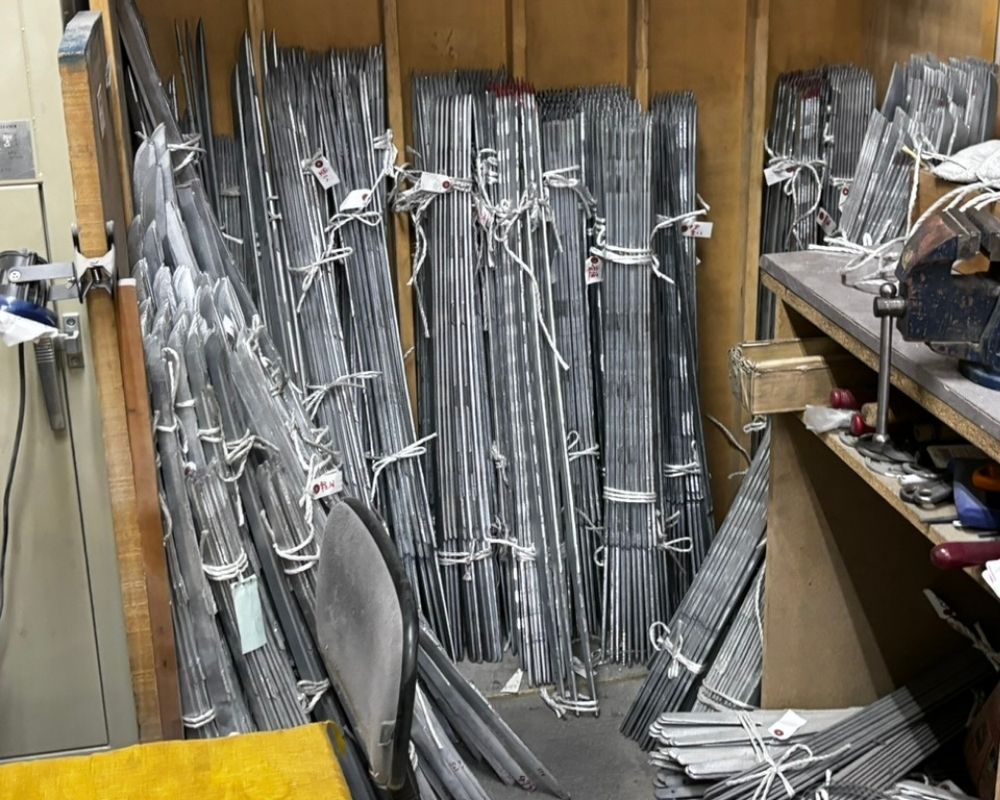
1. The Blade Stock: A Forest of Steel
The journey begins in the storage area, and the sight is nothing short of breathtaking. Rows upon rows of blade blanks—thousands of them—wait to be transformed. Knowing that these very blades will soon be shipped to dojos from Germany to Australia gives you a true sense of Nosyudo’s worldwide impact on the martial arts community.
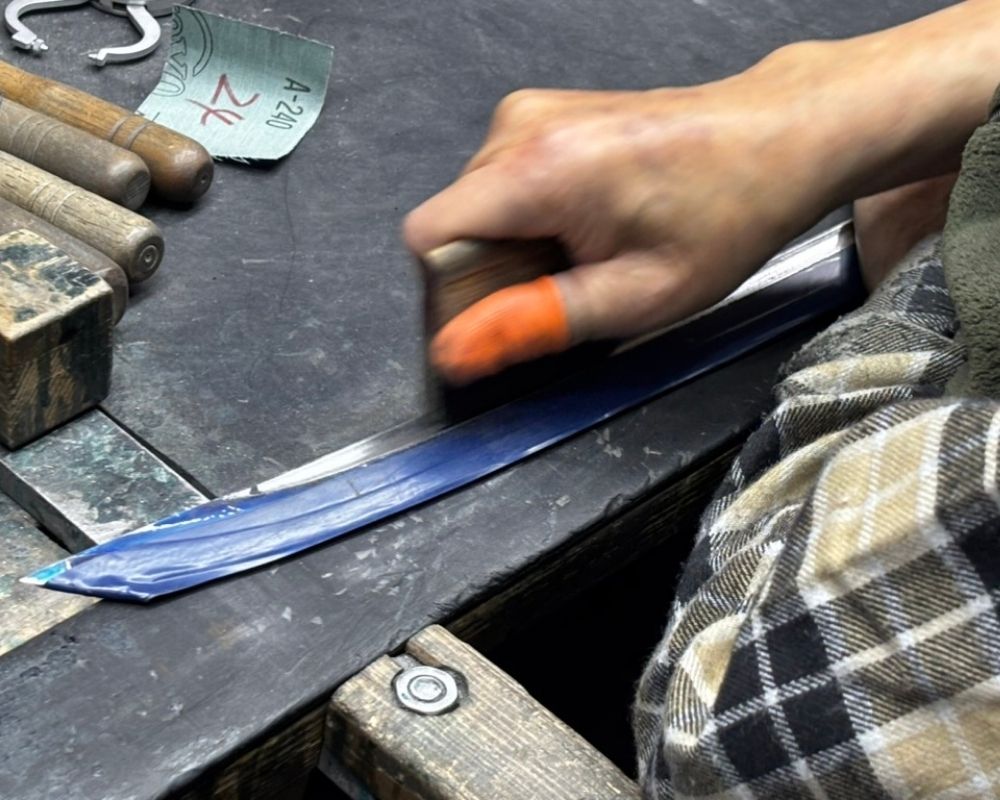
2. Refining the Soul: Polishing and Engraving
Just steps away from the stock, the atmosphere shifts to intense focus. This is where the raw blade begins to take its final form.
Polishing: The rhythmic sound of steel on stone as the blade’s surface is refined to a mirror finish.
Bo-Hi Manufacturing: Watching the master craftsmen carve the Bo-Hi (groove) is mesmerizing. It is a delicate balance of removing weight while maintaining the structural integrity and the “whistle” (tachikaze) of the sword.
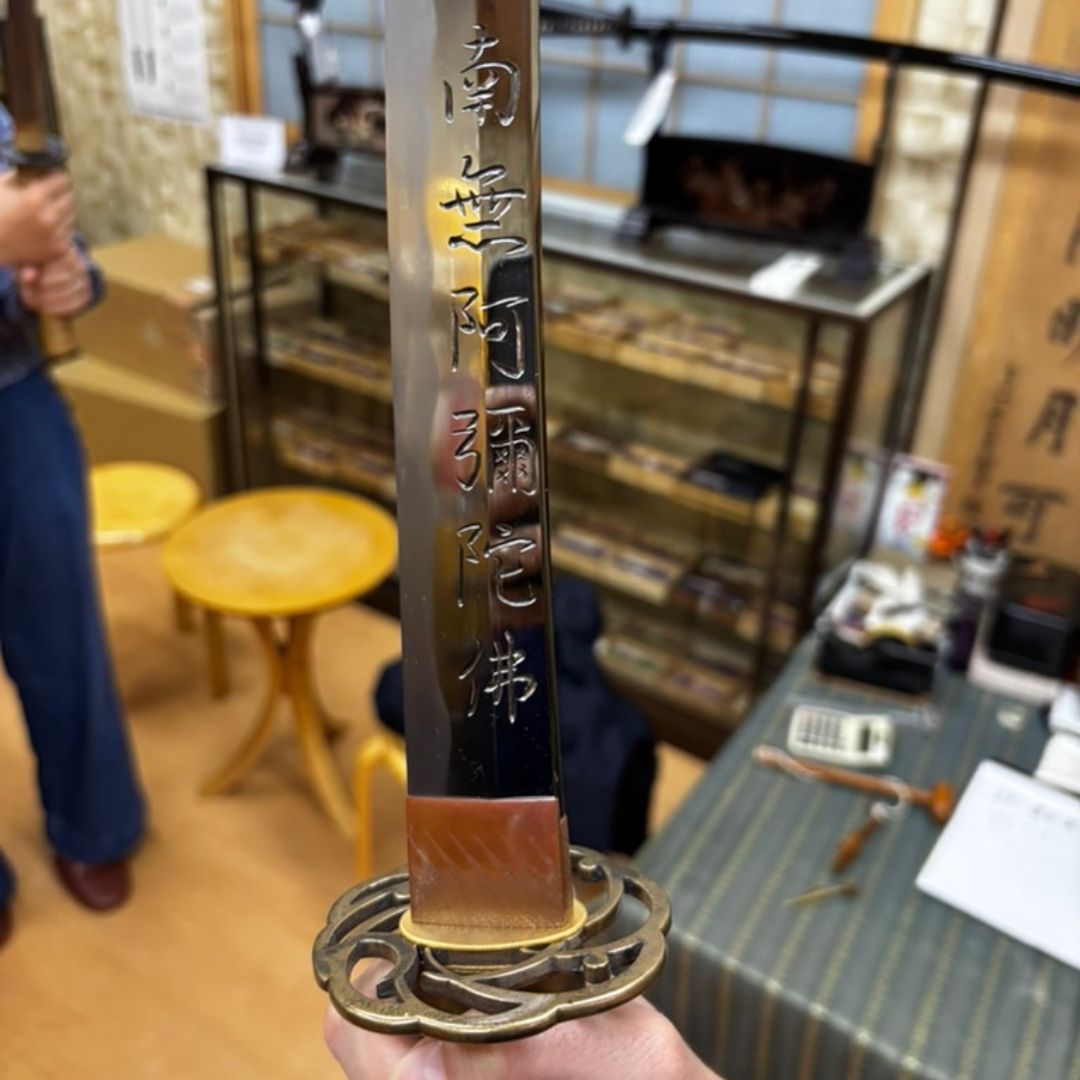
Engraving: For those seeking a personal touch, the intricate hand-engraving of kanji or symbols is done here with incredible steady-handedness.
3. The Perfect Fit: Habaki and Tsuka
Next, we move to the fitting stage. The Habaki (blade collar) is custom-fitted to the blade. This is a critical step; if the Habaki isn’t perfect, the sword won’t sit correctly in the scabbard.
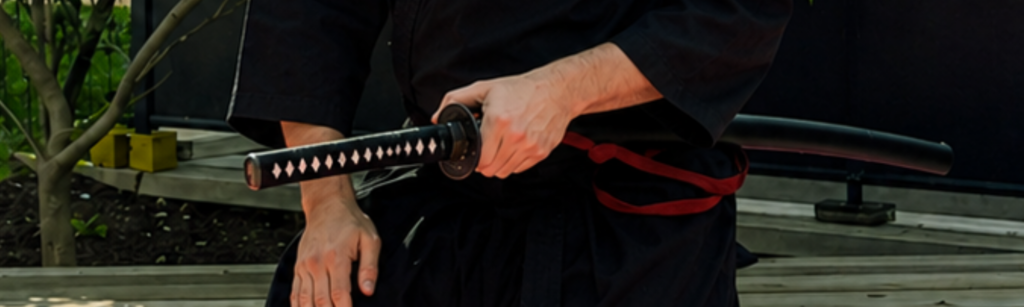
Following this is the Tsuka (handle) preparation. I was absolutely amazed by the Tsukamaki (handle wrapping). The precision required to wrap the silk or cotton over the rayskin (samegawa) is a true art form. Every diamond shape must be perfectly symmetrical, and the tension must be consistent to ensure a safe and comfortable grip during practice.
4. The Final Assembly: Tsuba and Mekugi
The final stages are where the sword truly becomes a unified tool:
Mekugi Placement: Finally, the Mekugi (bamboo peg) is placed. This tiny piece of wood is the only thing holding the blade in the handle—the last, most important step in the Iaito manufacturing process, ensuring the safety of the practitioner.
Tsuba Adjustment: The handguard is meticulously adjusted to ensure there is zero “rattle” or movement.
The Final Lock: The most vital step is the drilling of the Mekugi-ana (peg hole).
A pure beauty
My Take away from Nosyudo
I had fantastic time and took passionated people very engaged and in their work willing to share their passion and I would like to thank the operator to take some time to fix the katana of my grandfather we discovered in the garage after his death.
Qualitative swords : I was impressed by the quality of the swords and very interested in the different shapes of the Tsuka they are proposing. The swing is super smooth even you are using an heavier sword compared to the light ones proposed by our brand.