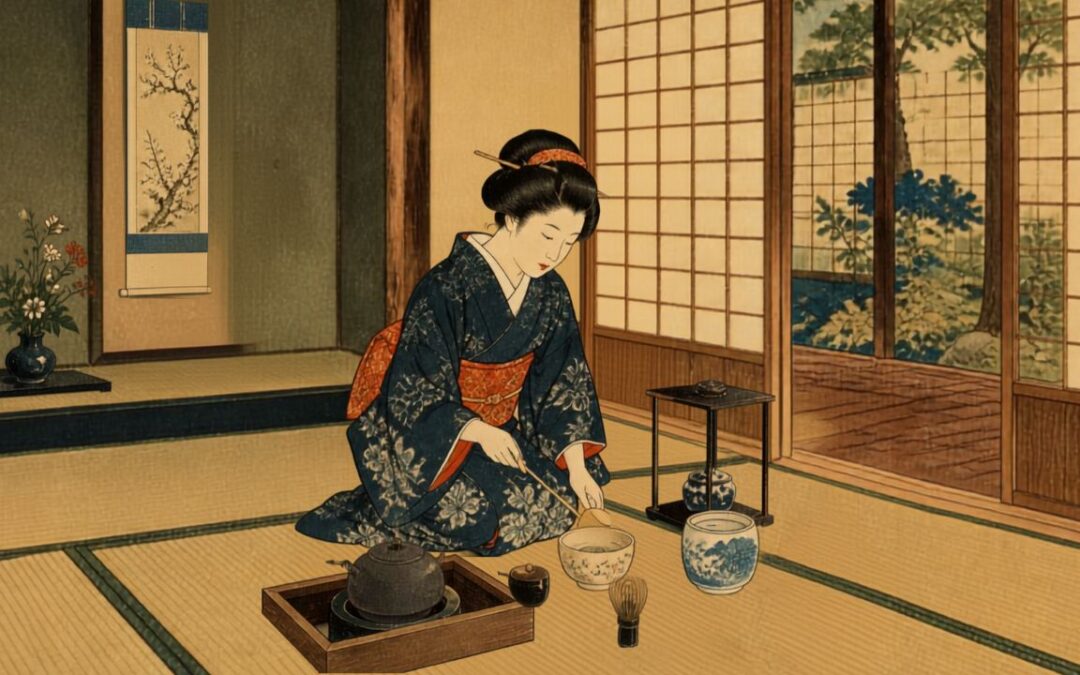
The Japanese tea ceremony, known as chanoyu (“hot water for tea”) or chadō (“the way of tea”), is much more than an aesthetic ritual or a social gathering. It is a profound spiritual discipline deeply rooted in the philosophy of Zen Buddhism. To truly understand the essence of this tradition, one must trace the historical journey of Zen, the evolution of powdered green tea (matcha), and the core principles that transform a simple cup of tea into a moving meditation.
The Journey of Zen: From India to Japan
Zen Buddhism traces its origins back over 2,500 years to the meditative awakening of Siddhartha Gautama under the Bodhi tree in India. Deriving its name from the Sanskrit word dhyāna (meaning “perfect contemplation”), the tradition was brought to China around 520 CE by the monk Bodhidharma, where it developed into Chan Buddhism.
Between the 12th and 13th centuries, Japanese Buddhist monks traveling to China—most notably the monk Eisai—brought these Zen teachings home to Japan. Eisai established the Rinzai school of Zen, which quickly gained favor among the samurai warrior class due to its emphasis on strict mental discipline, self-control, and direct focus on the present moment.
The Arrival of Matcha and Monastic Rituals
Along with Zen philosophy, Eisai introduced powdered green tea, or matcha, to Japan from Song Dynasty China in 1191. Initially, matcha was consumed within Zen monasteries as a medicinal remedy and as a practical aid to help monks remain alert during long hours of zazen (seated meditation).
Over time, this monastic practice expanded into broader feudal society. During the 14th and 15th centuries, tea tasting (cha-yoriai) became a lavish pastime among military lords and aristocrats, who competed to display their immense wealth using costly, pristine Chinese porcelain and bronze vessels.
The Wabi-Sabi Revolution and Sen no Rikyū
In response to this ostentatious display of luxury, tea masters began transforming tea preparation into an authentic spiritual practice. Murata Shuko (1422–1503), often regarded as the father of the tea ceremony, was the first to draw a direct parallel between tasting tea and practicing Zen meditation.
This movement culminated in the 16th century with the legendary tea master Sen no Rikyū. Rikyū revolutionized chanoyu by stripping away extravagant Chinese utensils and establishing the aesthetic philosophy of wabi-sabi—the appreciation of natural simplicity, humility, and the quiet beauty found in imperfection and age. Instead of perfect porcelain, Rikyū championed unadorned, rustic ceramic bowls (chawan) and simple bamboo tools, emphasizing that true refinement lies in extreme simplicity.
“The Way of Tea is nothing more than this: boil water, make tea, and drink it properly. That is all you need to know.” — Sen no Rikyū
The Four Pillars of Chadō: Wa, Kei, Sei, Jaku
Sen no Rikyū codified the spiritual framework of the Way of Tea into four foundational principles that guide every movement and interaction in the tearoom:
Wa (和 – Harmony): Achieving complete balance and alignment with nature, the changing seasons, the utensils, and fellow participants.
Kei (敬 – Respect): Demonstrating profound reverence for all human beings present and handling every humble object with total care and mindfulness.
Sei (清 – Purity): Cleansing both the physical environment and the inner mind, leaving ego, stress, and worldly anxieties at the threshold.
Jaku (寂 – Tranquility): Entering a state of unshakeable inner peace and serenity, which arises naturally when harmony, respect, and purity are fully realized.
Cha Zen Ichi Mi: “Zen and Tea Have the Same Taste”
The intimate connection between Zen and tea is epitomized by the ancient Japanese proverb Cha zen ichi mi (“Zen and tea have the same taste”).
In Zen philosophy, ultimate spiritual reality is not found in abstract dogma, but in the direct experience of ordinary daily actions. Every movement in the tea ritual—heating water in an iron kettle (kama), whisking powdered matcha with a bamboo whisk (chasen), and presenting the bowl—becomes an active exercise in mindfulness and presence.
The Tearoom as a Sanctuary of Radical Equality
The architecture of the traditional tea pavilion (chashitsu) embodies the Zen requirement to surrender one’s ego. The entrance door (nigiriguchi) is constructed deliberately low, requiring every guest to bow deeply and crawl inside.
Historically, even high-ranking samurai warlords had to unbuckle their katana (swords), leave them outside on a rack, and bow down to enter. Inside the small, minimalist room, all social hierarchies dissolved, creating a sacred space of absolute equality and shared human connection. This mindset is closely linked to the concept of Ichi-go Ichi-e (“one time, one meeting”), which reminds participants that every gathering is unique and will never occur again in the exact same way.
The Way of Tea reveals that true mastery and peace of mind do not require grand gestures. By bringing full awareness, humility, and respect to our daily routines, we can transform even the simplest moments into a sanctuary of stillness and presence.
You can as well listen to the dedicated episode on our Podcast Liomugai The Way of Sword and Budo
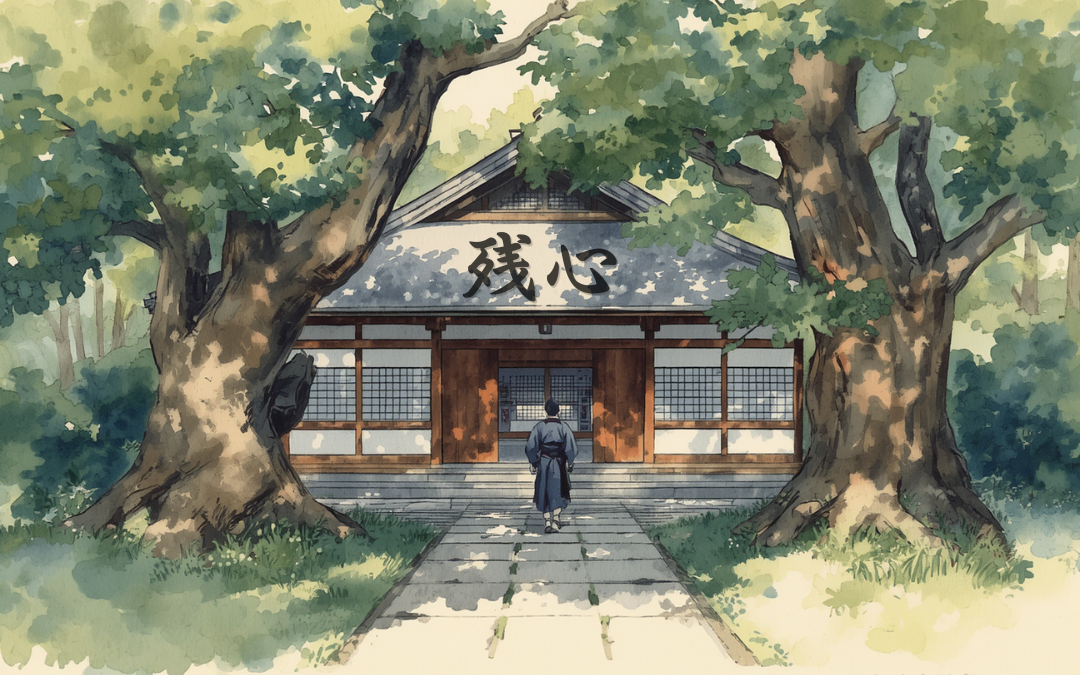
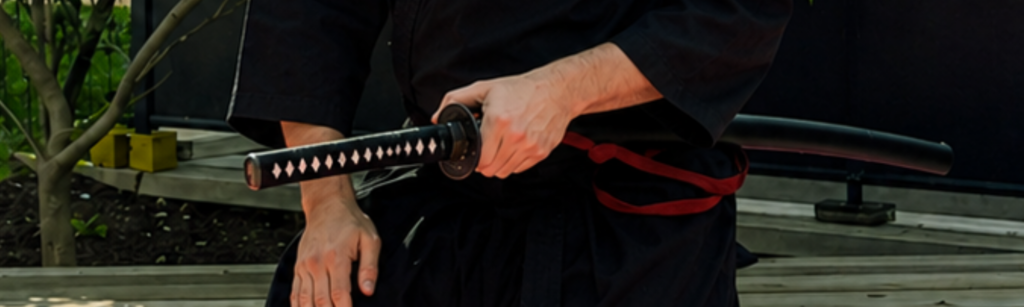
In the world of Japanese swordsmanship, the moment the blade completes its cut is not the end of the technique. It is, in many ways, the beginning of something far more profound. This is the realm of Zanshin (残心), often translated as the “lingering mind” or “remaining heart.” It is the awareness that persists after the action is complete—the state of total presence that ensures you are never caught off guard, physically or spiritually.
For a practitioner of Mugai-ryū Iaido or Battōdō, Zanshin is not just a technical requirement; it is a way of being. It is the difference between a swordsman who merely performs kata and one who embodies the essence of the art in every movement, every breath, and every thought.
Zanshin in the Dojo
In the dojo, Zanshin is most visibly expressed in the moments following a kata. After the final cut, the practitioner does not immediately relax. Instead, they maintain a state of alert stillness—the sword remains extended, the body poised, the mind sharp. This is not a pause; it is a continuation of the action, a silent declaration that the fight is not over until the opponent is truly neutralized and the environment is secure.
The Three Dimensions of Zanshin in Training:
Physical Zanshin
The body remains in a state of readiness. The feet are grounded, the posture upright, and the eyes continue to scan for potential threats. Even after the last cut, the practitioner does not drop their guard. This is the most tangible aspect of Zanshin, and it is often what beginners focus on first.
Mental Zanshin
The mind stays fully engaged. There is no mental “switching off” after the technique. Instead, the practitioner remains aware of their surroundings, their opponent (real or imagined), and their own internal state. This mental clarity is what allows a swordsman to respond instantly to any change in the situation.
Spiritual Zanshin
This is the deepest layer. It is the understanding that Zanshin is not just about physical or mental readiness, but about a **state of being**. It is the recognition that true mastery comes from a place of inner stillness, where the mind is free from distraction and the spirit is unshaken by fear or doubt.
Zanshin Beyond the Dojo
The beauty of Zanshin is that it is not confined to the dojo. The principles of lingering awareness and total presence can be applied to every aspect of life. In a world filled with distractions, Zanshin offers a way to move through life with intention and clarity.
Zanshin in Everyday Life:
In Conversations How often do we truly listen to the person in front of us? Zanshin teaches us to be fully present in conversations, to listen not just with our ears but with our entire being. It is the difference between hearing and understanding.
In Work Whether you are an artist, a teacher, or a business professional, Zanshin can transform how you approach your tasks. It is the ability to stay focused on the present moment, to give your full attention to the task at hand, and to remain aware of the broader context. It is the difference between working on autopilot and working with purpose.
In Relationships Zanshin reminds us to be present with our loved ones. It is the awareness that every interaction matters, that every word and gesture carries weight. It is the practice of showing up fully, without distraction, for the people who matter most.
In Moments of Stress Life is unpredictable, and challenges often arise when we least expect them. Zanshin is the ability to remain calm and centered in the face of adversity, to respond rather than react, and to maintain clarity even in the midst of chaos.
The Paradox of Zanshin
Zanshin is often described as a state of relaxed awareness. This might seem like a contradiction—how can one be both relaxed and alert? The answer lies in the nature of true presence. When the mind is free from tension, it is able to perceive more clearly. When the body is relaxed, it is able to move more efficiently. Zanshin is not about being on edge; it is about being fully alive in the present moment.
In the words of the great swordsman Miyamoto Musashi:
“Perceive that which cannot be seen with the eye.”
This is the essence of Zanshin. It is the ability to see beyond the obvious, to sense the unseen, and to remain connected to the world around you, even in stillness.
Cultivating Zanshin
So how does one develop Zanshin? Like all aspects of martial arts, it begins with practice—both on and off the mat.
Practical Exercises:
Mindful Breathing
Before and after training, take a few moments to focus on your breath. Inhale deeply, exhale slowly, and allow your mind to settle. This simple practice can help you cultivate the mental clarity that is essential for Zanshin.
Slow Kata Practice
Perform your kata at half-speed, paying close attention to every movement, every transition, and every breath. This helps to ingrain the habit of maintaining awareness throughout the entire sequence.
Meditation
Sit in *zazen* (seated meditation) for a few minutes each day. Focus on your breath and observe your thoughts without judgment. Over time, this practice will help you develop the inner stillness that is the foundation of Zanshin.
Daily Awareness Drills
Throughout the day, take a moment to pause and check in with yourself. Ask: *Am I fully present in this moment?* If not, gently bring your attention back to the here and now.
Zanshin as a Way of Life
Ultimately, Zanshin is more than a martial arts concept. It is a philosophy—a way of moving through the world with awareness, intention, and grace. Whether you are holding a sword, sitting in a meeting, or spending time with loved ones, Zanshin reminds you to be fully present, to stay connected to the moment, and to approach life with an open heart and a clear mind.
As you continue your journey in Mugai-ryū Iaido or Battōdō, I encourage you to explore Zanshin not just as a technical requirement, but as a guiding principle. Let it shape how you train, how you live, and how you interact with the world around you. In doing so, you will find that the lingering mind becomes not just a part of your practice, but a part of who you are.
What does Zanshin mean to you? How do you cultivate awareness in your own life? Share your thoughts in the comments below—I’d love to hear from you.
Follow my journey on YouTube and Instagram for more insights into the Way of the Sword.
I know how busy life can get. Between work, family, and training, it isn’t always easy to sit down and read long-form articles—even if you want to stay up to date with the latest insights.
To make my website posts more accessible when you are short on time, I have officially launched a brand-new audio companion: Liomugai: The Way of the Sword.
This is a brand-new venture for me, so consider this our first official start! The audio and production quality will naturally get better with time. Thank you for your patience and for joining me on this learning curve.
We are hitting the ground running with 5 episodes already available for you to listen to:
Episode 1: Introduction to Liomugai’s podcast
Episode 2: The Sacred and the Sharp: Whispers of Mount Fuji
Episode 3: The Mugai-ryū and the Way of Zen
Episode 4: The Soul of Hiroshima and Miyajima
Episode 5: Muga : The Zen Heart of Mugai-ryū
And then a new episode will be available every Tuesday morning
Why listen?
Time-Friendly: Perfect for your daily commute, a walk, or while you’re prepping your gear.
Audio Companion: You won’t miss a single website post.
Deep Dives on the Go: Explore the philosophy, history, and mindset of the sword wherever you are.
Whether you prefer reading at your desk or listening through your headphones, you can now engage with the content in whatever way fits your schedule best.
If you enjoy the show, please consider hitting Subscribe and leaving a review on Apple Podcasts—it helps other martial arts and sword enthusiasts find us!
Thank you all for your support as we start this new chapter.
Why In-Yō (Yin-Yang) is About Collaboration, Not Opposition
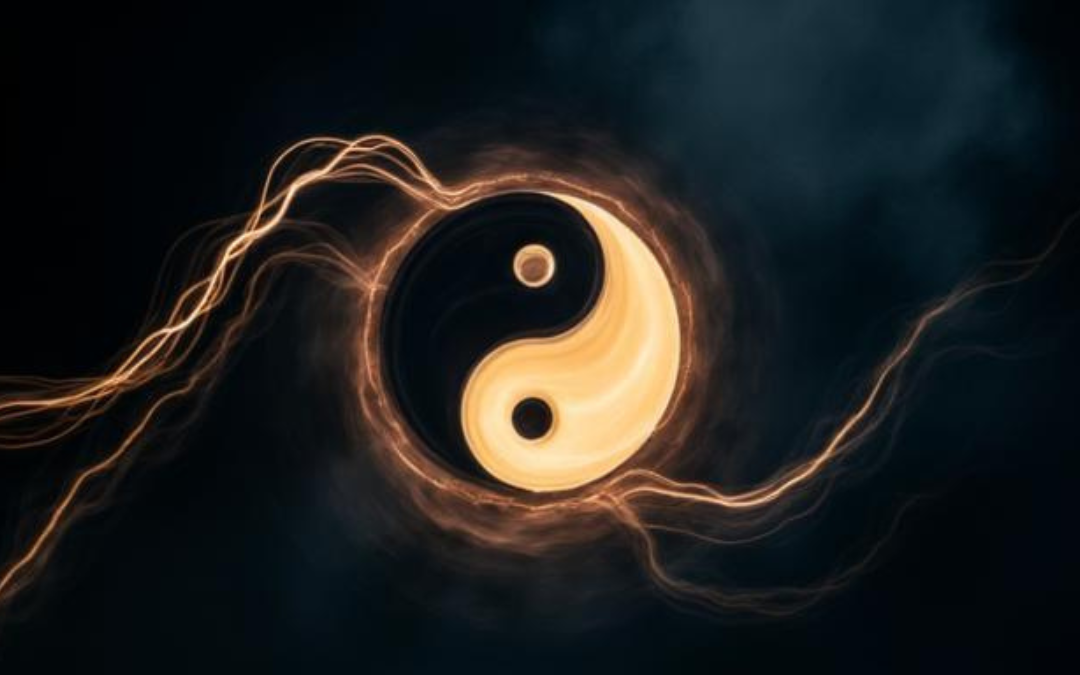
Every practitioner of the Japanese sword eventually encounters the concept of In-Yō (陰陽)—the Japanese reading of Yin and Yang. Frequently, it is explained as a simple list of opposites: dark and light, soft and hard, passive and active.
But if we treat In-Yō merely as a switch we flip back and forth, we miss its true power.
In-Yō is not a battle between two opposing forces. It is a relationship of absolute codependency and mutual support. In Iaido, Battodo, and Kenjutsu, In and Yō do not compete; they serve each other. One generates the other; one protects the other. To master the sword, we must stop seeing them as opposites and start seeing them as a single, unified engine.
Here is how this vital partnership supports every layer of our training.
1. Iaido: The Hidden Seed of Movement
Iaido is often described as the transition from stillness to explosive action. But true mastery reveals that the stillness (In) is actively supporting the action (Yō), and vice versa.
Stillness Generates Action: When you sit in seiza or stand in shizentai, your exterior is calm and hidden (In). But this isn’t dead inertia. Deep within that stillness, your focus is sharpening and your breath is dropping to your core. This quietude is the literal launchpad for your nukitsuke (drawing cut). Without the profound calmness of In, your explosive Yō will be tense, erratic, and telegraphed.
Action Returns to Protect Stillness: Conversely, after the decisive cut (Yō), you return the blade to the scabbard via noto. This return to In is protected by zanshin—a state of heightened, active awareness (Yō). The physical passivity of sheathing the sword is only safe because it is cradled by an active, vigilant mind.
The Interlocking Reality: You cannot have a fast draw without a relaxed starting posture. The “soft” In gives birth to, and structurally supports, the “hard” Yō.
2. Battodo: The Mechanics of Supported Power
In Battodo, we test our form against physical targets like tatami omote. Here, the illusion of pure power (Yō) is shattered. We quickly learn that power is completely dependent on its opposite: softness and structural relaxation (In).
Softness Drives the Hard Edge: If you try to cut a target using pure muscle power (pure Yō), your body tightens, your shoulders rise, and your blade will likely stall or bend in the mat. True power requires the muscles of the arms and shoulders to remain incredibly loose, heavy, and receptive (In). This softness allows the blade to achieve maximum velocity.
The Partnership of Tenouchi: Look closely at your grip (tenouchi). If your hands are clamped tightly onto the tsuka (hilt) throughout the entire swing, the cut fails. Instead, the grip must be soft and yielding (In) during the arc of the swing, tightening into a firm, supportive squeeze (Yō) only at the exact microsecond of impact, before immediately melting back into In.
The Interlocking Reality: The “hard” impact of the sword is entirely fueled by the “soft” velocity of the swing. Yō cannot do its job of cutting the target unless In provides the relaxed speed. They are two sides of the same physical coin.
3. Kenjutsu: Tactically Feeding the Opponent
When facing a live partner in Kenjutsu, In-Yō becomes a tactical dance of mutual support. A strike is never just a strike; it is an invitation, and a defense is never just a block; it is the birth of an attack.
Yielding to Redirect: When an opponent launches a fierce, aggressive attack (Yō), meeting it with equal brute force creates a collision that risks breaking your blade. Instead, you accept their force by yielding, slipping, or absorbing their strike with a receptive posture (In). By being the “soft” to their “hard,” you control their balance.
Creating the Void: By offering your opponent an opening—showing them emptiness (In)—you actively draw out their attack (Yō). The moment they commit their energy to that void, they exhaust themselves, leaving a vacuum. Your defense instantly becomes the offense.
The Interlocking Reality: In partner work, you use your In to manipulate their Yō, and your Yō to exploit their In. You flow between them seamlessly because you recognize that their attack is actually giving you the exact energy you need to defeat them.
The Unified Body and Mind
When In and Yō support each other perfectly, your martial arts become effortless. You begin to realize this balance is present in every fundamental mechanic:
Your Posture: Your upper body, shoulders, and chest are relaxed, open, and calm (In), while your lower body, hips, and feet are rooted, powerful, and driven into the floor (Yō). The upper body cannot be free to move unless the lower body provides a rock-solid foundation.
Your Breath: The inhalation (In) gathers energy and centers your mass, directly preparing the body for the exhalation (Yō) which expresses that energy through the tip of the sword. One cannot exist without the other.
Ultimately, In-Yō teaches us that we do not try to eliminate weakness to become strong, nor do we eliminate stillness to become fast. We use our stillness to feed our speed, and our relaxation to power our strength.
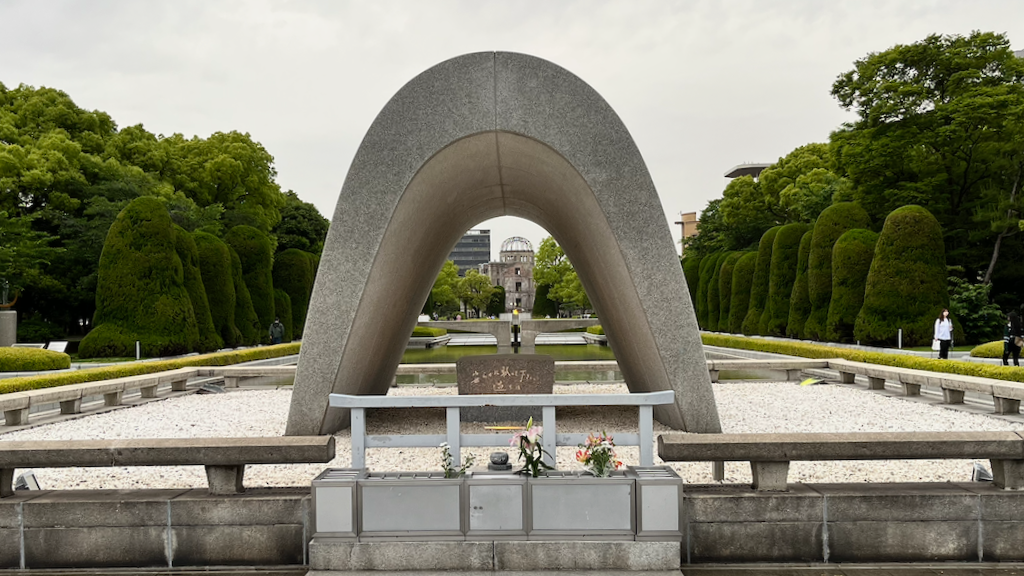
In a recent post, I shared my experience in Hiroshima, along with a suggested one-day itinerary for travelers short on time. A city that embodies resilience and rebirth, Hiroshima still bears the marks of humanity’s darkest capabilities—yet stands today as a powerful symbol of peace.
Just a short journey away, crossing the bay by ferry, lies one of Japan’s most enchanting places: the sacred island of Itsukushima, better known as Miyajima, which literally means “Shrine Island.”
A Floating Sanctuary
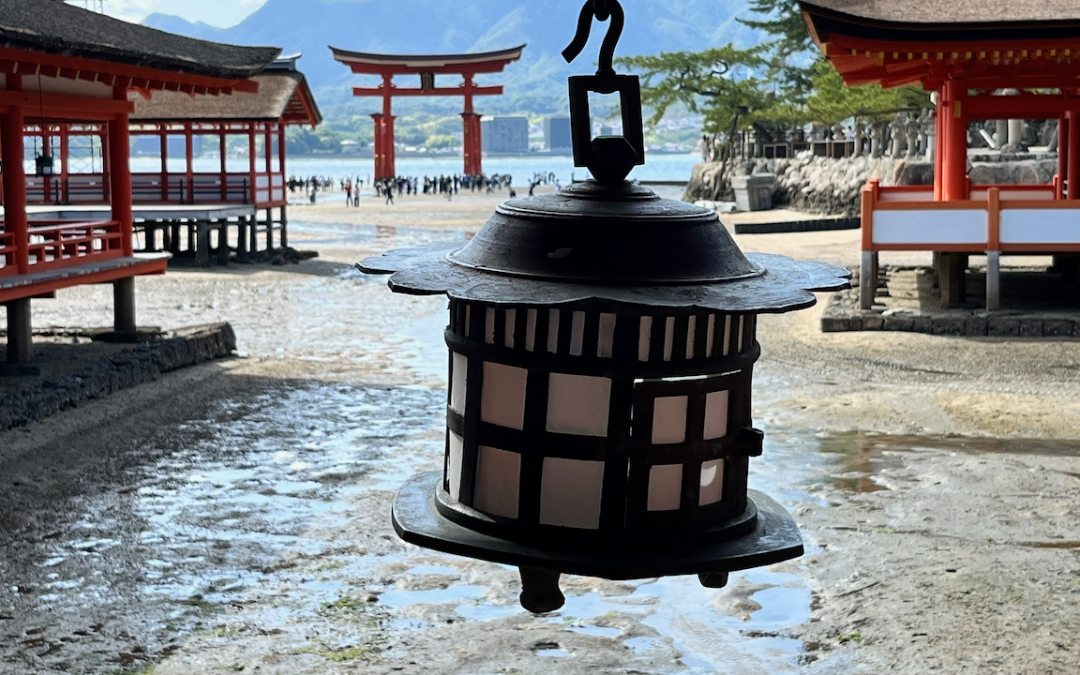
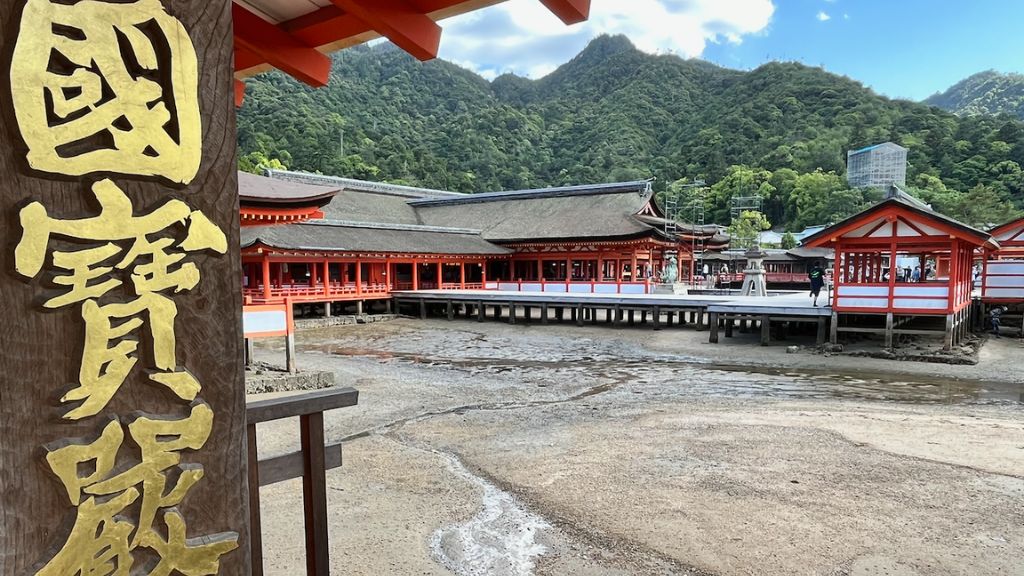
Known worldwide for its immense torii gate rising from the sea, this Shinto shrine was originally built in the 6th century and took its current form under the influence of Taira no Kiyomori (1118–1181).
For centuries, the island was considered so sacred that births and deaths were forbidden, in order to preserve its spiritual purity.
⛩️ The Great Torii of Itsukushima
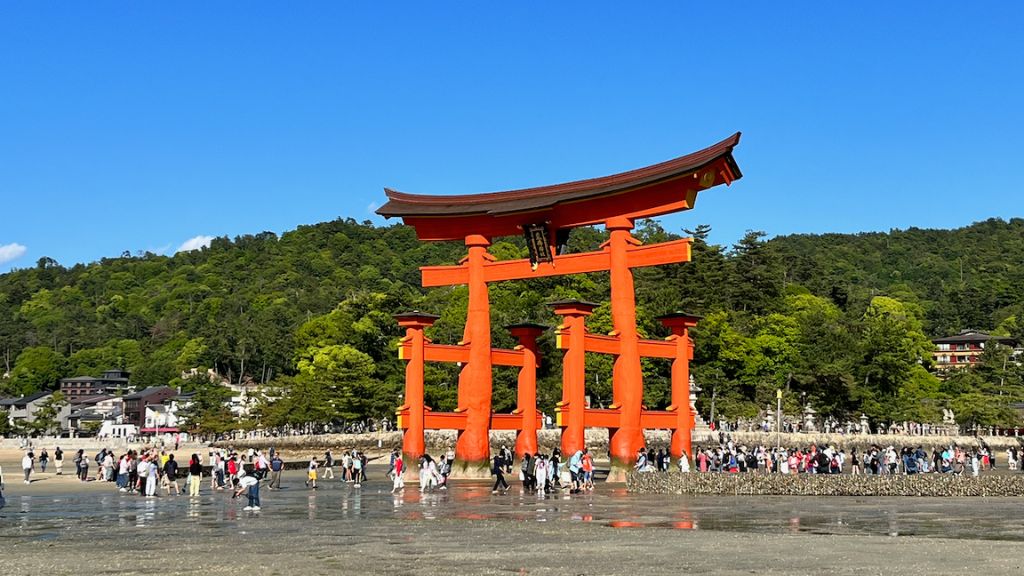
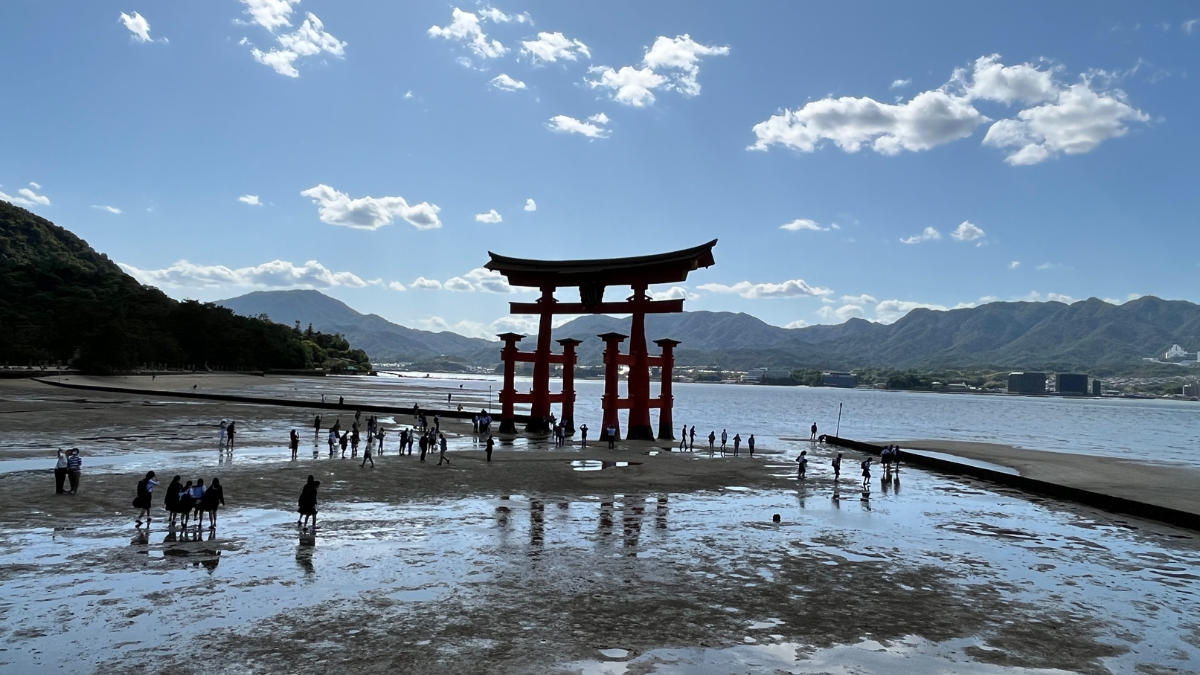
The island’s undisputed icon, the Great Torii offers two completely different experiences depending on the tide:
High tide: The gate appears to float on water—mystical and almost surreal.
Low tide: You can walk right up to its base and admire its monumental scale (and even spot tiny shells clinging to its pillars).
If you have the time, stay for sunset. The sky fills with shades of orange and pink, blending with the shimmering sea and the vermilion reflection of the torii—a truly unforgettable sight.
Equally magical is watching the tide slowly rise while standing on the shrine’s wooden walkways, with the gentle sensation of floating above the water.
The Gods’ Messengers… on Four Legs
In Shinto belief, deer are sacred animals believed to act as messengers between humans and the gods.
They may look adorable—but don’t be fooled by their innocent eyes! After generations of interacting with visitors, they’ve learned that they rule the island… and won’t hesitate to check your pockets for snacks.
Itsukushima Shrine: A Masterpiece of Architecture
Listed as a UNESCO World Heritage Site, this Shinto shrine is dedicated to the three daughters of Susanoo-no-Mikoto, the god of storms.
Why is it built on water? To respect the sacred nature of the island, the shrine was constructed on stilts within the tidal zone—allowing worshippers to “float” above the divine ground without setting foot on it.
The floating torii: Rather than being anchored deep into the seabed, it stands purely under its own weight (around 60 tons), a true feat of traditional engineering.
Mount Misen: The Spiritual Heights
While the lower part of the island is deeply rooted in Shinto, the upper slopes tell a different story—one of Buddhism.
In 806, the monk Kukai (also known as Kobo Daishi), founder of the Shingon school, established a spiritual training center here. Near the summit of Mount Misen burns an eternal flame, said to have been alive for over 1,200 years and this flame was used to ignite the Flame of Peace in Hiroshima’s Peace Memorial Park.
If you want to know more, do not hesitate to listen the dedicated episode on Liomugai’s podcast :
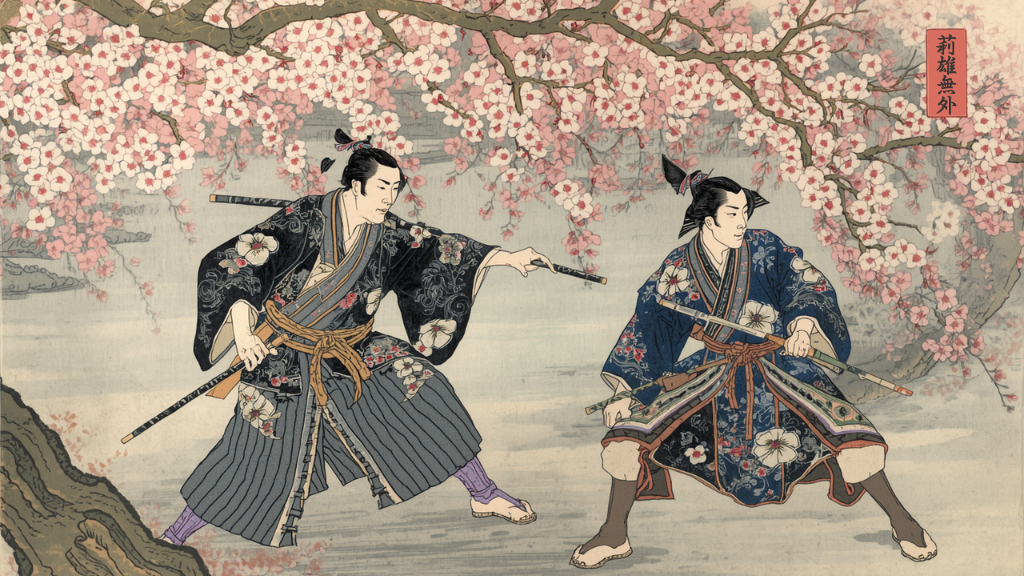
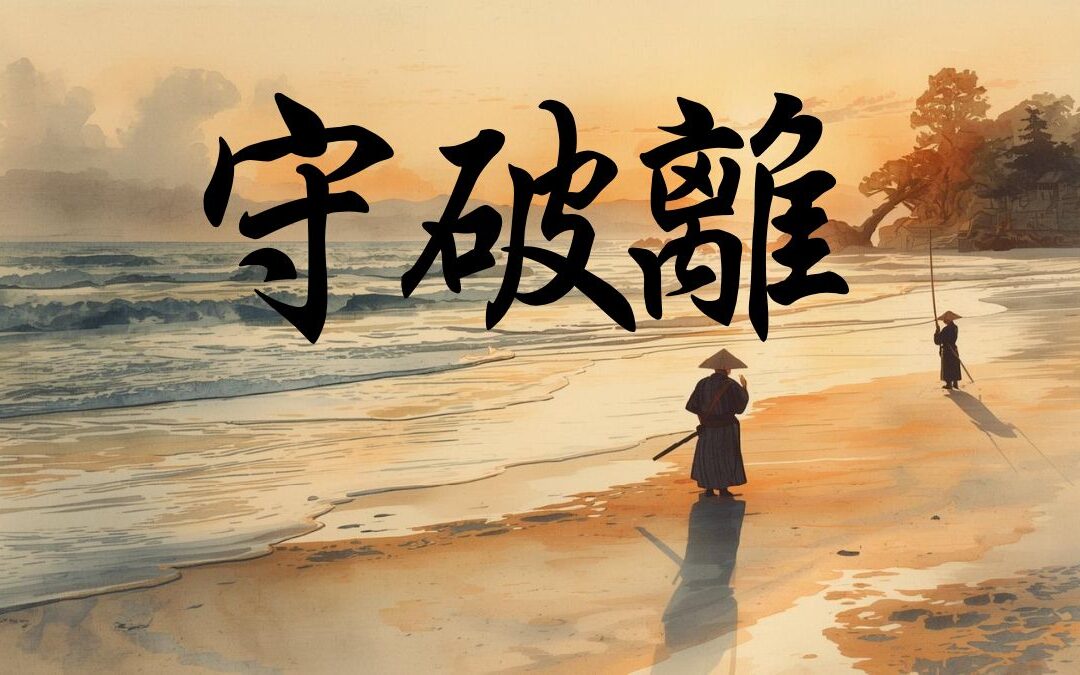
In the world of Japanese martial arts—and particularly within the discipline of Iaidō—mastery is not a destination to be reached, but a lifelong process of refinement. It is an ongoing evolution of body, mind, and spirit. This journey is elegantly expressed through the timeless concept of Shu–Ha–Ri (守破離).
Whether you are just beginning to tie your hakama or you have spent decades polishing your nukitsuke, understanding these three stages of learning is essential to genuine progress. Shu–Ha–Ri offers more than a pedagogical framework; it is a mirror held up to the practitioner’s inner development.
Originally articulated in the teachings of the legendary tea master Sen no Rikyū, and later embraced by generations of swordsmen, Shu–Ha–Ri describes the transformation of a student—from one who faithfully imitates the teacher, to one who ultimately embodies the art itself.
Phase 1 : Shu (守): Protect and Obey
The first stage, Shu, literally means “to protect” or “to preserve.” At this level, the student’s primary responsibility is to safeguard the tradition by receiving it intact.
The Mindset: Absolute obedience—not blind submission, but humble receptivity. Shu is about protecting the purity of the teachings from the intrusion of ego, impatience, and premature interpretation.
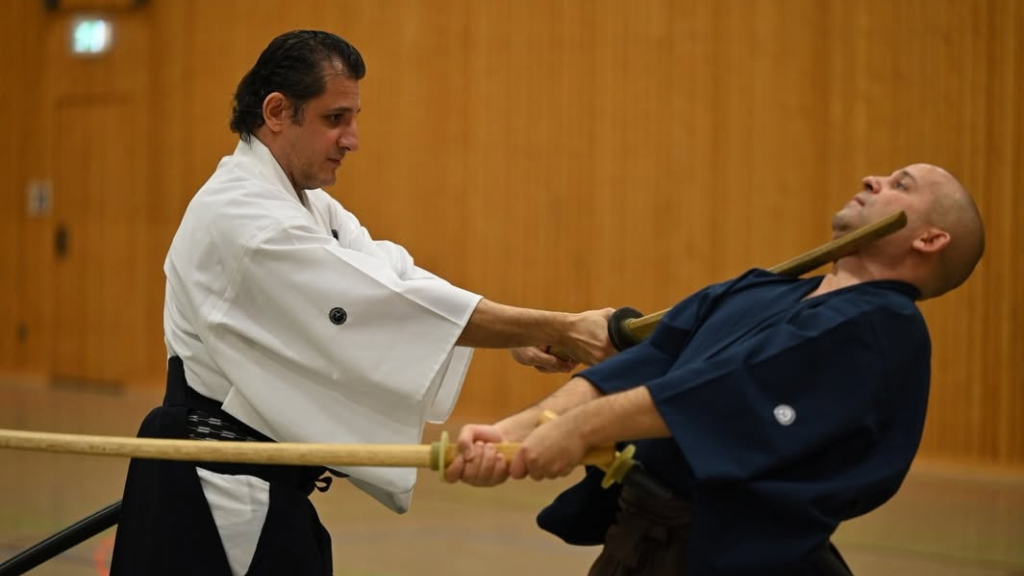
In Practice: In a Mugai-ryū dōjō, Shu means copying the sensei precisely. You do not ask, “Could I place my foot slightly differently?” You mirror the angle of the blade, the depth of the stance, the rhythm of the breath, and even the silence between movements.
The Goal: To build an unshakable foundation. Repetition engrains the forms into the body until technique becomes instinctive. You are learning the alphabet of the sword—without which no meaningful expression is possible.
In a nutshell: You cannot transcend the rules until you have fully internalized them.
Phase 2 : Ha (破): Detach and Break
The second stage, Ha, means “to break” or “to detach.” It is often the most misunderstood—and the most perilous—phase of the journey.
The Mindset: Inquiry and discernment. After years of disciplined practice, the student begins to perceive the why behind the how. Curiosity replaces imitation, but respect remains.
In Practice: You start to explore the underlying principles of Battōdō and how they adapt to different bodies, distances, or combative realities. You may study other ryūha, exchange insights with fellow practitioners, or observe how the same truth manifests through different forms.
The Goal: Integration. Ha is not about rejecting the teachings of Shu, but stress-testing them. You “break” the mold to confirm that the essence of the technique remains intact when adapted. The form loosens, but the principles endure.
Shu Ha Ri concept can be found in all martial arts and not only …
Phase 3 : Ri (離): Transcend and Depart
The final stage, Ri, means “to leave” or “to separate.” This is the realm of the master, where art and practitioner are no longer distinct.
The Mindset: Naturalness. Action arises without deliberation. In Zen terms, this is Mushin—no-mind. There is no hesitation, no calculation, no inner commentary.
In Practice: The practitioner no longer performs Mugai-ryū—they are Mugai-ryū. Movement is spontaneous, fluid, and perfectly attuned to the moment. The rigid instructions of the past dissolve into creative freedom grounded in deep understanding.
The Goal: Harmony. The sword becomes an extension of the self, and the self moves in accord with the universe. Rules are no longer followed consciously; they are fulfilled effortlessly.
Shu Ha Ri modern life
This cycle extends far beyond the dōjō. For a business professional, the parallels are clear: You first learn industry standards and best practices (Shu), then innovate and adapt them to your strengths (Ha), and eventually lead with an intuitive clarity that appears almost magical to outsiders (Ri).
In martial arts, Shu–Ha–Ri protects us from stagnation. It teaches the beginner patience, the advanced student discernment, and the master humility. Above all, it reminds us that the path of the samurai is not linear—it is spiral. We return to the basics again and again, each time with deeper understanding, broader perspective, and a quieter ego.
Mastery, in Iaidō as in life, is not about arriving somewhere. It is about becoming.