
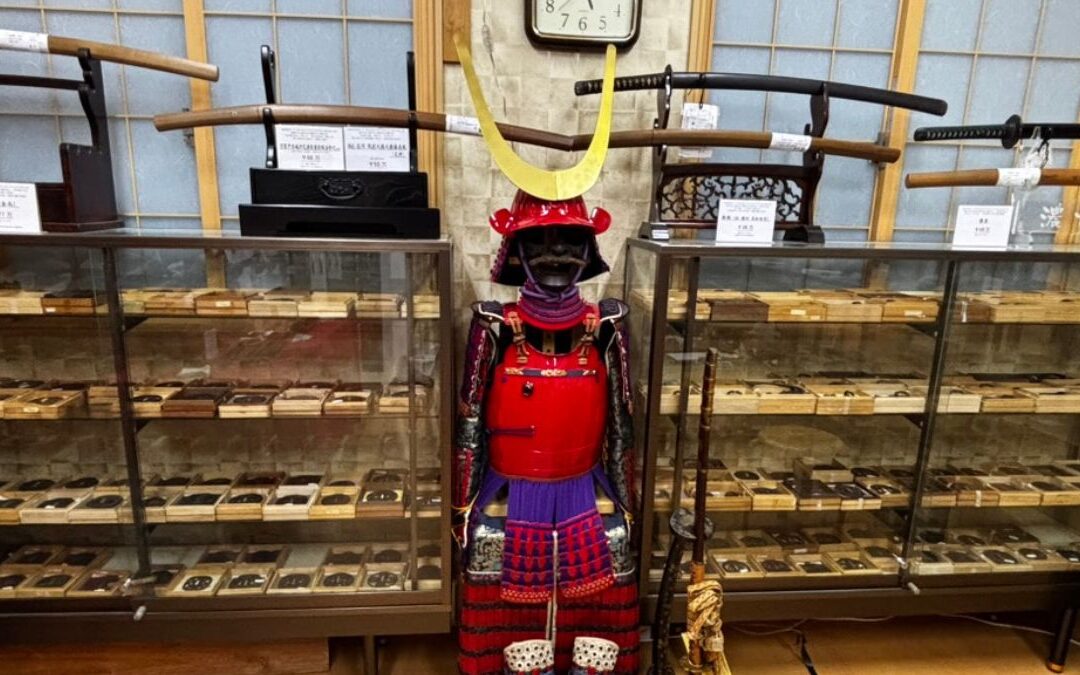
These past days were very busy in term of training, anyway I found the time to go to Seki City considered as “City of Blades.”
For over 800 years, this small city located in Gifu Prefecture has been the heart of Japanese swordsmanship.
The history of Seki as a sword-making hub began in the Kamakura Period (1185–1333). Master swordsmiths were drawn to the region because it possessed the “perfect trinity” for blade manufacturing:
- High-quality iron sand: Essential for creating the raw steel (tamahagane).
- Pine charcoal: Needed to reach the extreme temperatures required for forging.
- Pure water: Provided by the Nagara and Itadori Rivers for the crucial tempering process.
The most famous figure in Seki’s early history was Motoshige, a smith who moved to the area and established the techniques that would make Seki swords famous for being “unbreakable, unbendable, and incredibly sharp.”
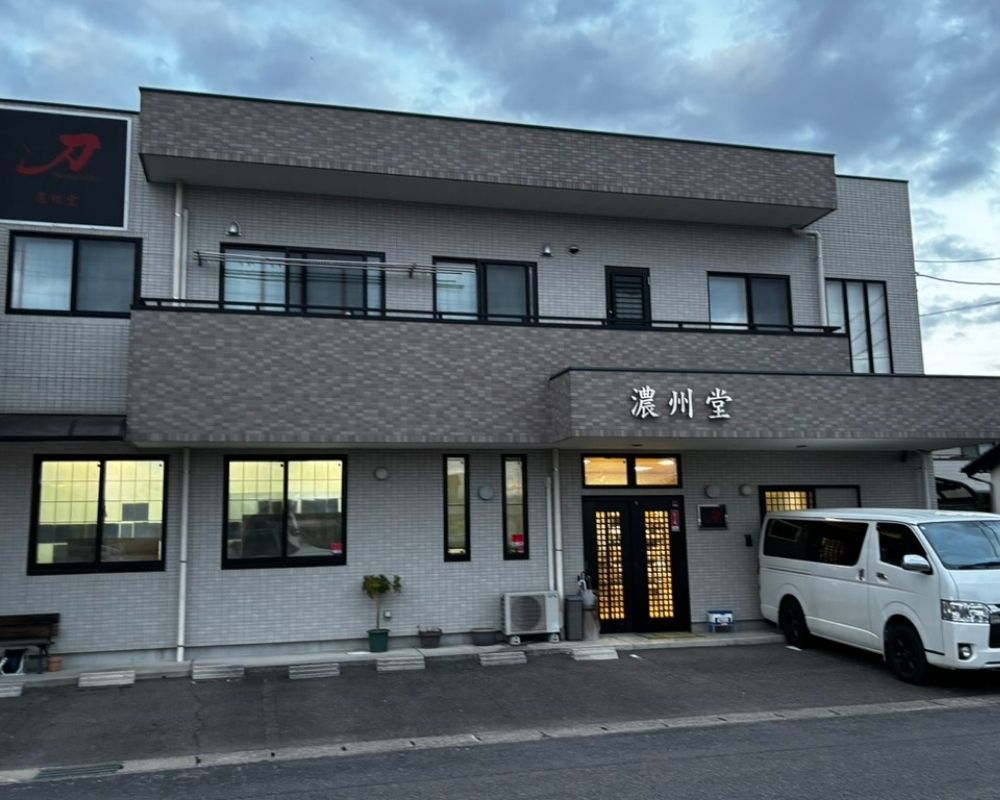
Nosyudo
I’ve been warmly welcomed by Nosyudo CEO Keiji Igarashi who is continuing the lineag of his familiy was the former president of Nosyudo.
Keiji-san was happy to share with me his passion and after some tea we spent some hours visiting the plant, discussing with the opearor and for m discovering the high complexity of blade manufacturing and the passion of the people working there.
Located close to the City Center, Nosyudo is very easy to access and has as well a parking ion front of their main gate.
Exact address : 1-chōme-11-14 Sannōdōri, Seki, Gifu 501-3252, Japan
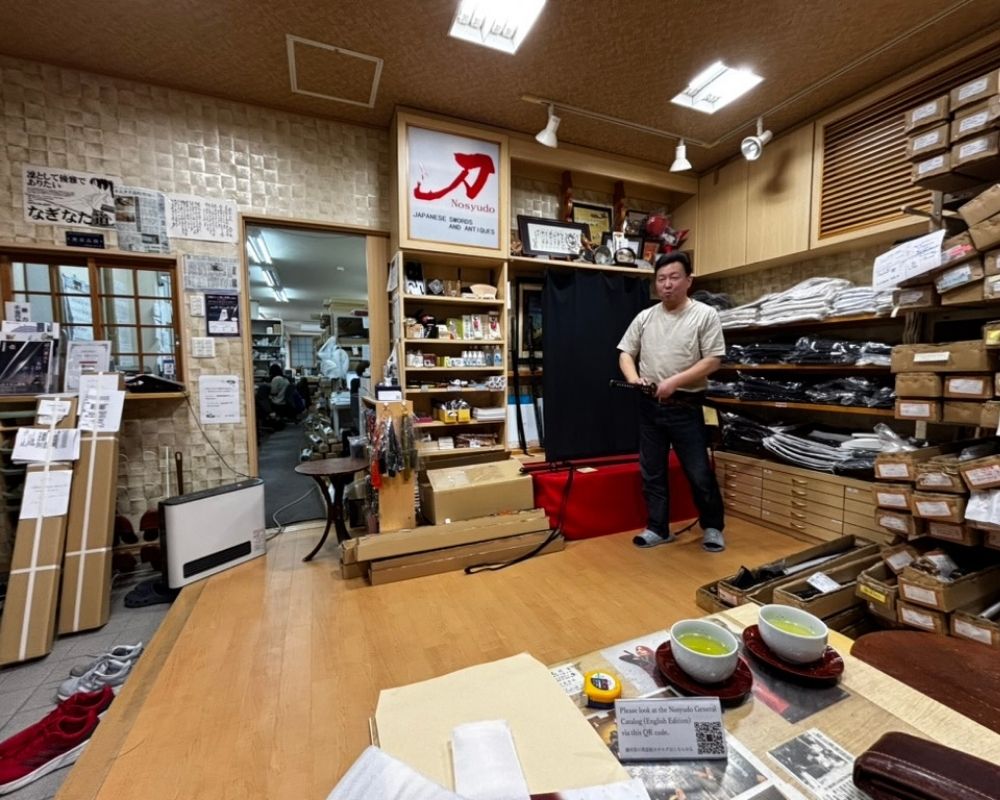
Inside the plant
My visit to the Nosyudo plant in Seki City was more than just a tour; it was a front-row seat to the birth of a masterpiece.
As a brand that supplies martial artists across the globe, seeing the scale and precision of their operation is a humbling experience for any practitioner.
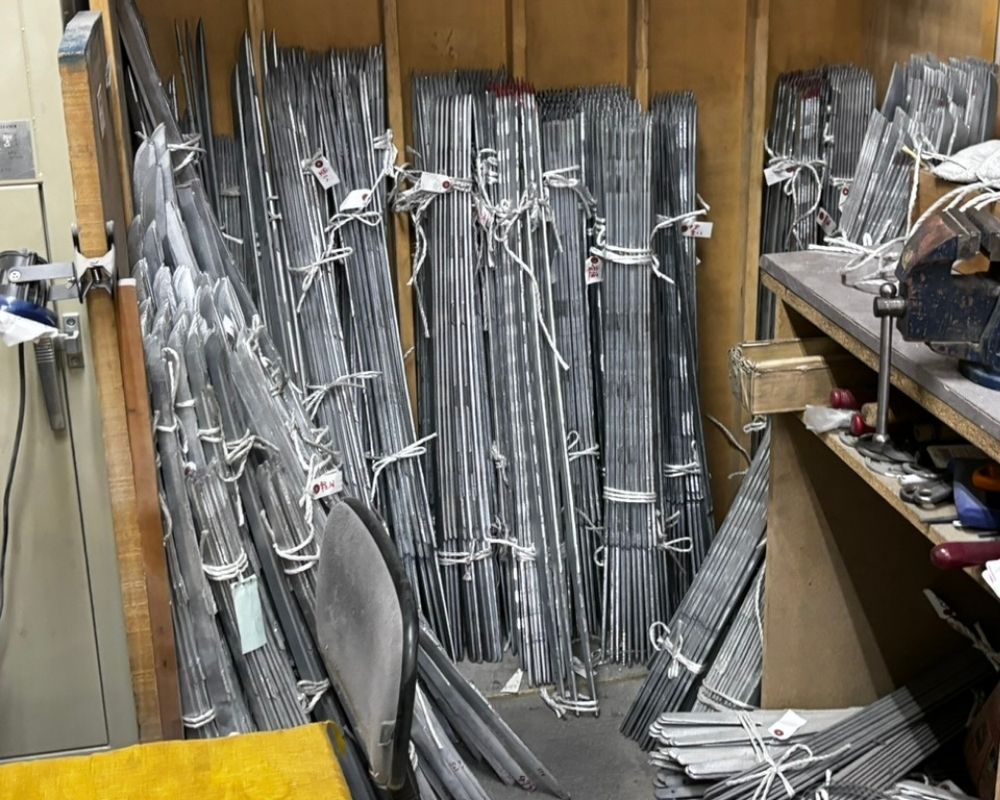
1. The Blade Stock: A Forest of Steel
The journey begins in the storage area, and the sight is nothing short of breathtaking. Rows upon rows of blade blanks—thousands of them—wait to be transformed. Knowing that these very blades will soon be shipped to dojos from Germany to Australia gives you a true sense of Nosyudo’s worldwide impact on the martial arts community.
2. Refining the Soul: Polishing and Engraving
Just steps away from the stock, the atmosphere shifts to intense focus. This is where the raw blade begins to take its final form.
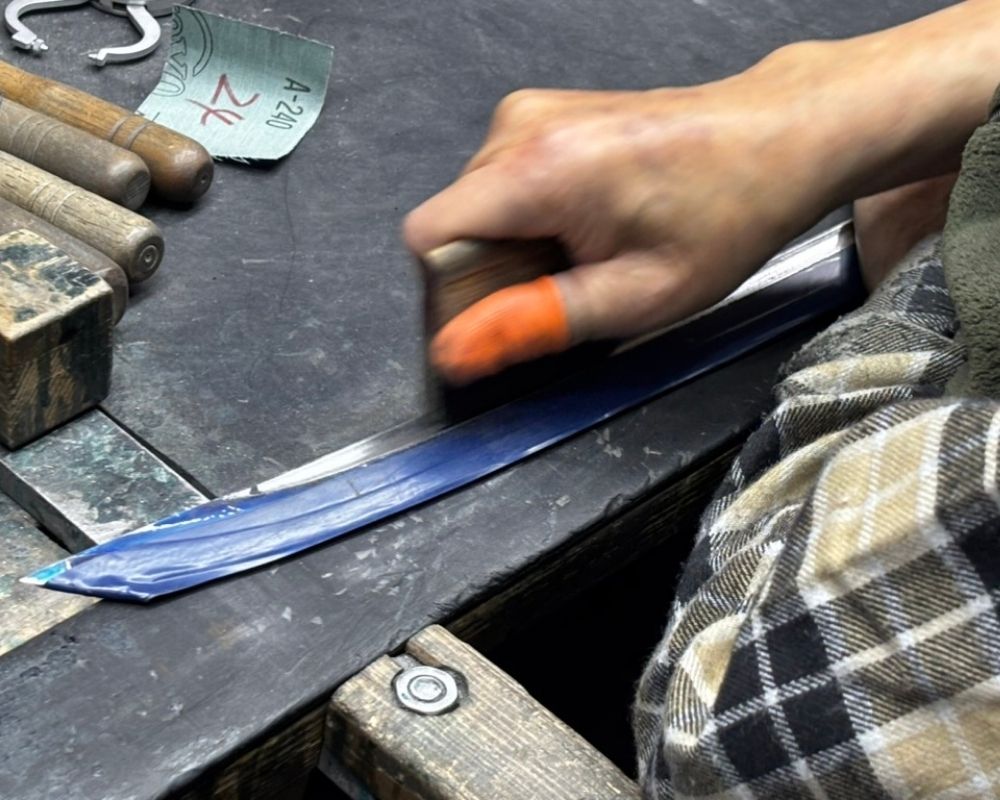
- Polishing: The rhythmic sound of steel on stone as the blade’s surface is refined to a mirror finish.
- Bo-Hi Manufacturing: Watching the master craftsmen carve the Bo-Hi (groove) is mesmerizing. It is a delicate balance of removing weight while maintaining the structural integrity and the “whistle” (tachikaze) of the sword.
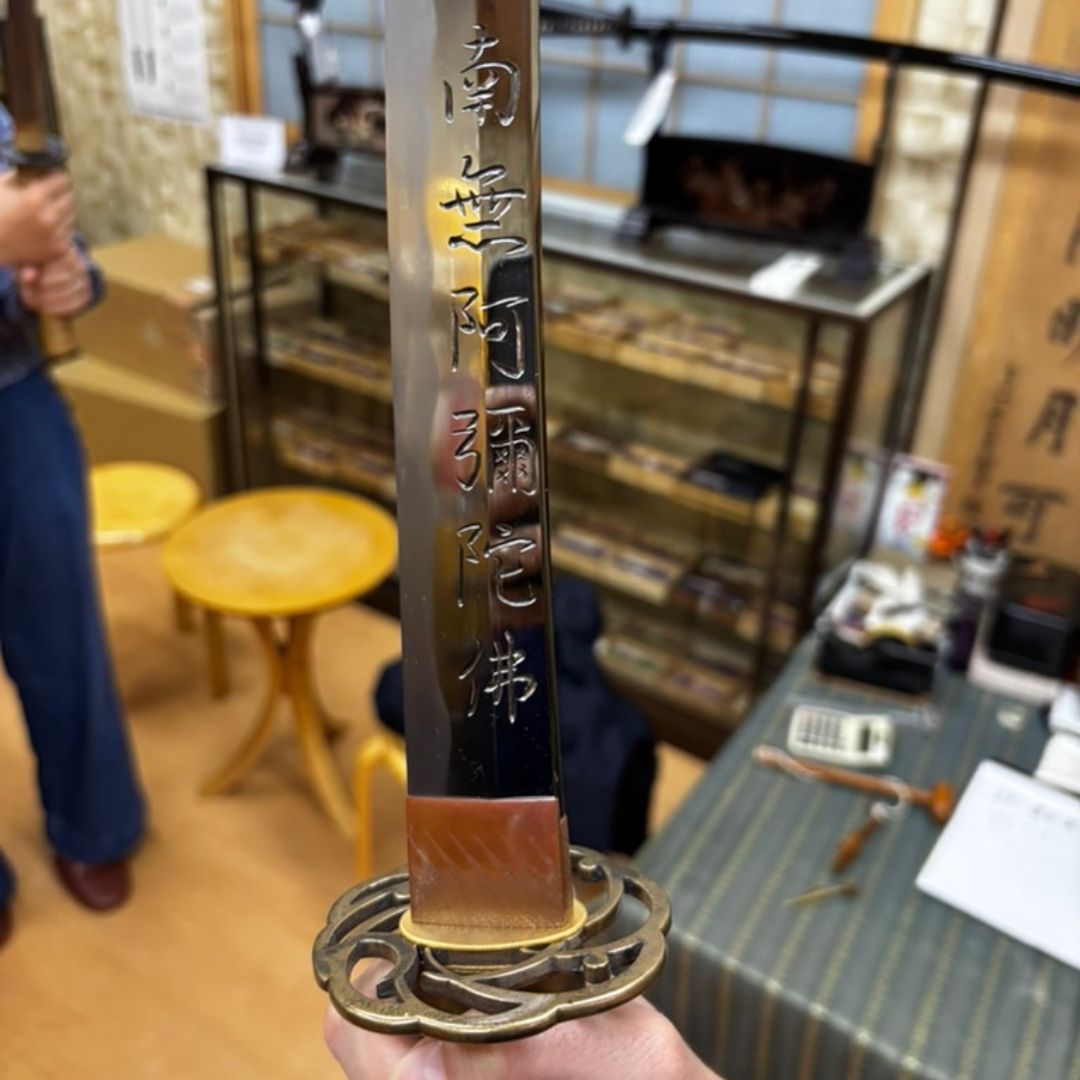
- Engraving: For those seeking a personal touch, the intricate hand-engraving of kanji or symbols is done here with incredible steady-handedness.
3. The Perfect Fit: Habaki and Tsuka
Next, we move to the fitting stage. The Habaki (blade collar) is custom-fitted to the blade. This is a critical step; if the Habaki isn’t perfect, the sword won’t sit correctly in the scabbard.
Following this is the Tsuka (handle) preparation. I was absolutely amazed by the Tsukamaki (handle wrapping). The precision required to wrap the silk or cotton over the rayskin (samegawa) is a true art form. Every diamond shape must be perfectly symmetrical, and the tension must be consistent to ensure a safe and comfortable grip during practice.
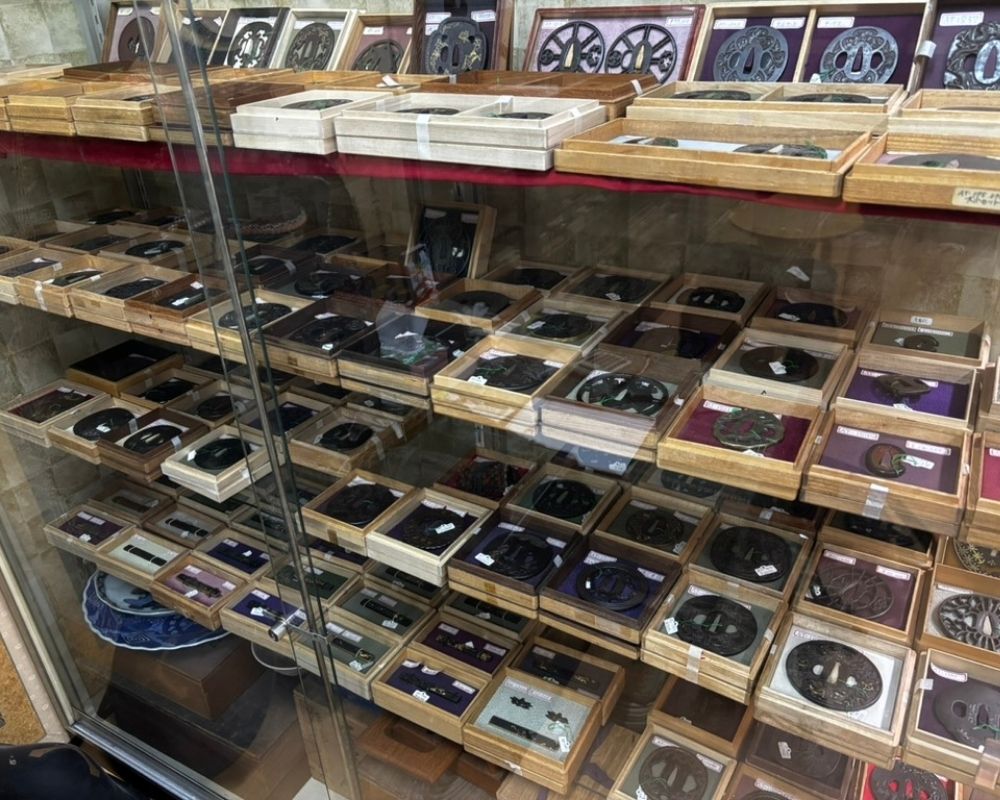
4. The Final Assembly: Tsuba and Mekugi
The final stages are where the sword truly becomes a unified tool:
Mekugi Placement: Finally, the Mekugi (bamboo peg) is placed. This tiny piece of wood is the only thing holding the blade in the handle—the last, most important step in the Iaito manufacturing process, ensuring the safety of the practitioner.
Tsuba Adjustment: The handguard is meticulously adjusted to ensure there is zero “rattle” or movement.
The Final Lock: The most vital step is the drilling of the Mekugi-ana (peg hole).
My Take away from Nosyudo
I had fantastic time and took passionated people very engaged and in their work willing to share their passion and I would like to thank the operator to take some time to fix the katana of my grandfather we discovered in the garage after his death.
Qualitative swords : I was impressed by the quality of the swords and very interested in the different shapes of the Tsuka they are proposing.
The swing is super smooth even you are using an heavier sword compared to the light ones proposed by our brand.
My next sword will be certainly a Nosyudo one….