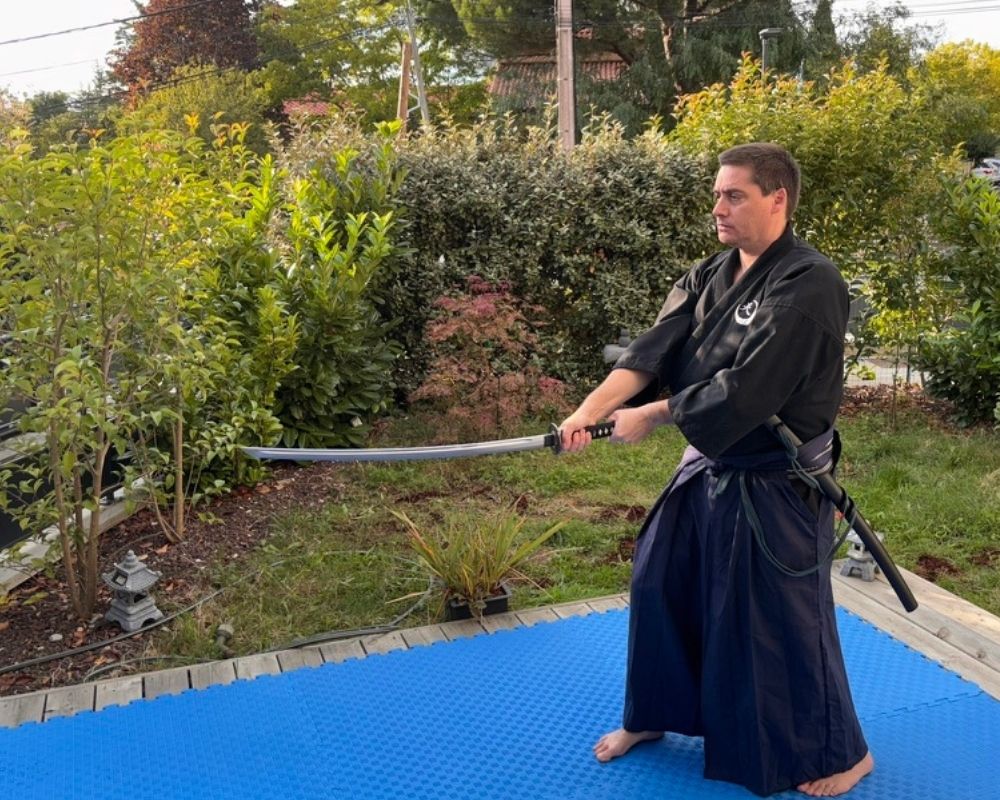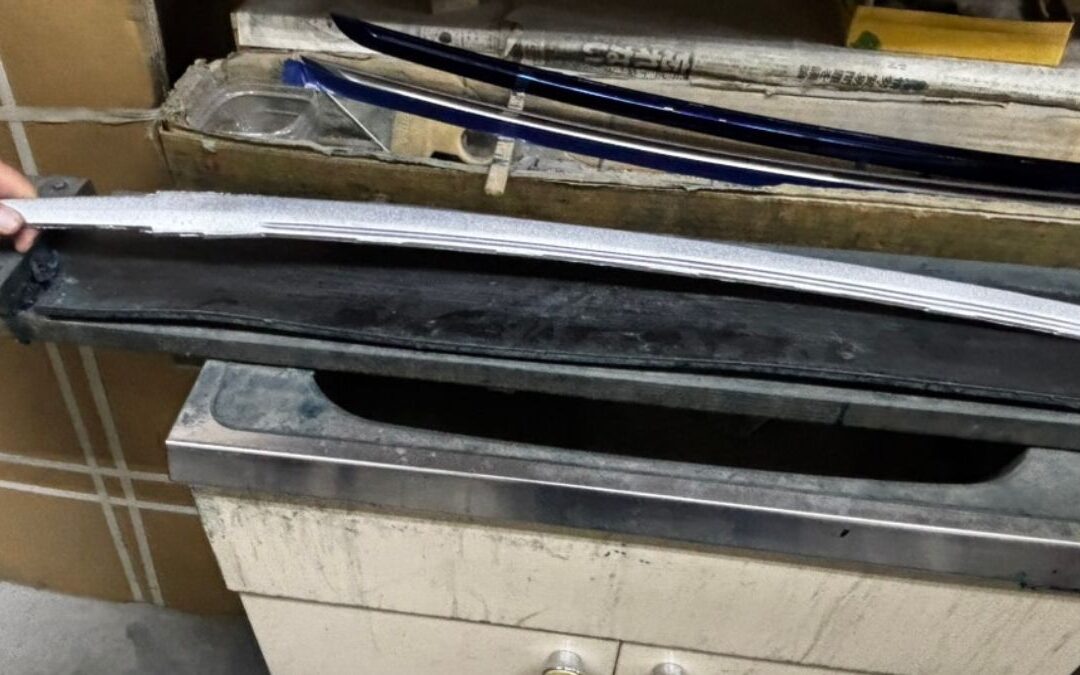
Buying your first iaito is always a puzzle and as most of you I made the common mistakes.
The most important is to select the right length.
The First-Time Buyer’s Puzzle: A Warning on Blade Measurements
Buying your first Iaito often feels like solving a complex puzzle. Like many of you, I navigated this process alone and made a classic mistake that I want to help you avoid.
The most critical decision you will make is selecting the correct blade length. However, there is a hidden trap when ordering online: not all measurements are created equal.
WARNING: Know Where the Measurement Starts
If you are ordering your sword from the internet, you must verify exactly how the site measures the length of the blade.
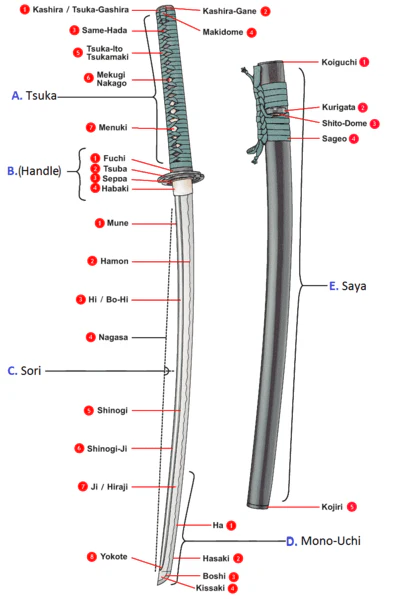
- The Japanese Standard: Traditional manufacturers in Japan (like Nosyudo in Seki) and experienced practitioners always measure the blade length from the tip (Kissaki) to the Habaki (the metal collar).
- The Western Variation: Some European or American websites measure from the tip all the way to the Tsuba (the handguard).
My “Shorter” Story
Imagine my disappointment when I received my very first Iaito only to find it was significantly shorter than I had anticipated. Because the site I used included the Habaki in the total length, the actual “cutting” surface of the blade was much smaller than I needed for my height.
To ensure your blade fits your body and your iaido practice perfectly, always confirm that you are measuring from the tip to the Habaki.
Don’t let your first investment become a “short” story like mine!
You said Shaku ?
In Japan, sword length is measured in Shaku, Sun, and Bu.
- 1 Shaku ≈ 30.3 cm (approx. 1 foot)
- 1 Sun ≈ 3.03 cm
- 1 Bu ≈ 0.3 cm
When you visit a workshop like Nosyudo in Seki, you will see blades categorized by these units. Most practitioners will fall between 2.30 and 2.55 Shaku.
As your Iaito is an extension of your body, if the blade is too short, your techniques may lack grace and reach.
If it is too long, you risk developing poor form or even injuring your shoulder during Saya-biki (drawing and unsheathing).
Some tips to define the right length
The most common way to determine your blade length is based on your height. While individual arm length varies, this chart serves as the industry standard used by master smiths in Seki and this is the official used by Nosyudo I visited some weeks ago.
| Men’s Height (cm) | Blade Length (in Shaku) | Women’s Height (cm) |
| 145 – 150 cm | 2,15 – 2,20 | 150 – 155 cm |
| 150 – 155 cm | 2,20 – 2,25 | 155 – 160 cm |
| 155 – 160 cm | 2,25 – 2,30 | 160 – 165 cm |
| 160 – 165 cm | 2,30 – 2,35 | 165 – 170 cm |
| 165 – 170 cm | 2,35 – 2,40 | 170 – 175 cm |
| 170 – 175 cm | 2,40 – 2,45 | 165 – 170 cm |
| 175 – 180 cm | 2,45 – 2,50 | 180 – 185 cm |
| 180 – 185 cm | 2,50 – 2,65 |
Beyond the Chart: Adjusting for Style and Real Steel
While measurement charts provide a solid baseline, they are merely a guide. To find your true length, you must consider the specific demands of your practice and the physical reality of the blade you are wielding.
The Gap Between Iaito and Shinken
Take my own experience as an example. Based on my height (1.80m), a standard chart suggests a blade length of 2.50 Shaku. However, practical application tells a different story:
For Mugai-ryu Iaihyodo (居合兵道): Our style is defined by direct, close-range techniques that embody the “One Draw, One Cut” principle. To maintain the speed and explosive precision required for these movements, I transitioned to a 2.40 Shaku—the same length I use for my Shinken.
For Battodo (Cutting Practice): I found that a 2.45 Shaku blade was more effective. In actual sword manufacturing, Shinken (live blades) often feel and handle differently than their Iaito counterparts; they are tools of weight and gravity, often requiring a slightly shorter reach for better control during the cut.
The Ultimate Rule: Consult Your Sensei
The most important advice I can give is this: Your Sensei is your best resource.
Charts cannot see your posture, your arm span, or the specific constraints of your style.
Your teacher understands the mechanics of your movement and the traditions of your school.
Before you click “buy” on that beautiful polished blade, have a conversation with your Sensei.
She/he will ensure that your Iaito is not just a beautiful object, but a functional tool for your path in the martial arts.