Whenever I visit my Japanese family’s hometown near Mount Fuji, there’s one place I always try to go back to. It’s not a big city, not a famous temple, and not one of the crowded viewpoints of Fuji.
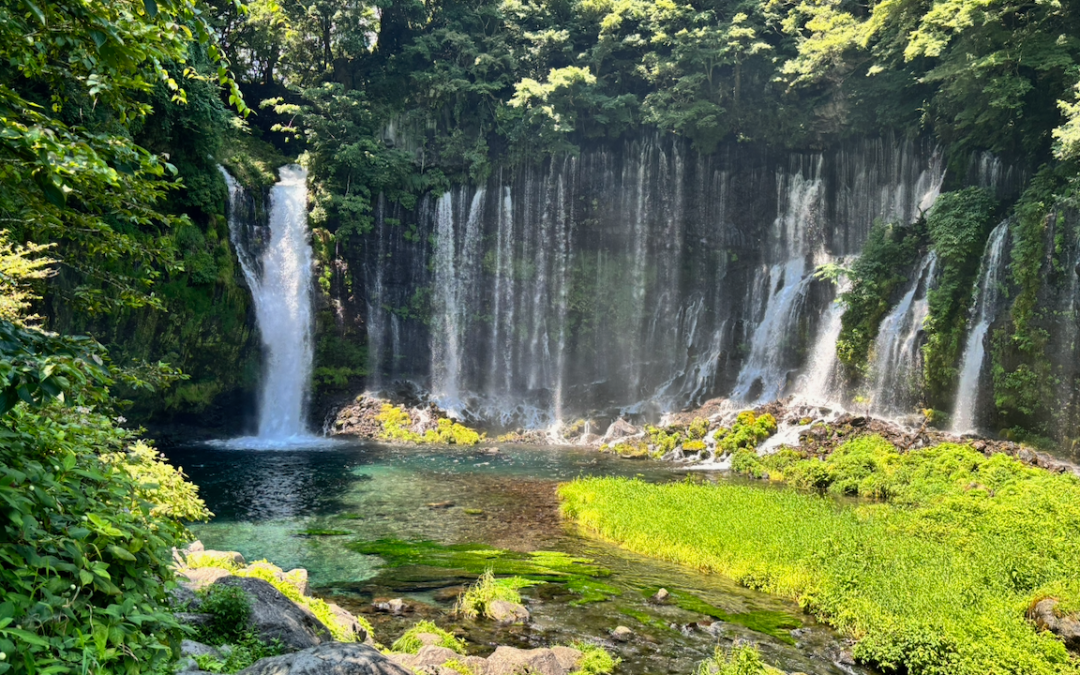
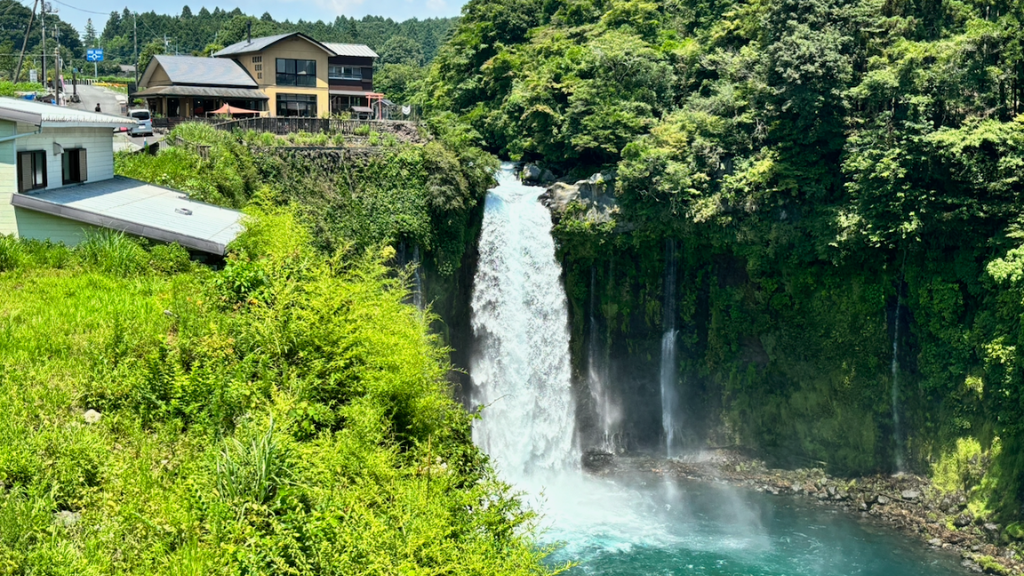
It’s a quiet waterfall hidden in the forest called Shiraito Falls.
The first time my family took me there, I didn’t really know what to expect. Japan has many waterfalls, after all. But as we walked down the forest path and I heard the sound of water echoing through the trees, I realized this place felt different.
Shiraito Falls isn’t dramatic or overwhelming. Instead, it’s peaceful, delicate, and strangely mesmerizing—the kind of place where you end up standing still for a long time without even noticing.
The Short Walk to the Falls
Getting to Shiraito Falls is part of the experience.
From the parking area, you follow a small path that slowly winds downhill through the trees. It’s not a long walk, but the atmosphere gradually changes as you go.
The air becomes cooler. The forest feels thicker. And the sound of water begins to grow louder with every step.
My family always walks slowly here, pointing out little things along the way—moss growing on rocks, small streams crossing the path, and sometimes the distant shape of Mount Fuji visible between the trees.
Then suddenly the path opens up.
And there it is.
Waterfall Made of “White Threads”
The first time you see Shiraito Falls, the shape of it might surprise you.
Most waterfalls crash down from a single point. This one doesn’t. Instead, water flows out from hundreds of small openings along a curved cliff face.
The streams fall gently down the dark rock, forming thin white lines across the entire wall. From a distance, it really does look like hundreds of threads hanging in the air.
That’s exactly where the name comes from—“Shiraito” means “white threads.”
The waterfall stretches about 150 meters wide, but it’s not especially tall. The beauty isn’t in its height or power. It’s in the delicate way the water flows.
Every stream moves slightly differently, creating a constantly shifting pattern.
I remember standing there the first time and thinking it almost looked like nature was quietly weaving something.
Water From Mount Fuji
Another thing that makes Shiraito Falls special is where the water comes from.
The water actually starts its journey on Mount Fuji. Rain and snow on the mountain slowly seep into the volcanic layers of rock and soil. Over time—sometimes years—it travels underground before finally emerging from the cliff at Shiraito.
So when you’re standing there watching the water fall, you’re really seeing water that has been slowly filtered through the mountain itself.
It’s incredibly clear and pure. When the sunlight hits the mist rising from the basin, you can sometimes see faint rainbows forming in the air.
In Shinto, the traditional belief system of Japan, natural places like mountains, forests, rivers, and waterfalls are believed to be inhabited by spiritual presences called kami.
These aren’t “gods” in the way many Western religions think of them. They’re more like sacred energies or spirits connected to the natural world.
Waterfalls are especially meaningful because flowing water represents purification.
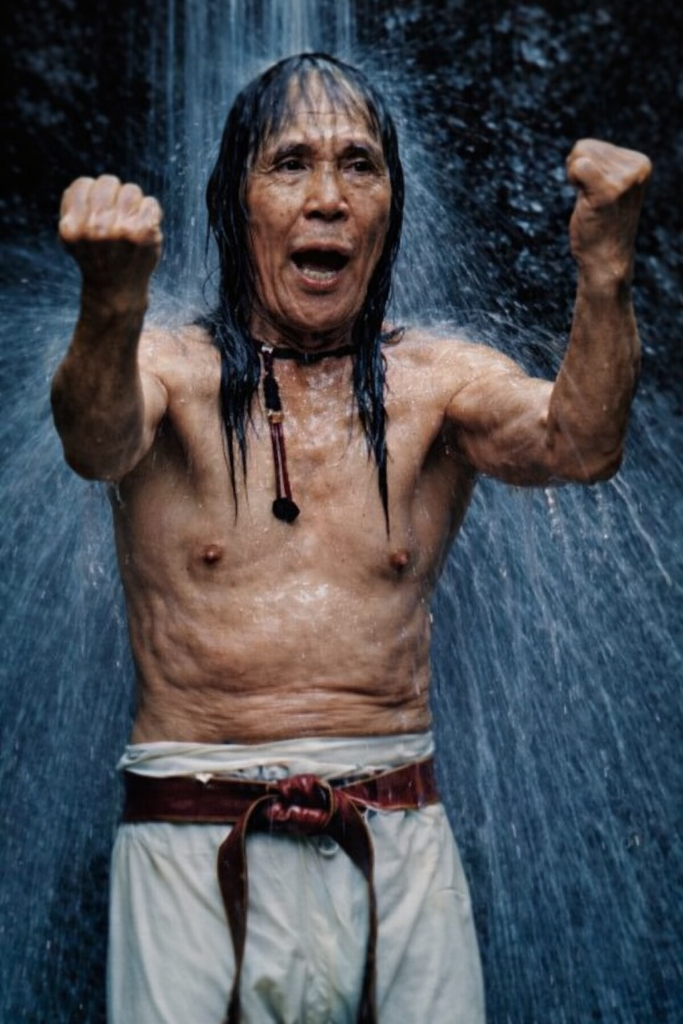
For centuries, people practiced a ritual called misogi, where they stood under cold waterfalls or in rivers to cleanse their body and spirit. The rushing water symbolically washes away impurities.
Shiraito Falls has long been connected to spiritual practices linked to Mount Fuji. Pilgrims and mountain ascetics would visit places like this as part of their training before climbing the sacred mountain.
Whenever friends ask me what they should see around Mount Fuji, they usually expect recommendations for famous viewpoints or big tourist attractions.
I always recommend them to go to walk around the Tanuki Lake and to visit Shiraito Falls.
In my Japanese family, the falls are a place of deep significance, visited to honor life’s most important moments. These pilgrimages are more than just trips; they are key milestones that connect our generations. My own martial path—from my teenage years in Goju-ryu to my current role as a Uechi-ryu teacher—is deeply tied to this imagery. I often recall the legendary Gogen Yamaguchi practicing misogi under the cascade, a powerful symbol of the discipline I strive to follow.
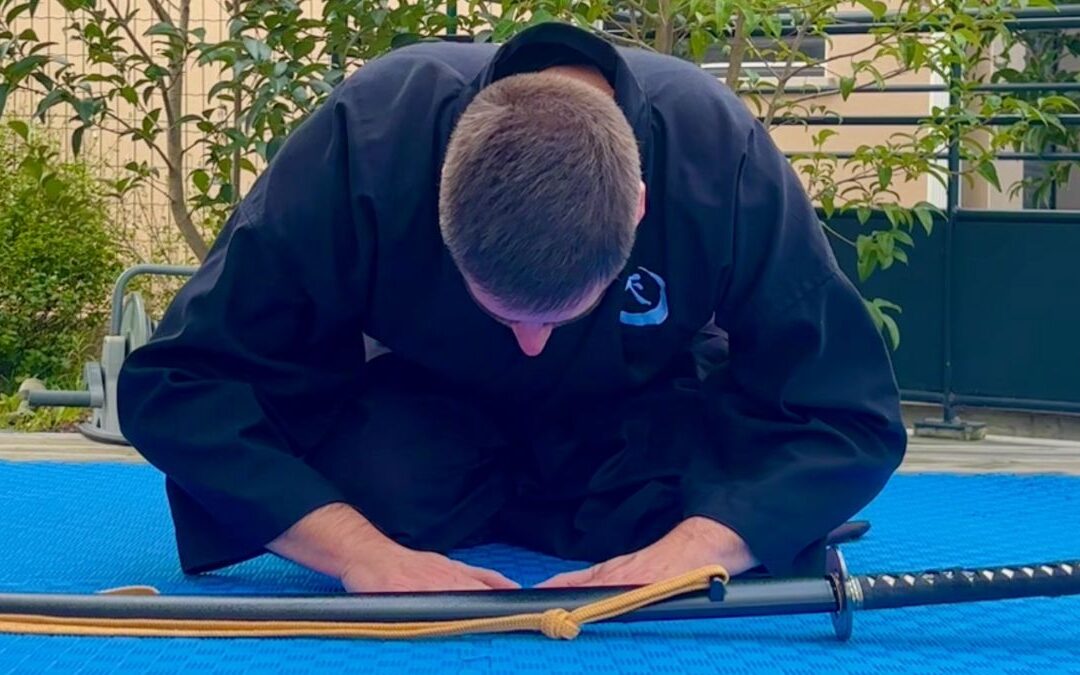
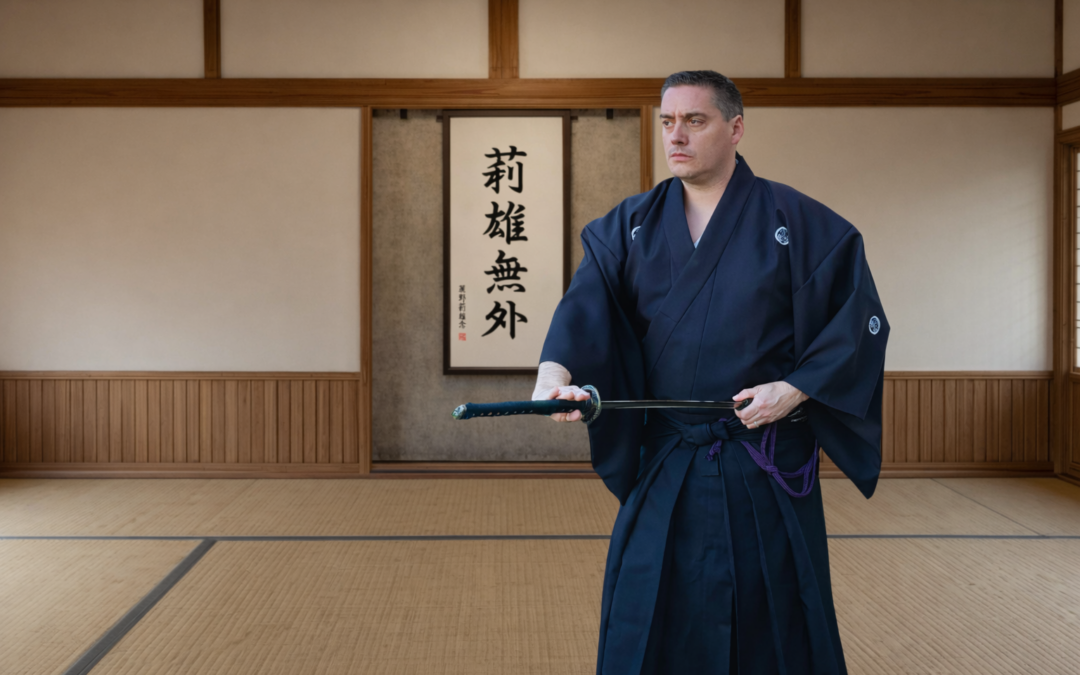
In the modern world, the act of bowing to a weapon can appear—at least to the uninitiated—as a curious form of reverence, even idolatry. Yet for a practitioner of Mugai-ryū or Battōdō, the ritual of Reigyō (礼行, etiquette in action) is not symbolic theater. It is one of the most practical and transformative elements of training.
When we kneel before our iaitō or shinken, we are not venerating an object. We are directing our attention inward, executing a deliberate strike against the most dangerous adversary we will ever encounter: the ego.
What is Reigyo?
In Japanese martial traditions, there is a well-known saying: “Budō begins and ends with rei.”
Reigyō is often translated simply as “etiquette,” but this rendering barely scratches the surface. Reigyō is the embodied expression of respect, gratitude, awareness, and restraint. It is etiquette made physical—conduct that shapes the mind as much as the body.
In the context of sword practice, Reigyō is expressed through rituals such as:
Tō-rei — the formal bow to the sword
Shinzen-ni-rei — the bow to the shrine or the front of the dōjō
Otaga ni rei — the bow to one’s training partners
These are not merely “rules of the dōjō.” Psychologically, they serve a precise function: they create a liminal space—a threshold between the disorder of daily life and the focused, potentially lethal discipline of the sword. Crossing this threshold prepares the practitioner to train with clarity, humility, and intent.
Why Bow to a Piece of Steel?
The sword is a paradox. Historically, it is an instrument of death. Philosophically, within many koryū traditions, it is a means of cutting away illusion—most notably one’s own. We bow to the sword for three essential reasons.
1. Acknowledging the Danger
The instant you stop respecting the blade is the instant you invite injury. Bowing is an explicit acknowledgment of danger—an admission that you are handling something capable of taking life.
This act cultivates mindfulness. It anchors you in the present moment. One cannot bow sincerely while the mind is wandering through errands, emails, or distractions. The bow demands presence.
2. Gratitude for the Path
The sword is an uncompromising teacher. It offers immediate and honest feedback: a flawed grip alters the tachikaze; a distracted mind causes the kata to unravel.
To bow is to express gratitude for this ruthless clarity. It is an acknowledgment that the practice itself—through success and failure alike—is shaping the practitioner.
3. Connection to Lineage
Mugai-ryū was founded in the late 17th century by Tsuji Gettan Sukemochi. When you perform the same tō-rei that has been enacted for more than three centuries, you momentarily step beyond your individual identity.
You become a link in a living chain of practitioners—each bound by the same forms, the same discipline, and the same silent understanding. The bow dissolves the illusion that you practice alone.
Zen Philosophy is promoting as well a non ego way
The Ego’s Greatest Enemy: Humility
The ego thrives on comparison. It wants to feel superior—to win, to look impressive, to master a technique faster than those around us. Left unchecked, it turns training into performance and progress into vanity. Reigyō stands as the antidote.
When you bow, you deliberately lower your head—the most vulnerable part of the body—beneath your heart. This is not a symbolic gesture; it is a physical declaration of humility. In that moment, you submit not to a person or an object, but to the art itself. The bow reminds us that the art is larger than the individual who practices it.
In Mugai-ryū, deeply influenced by Zen philosophy, the aim is to approach a state of Mu—emptiness, the absence of ego-driven interference. One cannot arrive at emptiness while being full of oneself. Each bow becomes a conscious act of self-emptying, a methodical clearing of pride so that technique may emerge unimpeded.
“The sword is not used to defeat others; it is a means to achieve self-mastery and to harmonize the spirit.”
Reigyo inside and outside the Dojo
The true measure of a swordsman is not how precisely they bow within the dōjō, but how faithfully they carry that spirit beyond its walls. If you can bow to a blade with sincerity, can you listen to a colleague with the same presence? Can you meet failure or criticism with the same Fudōshin—the immovable mind—you cultivate during a demanding kata?
Reigyō is not about surface-level politeness or empty formality. It is about wakefulness. Through bowing to the steel, we learn to move through the world with awareness, respect, and restraint. More importantly, we learn to recognize—and temper—the quiet voice of ego before it hardens into arrogance.
In this way, etiquette becomes discipline, discipline becomes character, and character becomes the true cutting edge of the sword.
A Walk Through Arigatayama, the Mountain of Gratitude
Recently, I was in Gotemba in Shizuoka. Most travelers passing there have one of two goals in mind. Some come to shop at the vast Gotemba Premium Outlets, one of the largest outlet complexes in Japan, while others arrive to begin their ascent of the legendary Mount Fuji (in summer).
Yet just beyond the busy roads and shopping crowds, on the quiet southeastern slopes of the mountain, lies a place that offers something far more meaningful than a luxury bargain or a summit photograph.
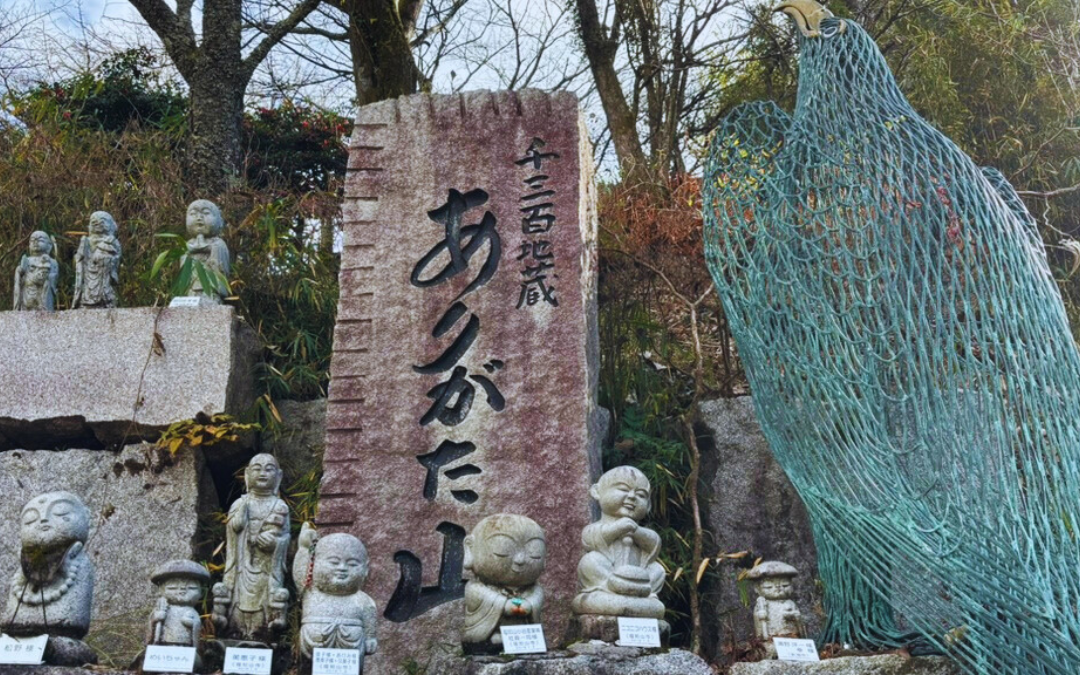
Hidden among forests and gentle hills is Arigatayama, literally translated as the “Mountain of Gratitude.” It is not a typical tourist attraction, nor is it widely known outside Japan. Instead, it is a sanctuary—a place built around reflection, humility, and thankfulness. Walking through its sacred grounds is less like visiting a temple complex and more like entering a different state of mind.
During my recent walk there, I discovered that Arigatayama is the kind of place that quietly reshapes your perspective long after you’ve left the foothills of Shizuoka Prefecture.
The Spirit of “Arigato”
Arigatayama serves as the headquarters of Nenpoushinkyou, a modern Japanese religious movement founded in the early twentieth century. While it has an organized spiritual framework, visitors do not need to be followers to appreciate the philosophy that defines the site.
At the heart of everything here lies one simple word: Arigato.
In Japanese, arigato means “thank you,” but its deeper meaning suggests something even more profound—gratitude for life itself. The teachings associated with Arigatayama emphasize expressing thankfulness for nature, for the wisdom of ancestors, and even for hardships that shape us into stronger people.
As soon as I stepped onto the wide stone paths, the atmosphere felt different from other temple grounds I had visited in Japan. The air seemed quieter, softer somehow. Tall cedar trees formed natural corridors along the walkways, their trunks rising like pillars into the sky. Sunlight filtered through the branches in scattered patterns across the ground, and the only sounds were distant bells, rustling leaves, and the occasional call of birds.
The sense of gratitude the site promotes isn’t loudly preached—it’s felt in the stillness.
Walking in the Shadow of a Deity
postcards, usually as a distant and iconic silhouette.
At Arigatayama, however, Fuji is not just a backdrop.
Because the sanctuary sits directly on the mountain’s slope, the presence of the volcano feels immense and immediate. The landscape rises toward the peak with quiet authority, reminding visitors that this sacred mountain has shaped Japanese spirituality for centuries.
Within the traditions of Shinto, Fuji is often regarded as a shintai—the physical body of a deity. In other words, the mountain itself is divine. Standing here beneath it, that idea suddenly feels less symbolic and more tangible.
On clear mornings the view is extraordinary. The perfect symmetry of Fuji’s snow-capped summit appears above the trees like a painting suspended in the sky. The most striking visual pairing is with the complex’s five-story pagoda, whose brilliant red structure rises above the surrounding forest.
The contrast is breathtaking:
deep green cedar forests
vivid red temple architecture
the brilliant white peak of Fuji above
For photographers it is a dream composition. But even without a camera, the scene offers something more valuable: a moment of perspective. Under a mountain that has stood for hundreds of thousands of years, everyday worries suddenly feel small and temporary.
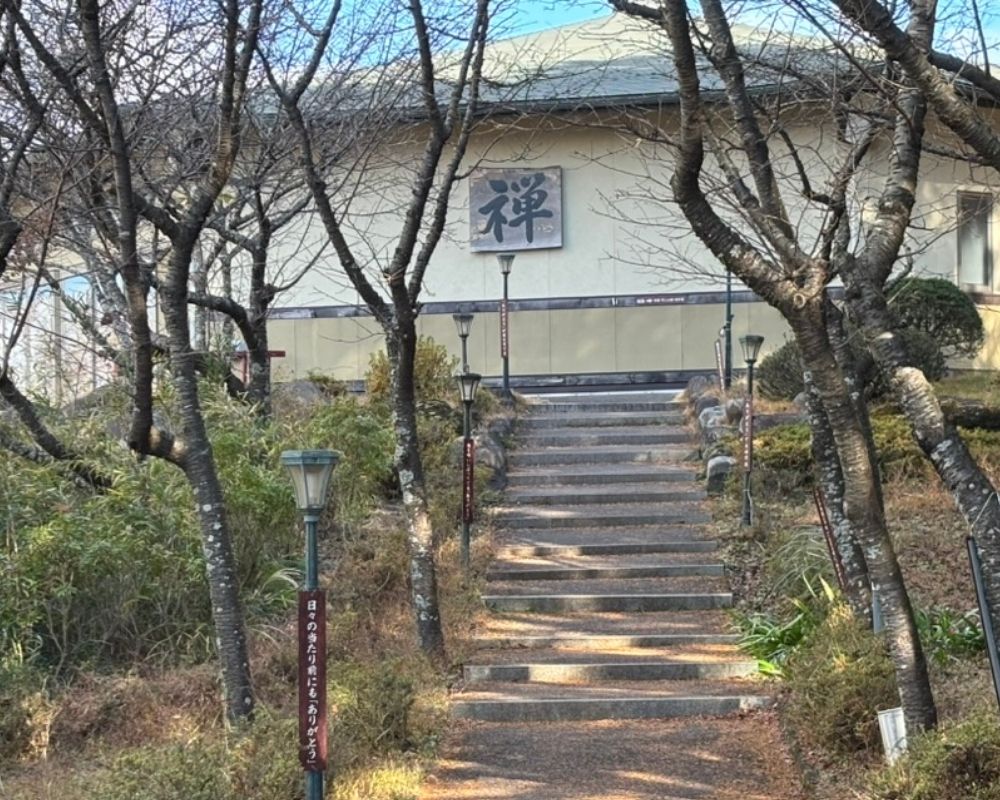
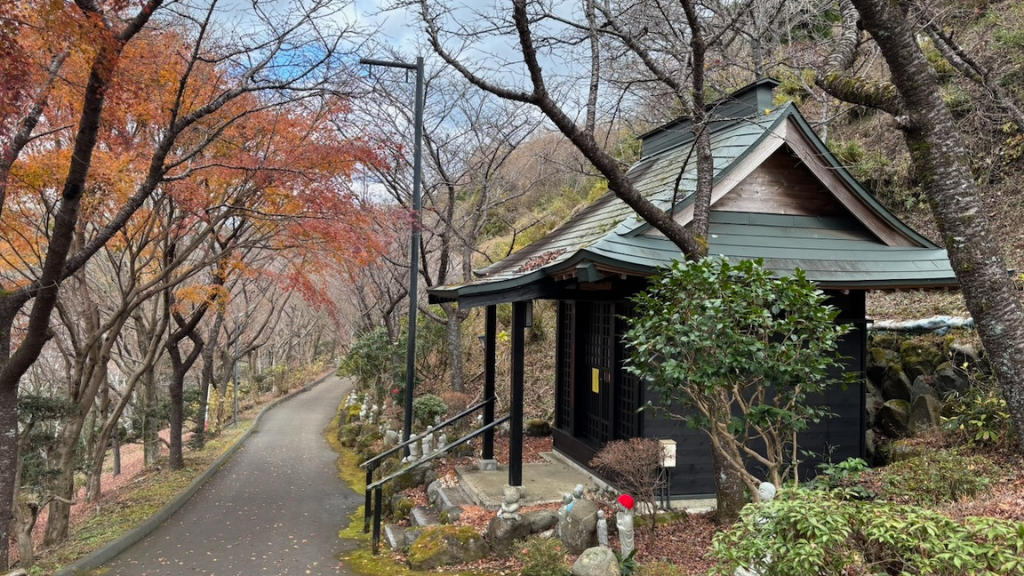
On the way to Arigatayama (Photo Liomugai)
The Silent Crowd: 1,800 Jizo Statues
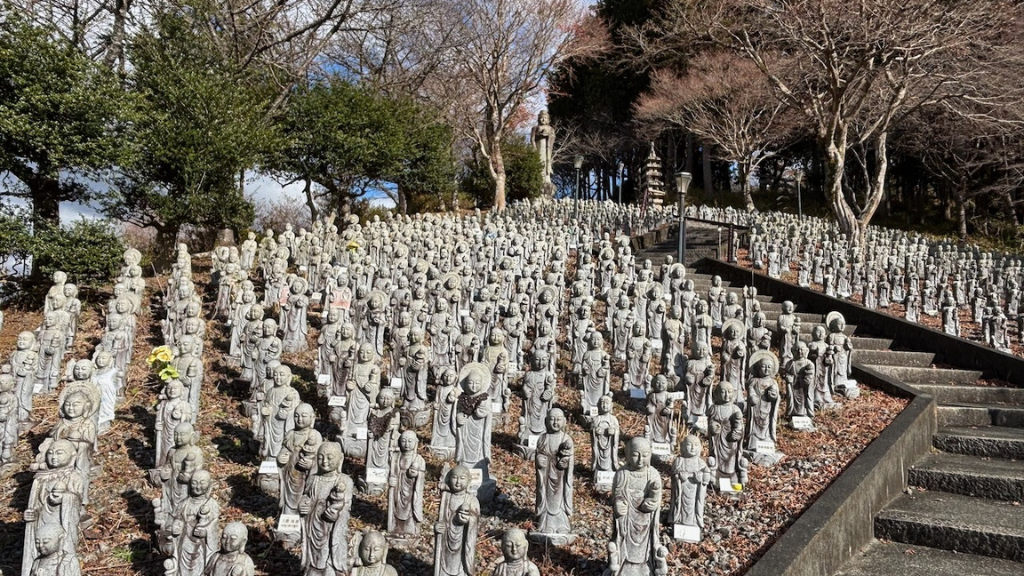
The most powerful moment of the walk comes gradually, as the path begins to fill with rows upon rows of stone statues.
Nearly 1,800 figures of Jizo line the trails of Arigatayama.
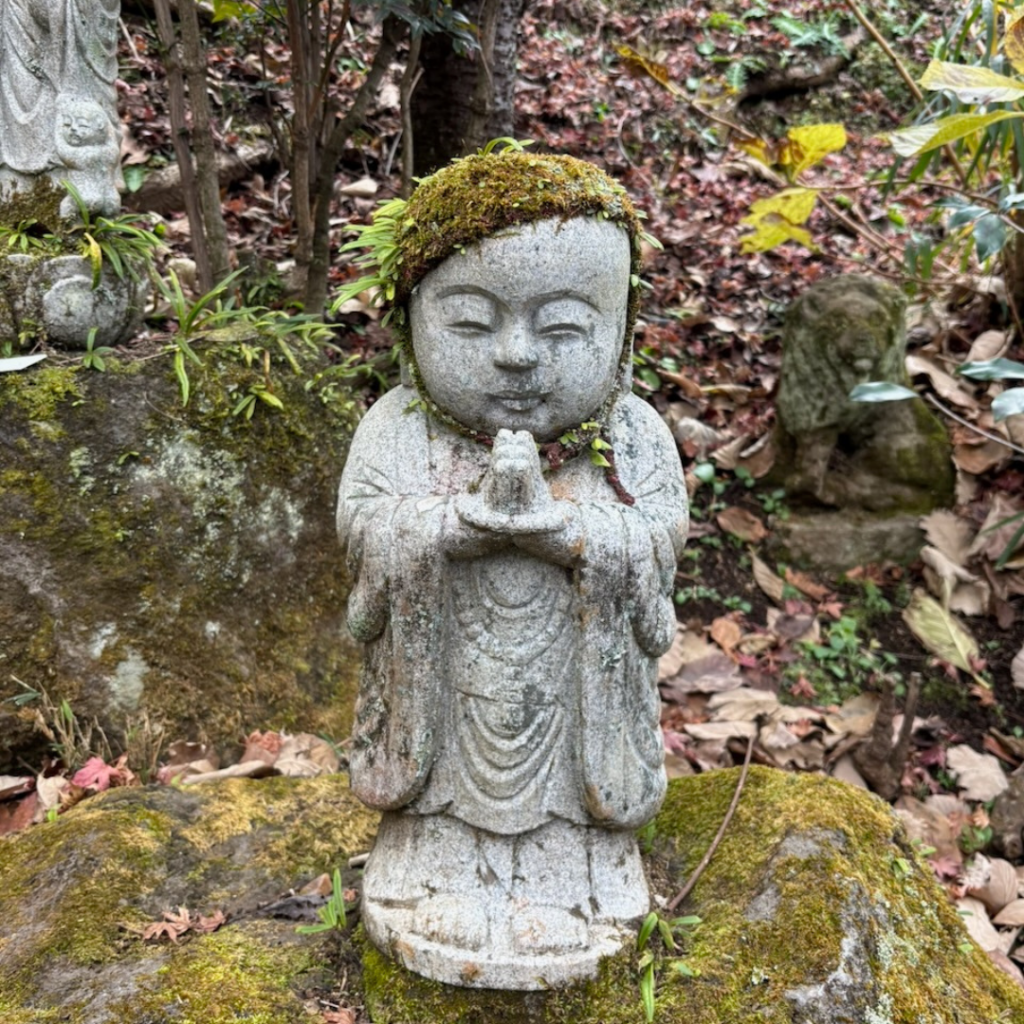
These statues represent Jizo Bosatsu, one of the most beloved protective figures in Japanese Buddhism. Jizo is traditionally considered the guardian of travelers, children, and souls moving through the afterlife. Throughout Japan, small Jizo statues often stand beside roads, rivers, and temple gates.
But seeing so many together is something entirely different.
At Arigatayama, the statues form what feels like a silent congregation, stretching along pathways and terraces among the trees. Each figure has its own posture and expression. Some appear peaceful, others contemplative. A few even seem to smile gently.
Walking among them feels like moving through a gathering of patient watchers.
Jizo Crowd
One detail immediately catches the eye: almost every statue wears a bright red knitted bib or cap.
These garments are not decorative. They are offerings placed by families and devotees as acts of care and devotion. In Japanese folk belief, the color red is associated with protection—it is thought to ward off illness, misfortune, and harmful spirits.
Traditionally, parents who have lost a child or who pray for a child’s safety may dress a Jizo statue in red clothing. By doing so, they symbolically entrust their love and concern to the compassionate protection of Jizo.
Seeing hundreds of these small hand-knitted garments is deeply moving. Each one represents a story—someone’s grief, hope, gratitude, or prayer.
The result is both quiet and powerful: a visual reminder that even anonymous statues can carry human emotion.
Praying Jizo
Another remarkable detail becomes clear when you look closely at the statues: no two faces are exactly the same.
Many of the Jizo figures here were donated by families or individuals as expressions of thanks. A recovered illness, a safe journey, a prayer answered—each statue can represent a moment of gratitude made permanent in stone.
The statues are often hand-carved and intentionally simple. Their material—stone from the earth—symbolizes the “Womb of the Earth,” a concept representing nature’s nurturing and enduring presence.
Over time, rain, moss, and mountain weather slowly soften the features of the statues. Instead of diminishing them, the aging process seems to deepen their presence, allowing them to blend naturally with the mountain landscape.
It is as if the mountain itself gradually adopts them.
Arigatayama is not simply a temple complex—it is a place intentionally designed to slow you down and shift your perspective.
By the time I finished my walk and began descending toward Gotemba, the noise of the modern world felt distant. The experience had quietly changed the rhythm of my thoughts.
In a world often defined by speed and achievement, Arigatayama offers a different message: pause, breathe, and be grateful.
And perhaps that is why the “Mountain of Gratitude” lingers in memory long after the journey ends. When you leave its cedar paths, you carry something small but meaningful with you—a little more arigato in every step.
12,000 Views: Sharing the Path of Mugai-ryu Iaihyodo
Since returning from Japan, I’ve been overwhelmed by the curiosity and support from the community on Instagram.
To better document and share my journey in Mugai-ryu Iaihyodo, I decided to launch my YouTube channel—and the response has been incredible.
I want to say a massive thank you to everyone who has tuned in. Starting from scratch with a niche martial art can be a quiet journey, so seeing over 12,000 views on my weekly content is truly humbling.
A special thanks goes out to the Japanese viewers who regularly watch my videos and reach out via Instagram. Your insights and encouragement mean the world to me. I look forward to sharing more Mugai-ryu techniques and katas as I continue to learn and grow.
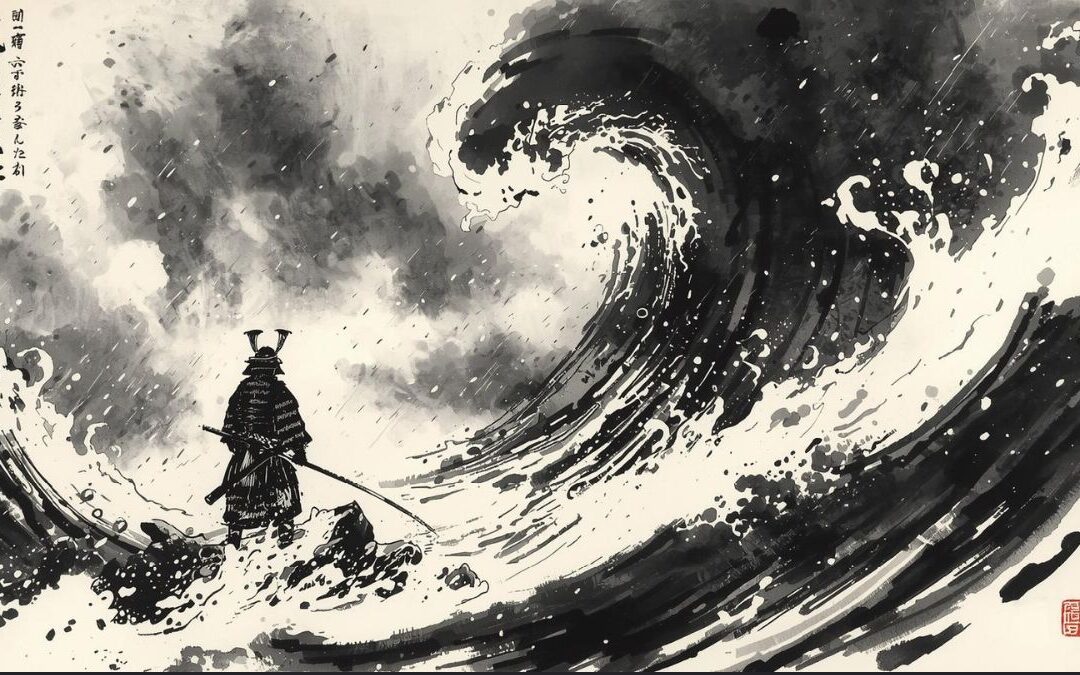
In the face of chaos, most people react like a leaf in the wind—tossed by praise, broken by criticism, or paralyzed by fear. The Japanese martial tradition offers an alternative: Fudōshin (不動心).
Translated literally as “Immovable Mind,” Fudōshin is a state of psychological and spiritual equilibrium. It is not a state of “unfeeling” or being a statue; rather, it is the ability to remain centered and effective regardless of external circumstances.
The Anatomy of the Immovable Mind
The term is composed of three kanji characters:
Fu (不): Not / Non-
Dō (動): Move / Motion
Shin (心): Heart / Mind / Spirit
In Eastern philosophy, the heart and mind are often viewed as a single entity (Xin or Shin). Therefore, Fudōshin is as much about emotional stability as it is about intellectual focus.
The Metaphor of Water and the Mirror
To understand Fudōshin, Zen masters often use the metaphor of a still pond.
If the water is turbulent, it distorts the reflection of the moon.
If the water is still, it reflects the world exactly as it is.
When your mind is “moved” by anger or anxiety, your perception of reality becomes distorted. You react to your projection of the threat rather than the threat itself. Fudōshin allows you to see the “moon” clearly.
Fudōshin in the Heat of Battle
Historically, this concept was vital for the Samurai. In a duel, a split second of hesitation (caused by fear) or a split second of overconfidence (caused by ego) meant death.
The legendary swordsman Miyamoto Musashi alluded to Fudōshin in The Book of Five Rings, describing a “distracted mind” as a fatal flaw. He argued that the warrior’s spirit should be the same in the midst of a duel as it is in everyday life—calm, observant, and undeterred.
“Both in fighting and in everyday life you should be determined though calm. Meet the situation without tenseness yet not recklessly, your spirit settled yet unbiased.” — Miyamoto Musashi
The Four weak points of the Mind
To achieve Fudōshin, one must overcome the Shiso (the four sicknesses/distractions) that cause the mind to move:
Fear (Kyo): Physical or mental dread that freezes action.
Confusion (Waku): A lack of clarity or doubt in one’s path.
Hesitation (Gaku): Over-calculating or waiting too long to commit.
Surprise (驚 – Kyō): Being caught off guard by the unexpected.
When you master Fudōshin, the unexpected no longer surprises you, not because you predicted it, but because your internal foundation is so solid that no external event can shake it.
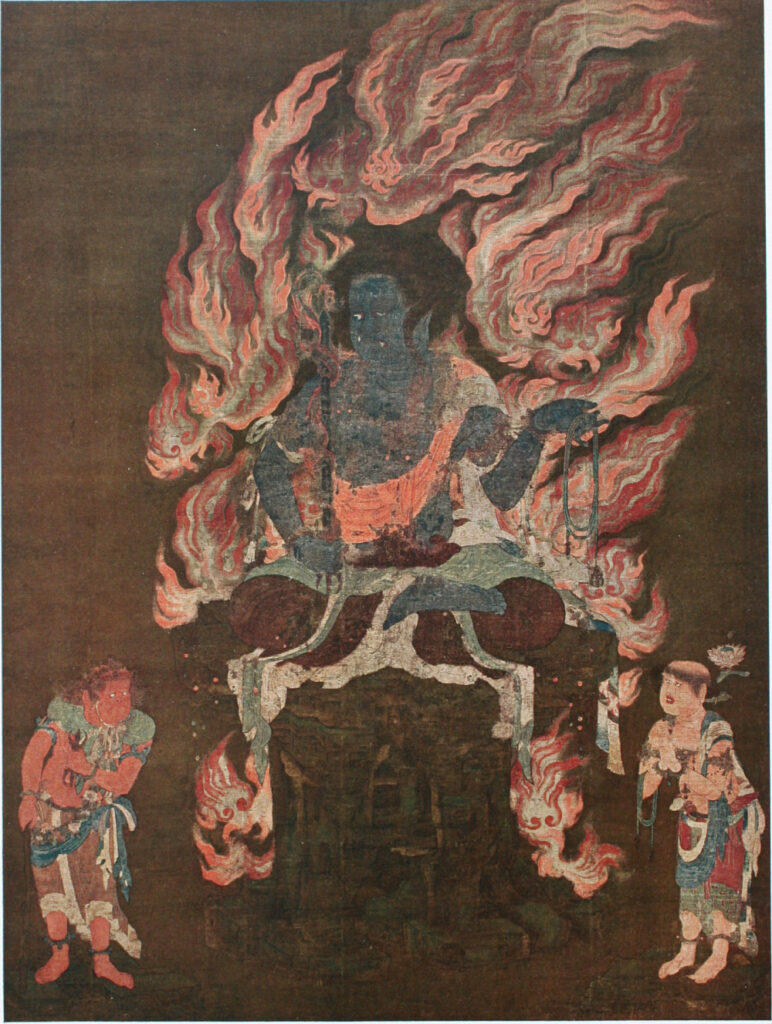
Fudō Myō-ō: The Visual Archetype
In Japanese Buddhism, the deity Fudō Myō-ō is the personification of this state. He is often depicted surrounded by flames, holding a sword in one hand and a rope in the other. He looks fierce and terrifying, yet he sits on a flat rock (symbolizing stability). The flames represent the burning of worldly desires and distractions, while his immovable stance represents the indestructible nature of the enlightened mind.