
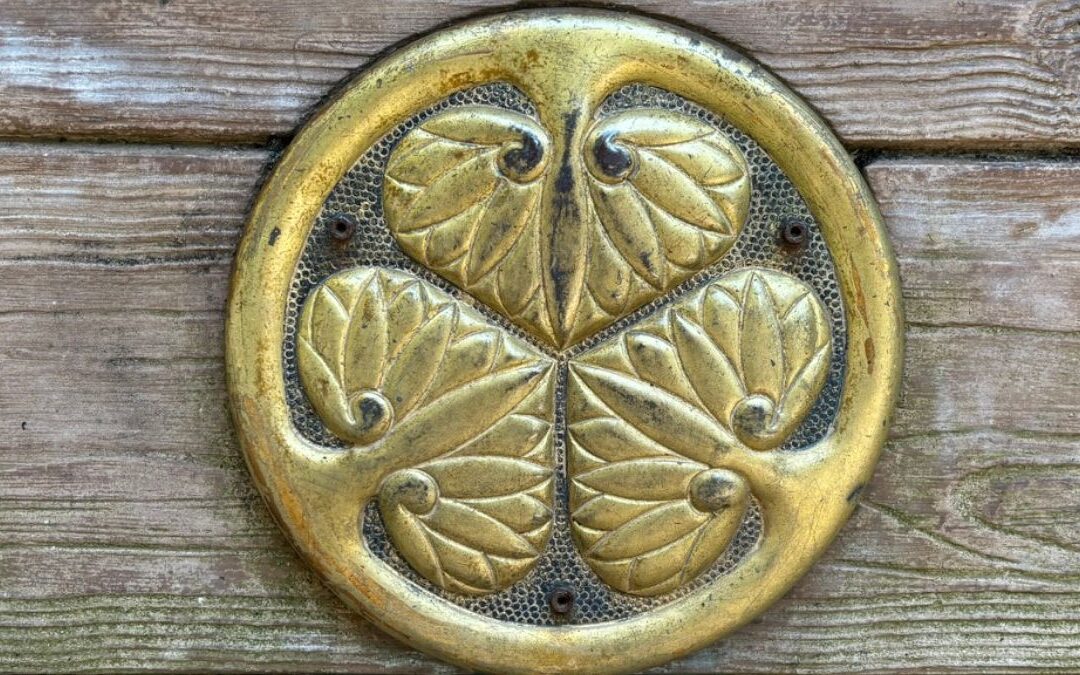
In the past days I had the opportunity to get enough time to follow Tokugawa Ieyasu legacy starting from Shizuoka to Nagoya.
It was an important historical deep dive considering Tokugawa’s impact is huge in Japanese history with the end of war period and the start of a long peace period known as the ‘Edo period’ .
Tokugawa Ieyasu (1543-16116)
Tokugawa Ieyasu was not merely a conqueror; he was the architect of a social and political order that redefined the DNA of Japanese civilization for over two and a half centuries.
By securing victory at the Battle of Sekigahara in 1600, Ieyasu ended the chaotic “Warring States” period and established the Tokugawa Shogunate, a feat achieved through a masterful blend of strategic patience and ruthless political engineering.
His greatest impact lay in the creation of the Bakuhan system, which balanced the power of the central Shogunate (Bakufu) with local lords (Daimyo), and the implementation of the Sankin-kōtai (alternate attendance) system.
This policy forced lords to live in Edo every other year, effectively draining their wealth to prevent rebellion while inadvertently creating a massive national infrastructure of roads and commerce.
Under his legacy, Japan transitioned from a culture of constant military mobilization to one of “Great Peace,” allowing for a flourish of urban culture, the rise of the merchant class, and a sophisticated internal economy.
By choosing Edo—a swampy village at the time—as his seat of power, he shifted the heart of Japan away from the ancient imperial capital of Kyoto, laying the literal and figurative foundations for what would eventually become the world’s largest metropolis, Tokyo.
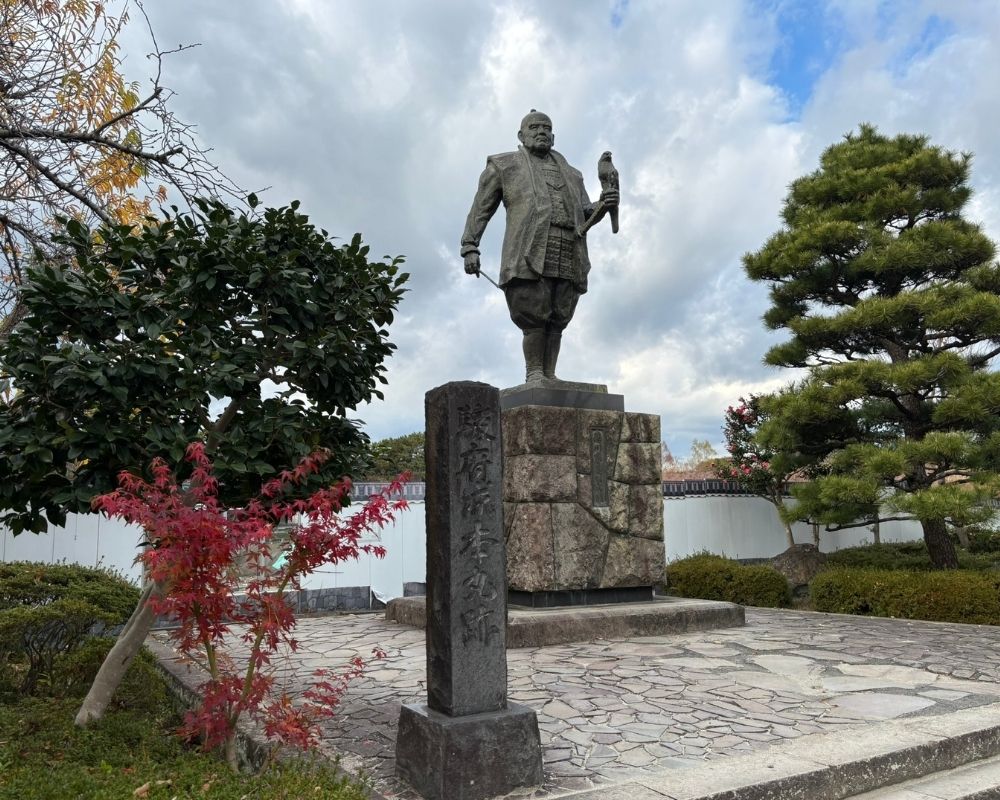
Sunpu Castle in Shizuoka
While Edo (Tokyo) was the seat of the Shogunate’s power, Sunpu Castle in Shizuoka was the true heart of the Tokugawa empire during the early 17th century. It was here that Tokugawa Ieyasu, the founder of the dynasty, spent his childhood as a hostage and his final years as the “Ogosho” (Retired Shogun), effectively ruling Japan from behind the scenes.
Tokugawa first lived here as a young hostage of the Imagawa clan, learning the arts of war and diplomacy.
After unifying Japan and establishing the Shogunate in Edo, he chose to return to Sunpu for his retirement in 1607.
Today, the site is known as Sunpu Castle Park. While the original wooden keep was unfortunately lost to fire in 1635, the meticulous reconstruction of the gates and towers allows visitors to experience the sheer scale of Ieyasu’s vision.
In the center of the park stands the famous bronze statue of Tokugawa Ieyasu. He is depicted in his later years, holding a hawk—a nod to his lifelong passion for falconry.
The Hidden Jewel of Shizuoka: Kunōzan Tōshō-gū
While most travelers flock to the famous shrines of Nikkō, the true heart of the Tokugawa legacy lies tucked away on a rugged cliffside overlooking Suruga Bay.
Kunōzan Tōshō-gū is the original final resting place of Tokugawa Ieyasu, and it remains one of the most historically significant sites in all of Japan.
Built to honor the man who finally unified a nation torn by civil war, the shrine is a breathtaking masterpiece of architecture, color, and symbolism.
For those seeking the “authentic” experience, the journey begins at the base of the mountain.
You must ascend a winding stone staircase of 1,159 steps. This climb isn’t just for exercise; it was designed to represent the long, patient, and often grueling path Ieyasu took to achieve peace.
As you climb, the views of the Pacific Ocean open up behind you, offering a sense of the scale and grandeur that Ieyasu loved about this region.
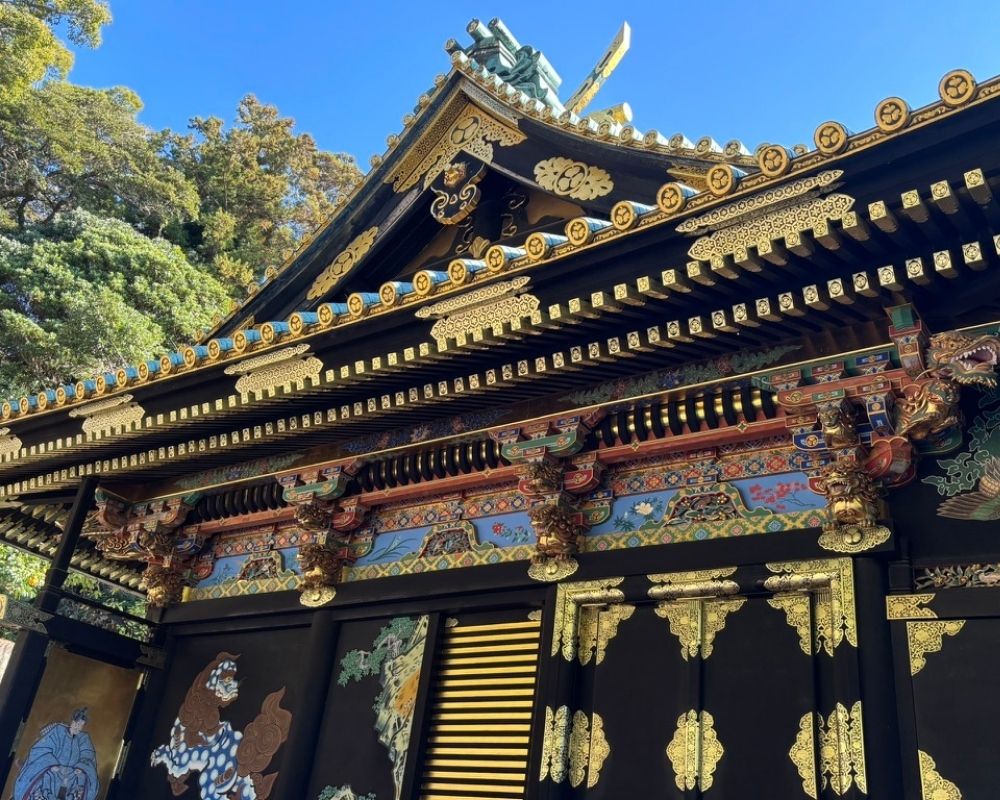
Once at the top, you are greeted by the stunning Gongen-zukuri architectural style—a explosion of brilliant vermillion lacquer, intricate gold leaf, and vibrant carvings. Look closely at the artwork; you’ll see mythical creatures and peaceful floral patterns that serve as a visual prayer for a world without war.
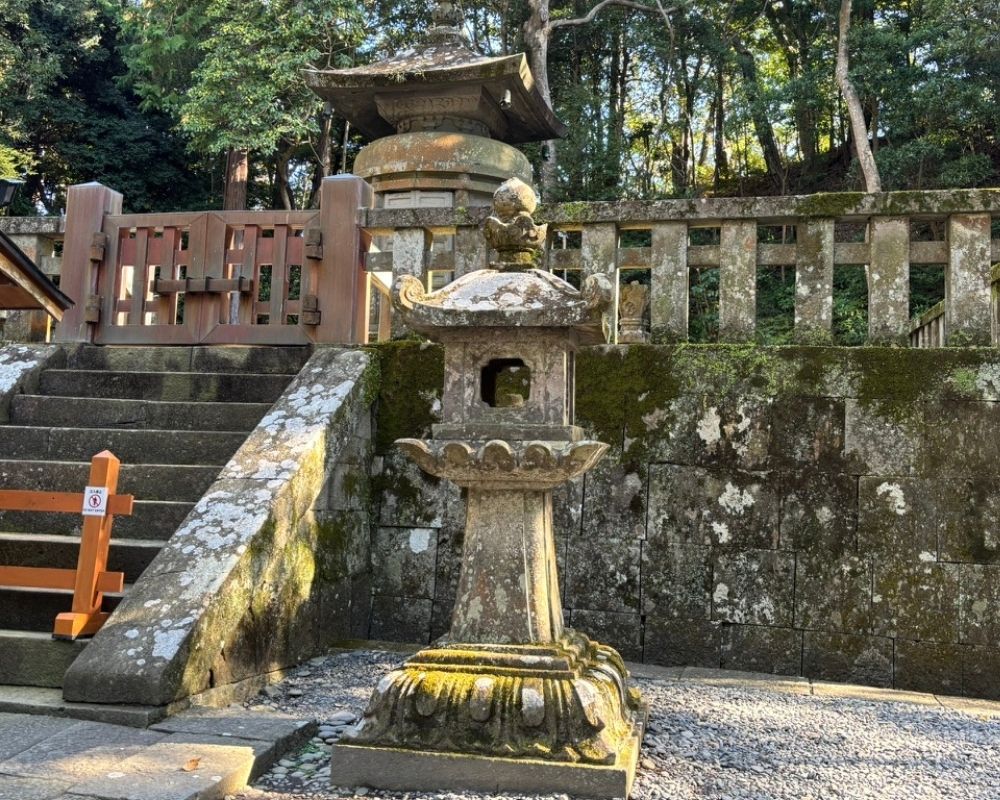
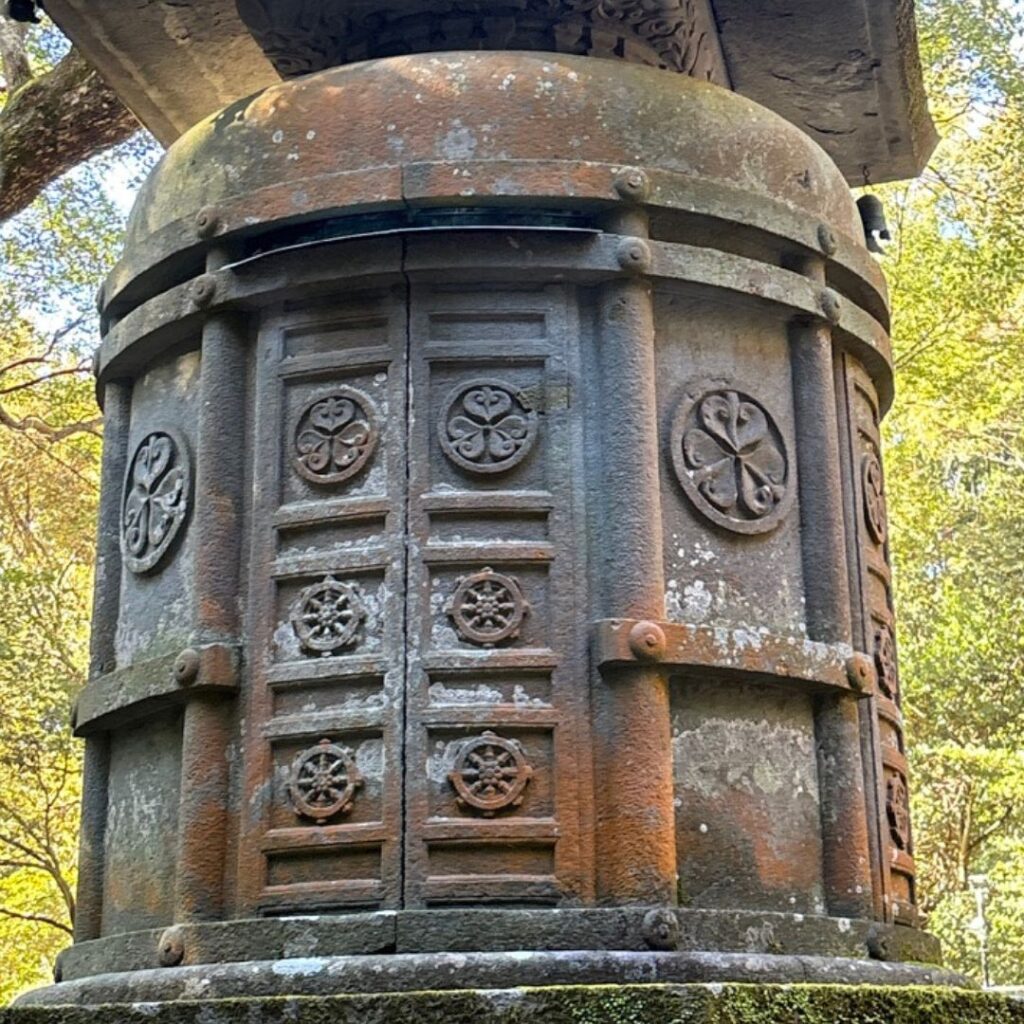
At the highest point of the sanctuary sits the Okumiya, a solemn bronze stupa where Ieyasu was interred immediately after his death in 1616.
Unlike the crowded tourist paths elsewhere, Kunōzan retains a deep sense of quietude.
Here, between the ancient cedar trees and the sea breeze, you can truly feel the presence of the Shogun who chose this specific mountain to watch over his legacy for eternity.
Nagoya Castle : The Golden Fortress of the Owari
Constructed in 1610 under the orders of Tokugawa Ieyasu, Nagoya Castle was built to serve as a strategic fortress on the Tōkaidō road and as the headquarters for the Owari branch of the Tokugawa family—the most important of the three “successor” lines.
Ieyasu spared no expense, ordering twenty former enemy feudal lords to contribute to its construction. This was a brilliant political move: by forcing them to fund the massive stone walls and labor, he depleted their resources, ensuring they had neither the money nor the men to stage a rebellion.
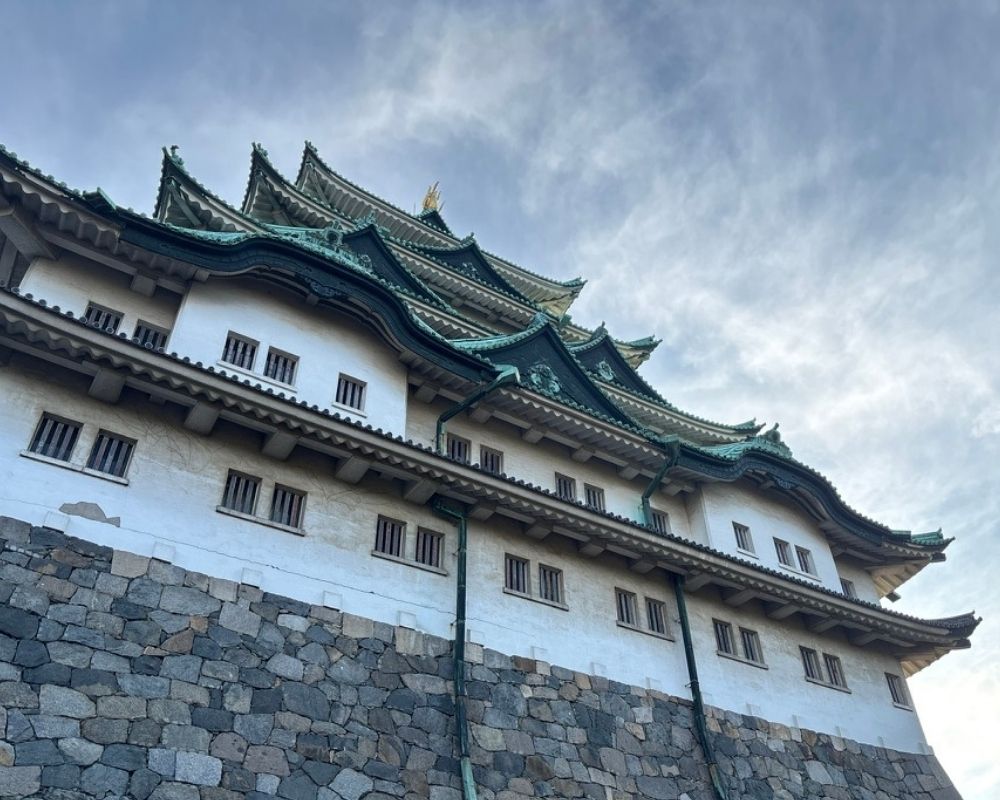
The castle’s most recognizable feature is the Kinshachi—two golden tiger-headed carp that sit at either end of the main roof. Cast in solid gold (later replaced with gold-plated copper), these creatures were believed to have the power to summon water to extinguish fires. Today, they remain the proud symbol of Nagoya City, representing the wealth and authority of the Edo period.
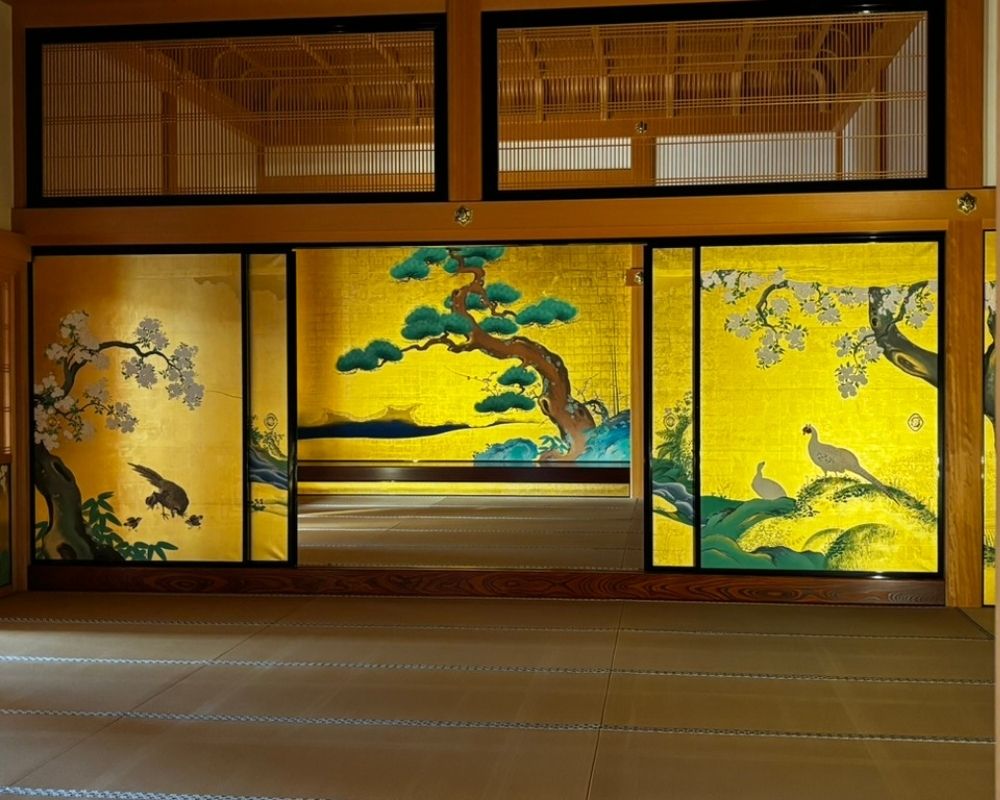
While many visitors focus on the stone tower, the true “soul” of Nagoya Castle is the Hommaru Palace. Recently reconstructed over a decade using traditional materials and techniques, it is widely considered the finest example of Shoin-zukuri (residential) architecture in Japan.
My take away from this historical trip
Even if we all know Tokugawa Ieyasu history, following his steps and discovering where he lived is something super emotional.
I’ve been really touched by the atmosphere surrounding Kunōzan Tōshō-gū and I can completely understand the faith of Japanese people for the Annual Festival on April 17 (the anniversary of Ieyasu’s death) to pay tribute to the first Shogun of Edo period.
Still interested in Tokugawa’s legacy, we have a dedicated Episode in Liomugai’s Podcast : The way of Sword and Budo