
In the world of Japanese martial arts, few schools embody the profound connection between Zen philosophy and the blade as deeply as Mugai-ryū Iaihyōdō.
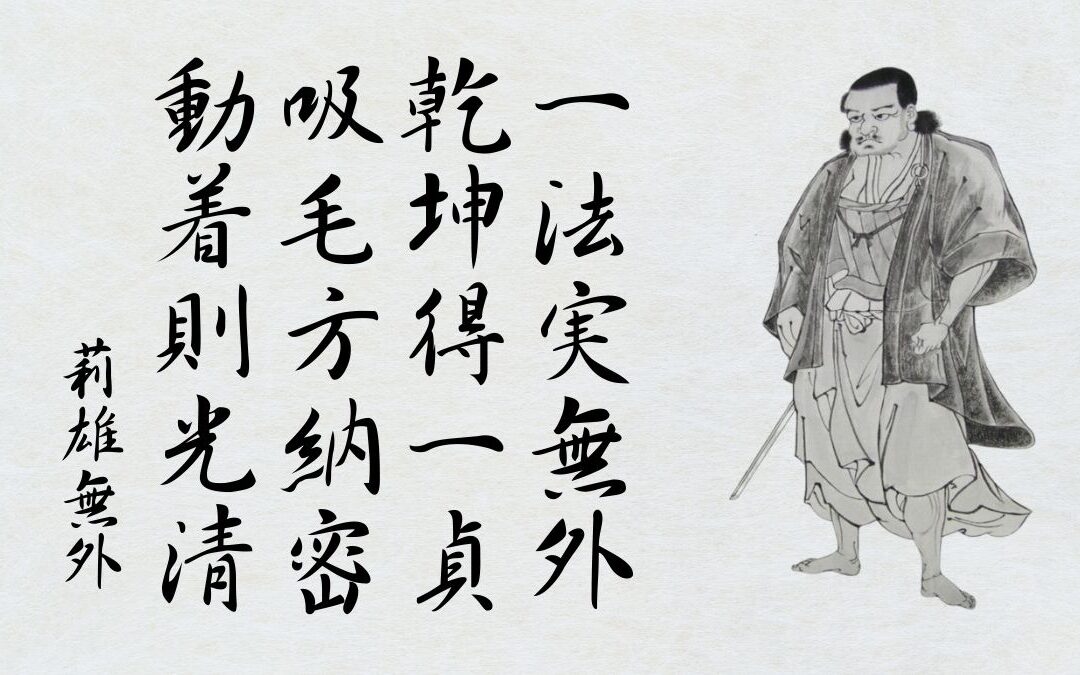
At the very heart of this ancient swordsmanship tradition lies a powerful poem, or kanshi, penned by its founder, Tsuji Gettan Sukemochi. This isn’t just a piece of poetry; it’s a spiritual blueprint, an articulation of enlightenment that continues to guide practitioners today.
The Founder’s Journey to “Nothing Outside”
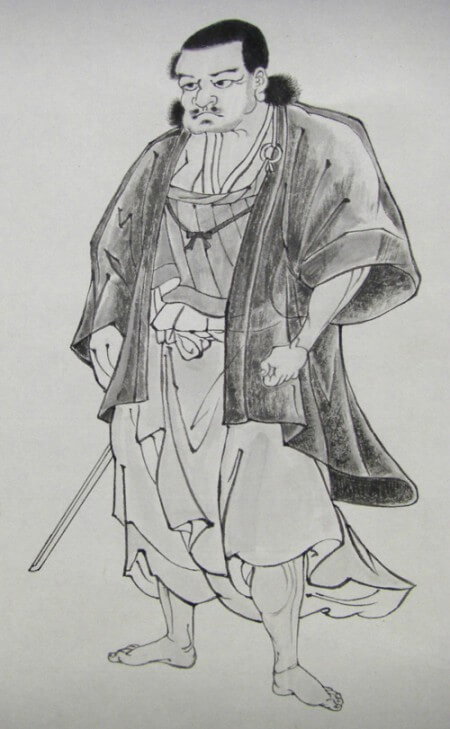
Tsuji Gettan Sukemochi (1649–1728) was a master swordsman in his own right, but he felt there was something missing – a deeper understanding beyond mere technique. He sought this through intense Zen training under Zen Master Sekitan Zenshi at Kyūkō-ji Temple.
It was during this period of rigorous meditation that Gettan achieved satori (enlightenment). The realization he gained profoundly impacted his martial art. He named his school “Mugai-ryū,” which translates to “Nothing Outside” or “No Other.” This name, and the poem he composed, encapsulates the Zen concept that true understanding and power come from within, not from external forces or superficial forms.
The Poem: A Glimpse into Enlightenment
The most famous and widely quoted lines of Tsuji Gettan’s enlightenment poem are:
一法実無外 (Ippō jitsu mugai) 乾坤得一貞 (Kenkon toku ittei) 明頭乗萬機 (Meitō manki ni jōzu) 活物示全身 (Kappatsu zenshin o shimesu)
A common translation brings its profound meaning to light:
“One Truth, nothing outside.” “Heaven and Earth obtain this one uprightness.” “With an enlightened mind, ride upon all phenomena.” “A living being reveals its whole body.”
A more poetic translation (I personally prefer this one) :
“The quest for Oneness is the sole gateway to the path of Truth. Throughout the vast cosmos, and across the infinite reach of time, stands the Just—timeless and unshakeable. By the absolute power of this Unity, the breath born within the heart bestows the might of the blade upon a single hair, transforming even the smallest stir into a surging fountain of light.“
Breaking Down the Core Philosophy
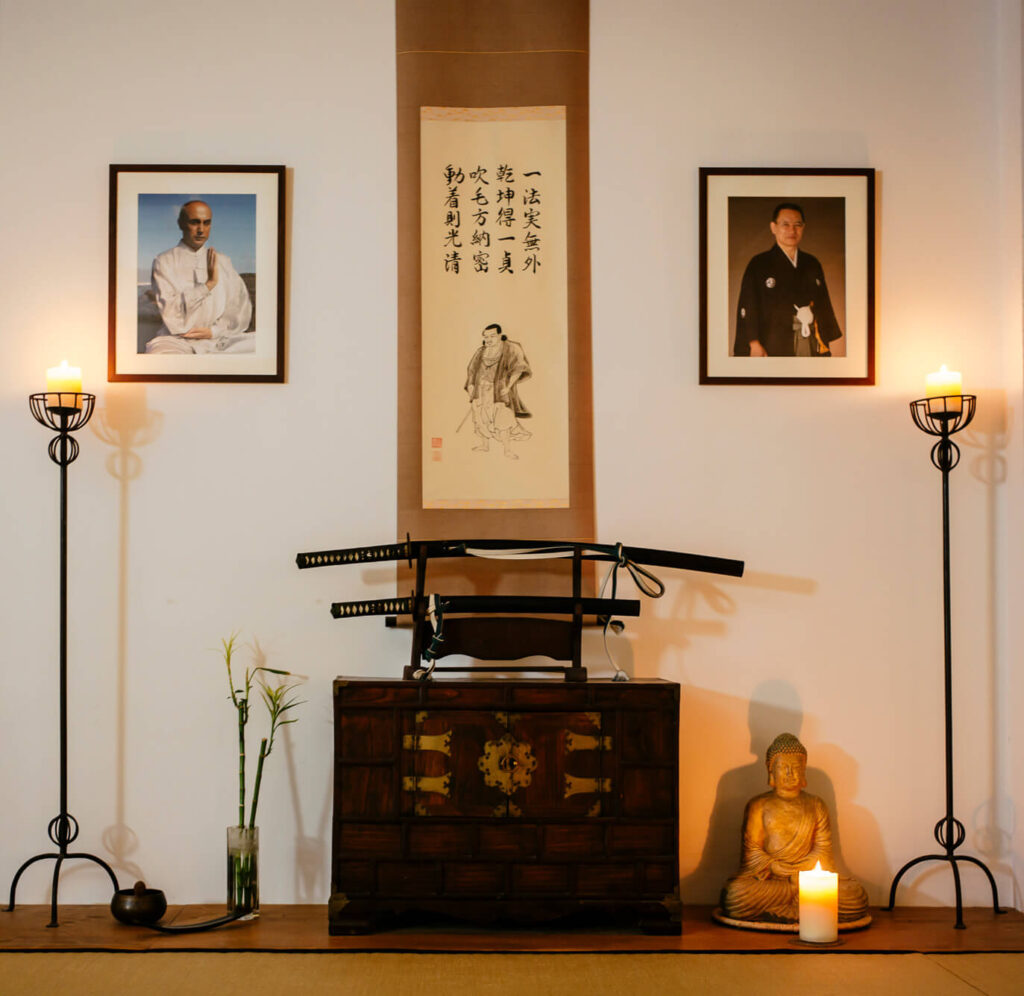
Let’s deep into each line of this poem:
- “One Truth, nothing outside.” (Ippō jitsu mugai): This is the core of Mugai-ryū. It speaks to the unity of all things and the absence of any external “other” to fear or contend with. The ultimate truth is found within oneself. When facing an opponent, this means seeing them not as a separate entity, but as part of the same interconnected reality.
- “Heaven and Earth obtain this one uprightness.” (Kenkon toku ittei): This line emphasizes the universal principle of harmony and integrity. It suggests that when one aligns with this “One Truth,” their posture, mind, and spirit become perfectly upright and unwavering, mirroring the natural order of the universe.
- “With an enlightened mind, ride upon all phenomena.” (Meitō manki ni jōzu): This is where Zen meets the sword in action. “Riding upon all phenomena” implies a state of fluid, effortless adaptability. An enlightened mind isn’t disturbed by external events; instead, it moves with them, anticipating and responding instinctively without hesitation or attachment.
- “A living being reveals its whole body.” (Kappatsu zenshin o shimesu): This final line speaks to spontaneous, total commitment. When one truly embodies the “One Truth,” their entire being—mind, body, and spirit—moves as a single, unified force. There is no partiality, no hesitation; the practitioner acts with complete authenticity and presence, revealing their “whole body” in every movement.
Interested in learning more, My podcast is there for that and we have a specific episode. Give it a Go to Liomugai’s Podcast : The Way of Sword and Budo