
In a recent post, I shared my experience in Hiroshima, along with a suggested one-day itinerary for travelers short on time.
A city that embodies resilience and rebirth, Hiroshima still bears the marks of humanity’s darkest capabilities—yet stands today as a powerful symbol of peace.
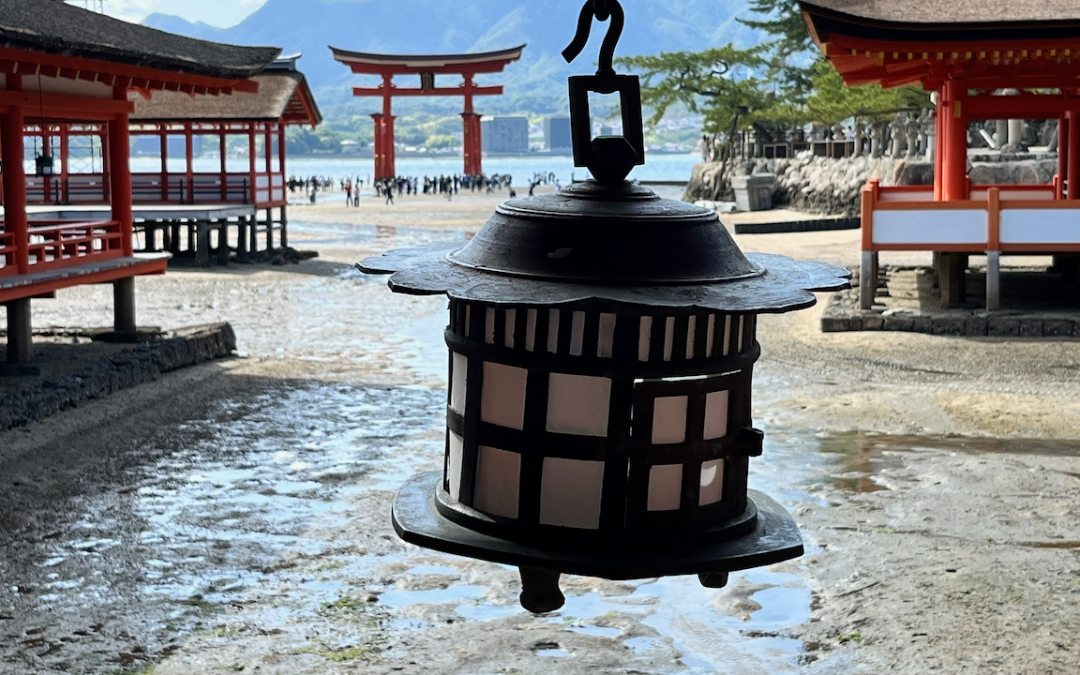
Just a short journey away, crossing the bay by ferry, lies one of Japan’s most enchanting places: the sacred island of Itsukushima, better known as Miyajima, which literally means “Shrine Island.”
A Floating Sanctuary
Known worldwide for its immense torii gate rising from the sea, this Shinto shrine was originally built in the 6th century and took its current form under the influence of Taira no Kiyomori (1118–1181).
For centuries, the island was considered so sacred that births and deaths were forbidden, in order to preserve its spiritual purity.
⛩️ The Great Torii of Itsukushima
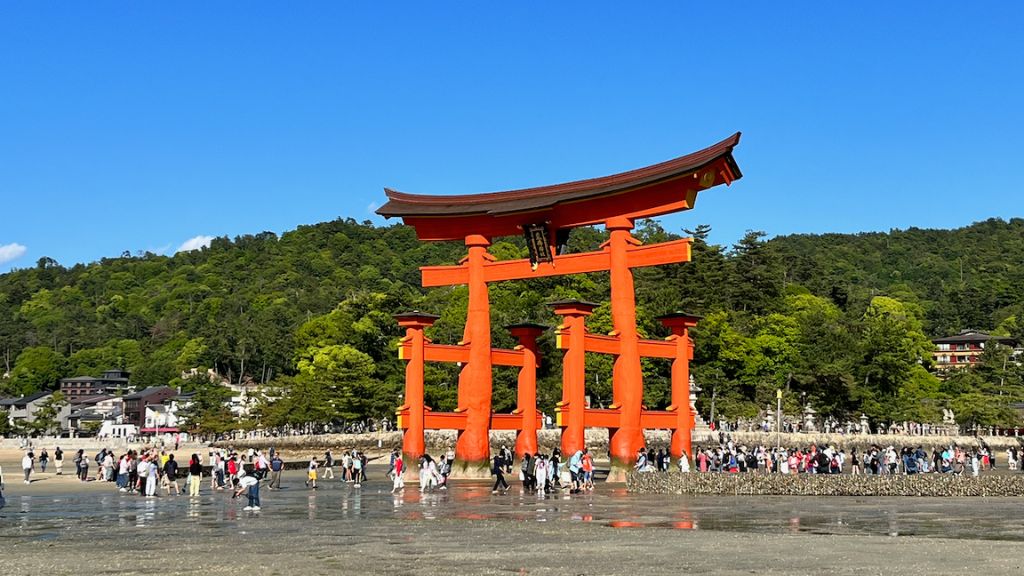
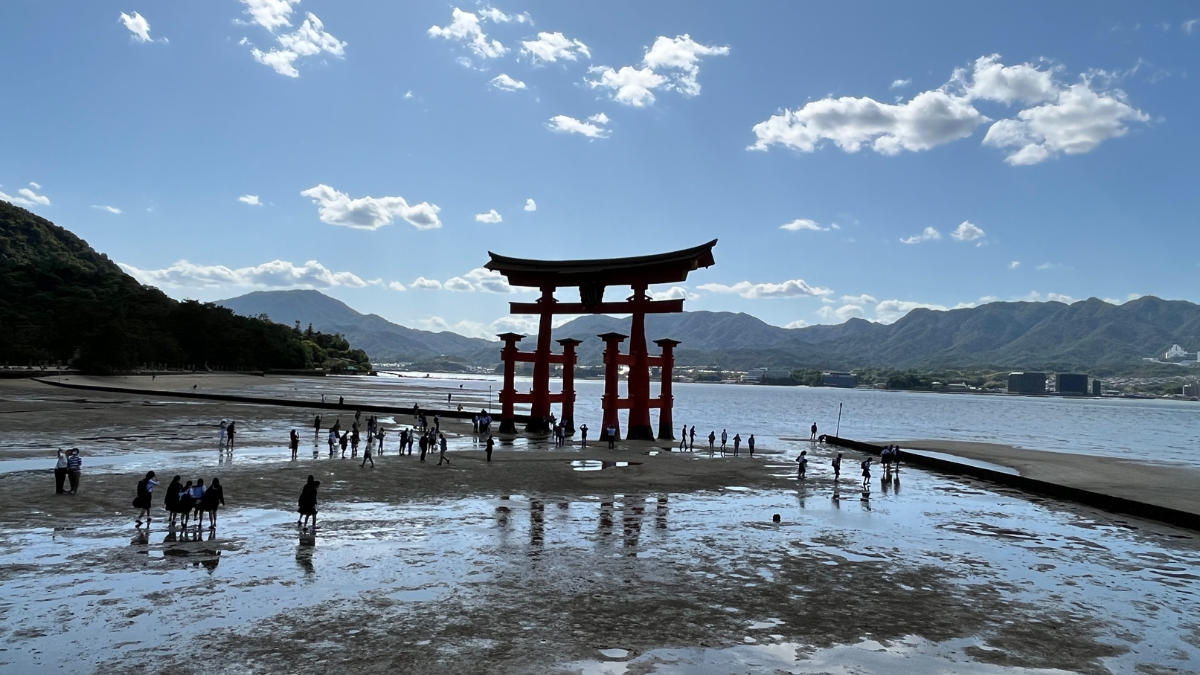
The island’s undisputed icon, the Great Torii offers two completely different experiences depending on the tide:
- High tide: The gate appears to float on water—mystical and almost surreal.
- Low tide: You can walk right up to its base and admire its monumental scale (and even spot tiny shells clinging to its pillars).
If you have the time, stay for sunset. The sky fills with shades of orange and pink, blending with the shimmering sea and the vermilion reflection of the torii—a truly unforgettable sight.
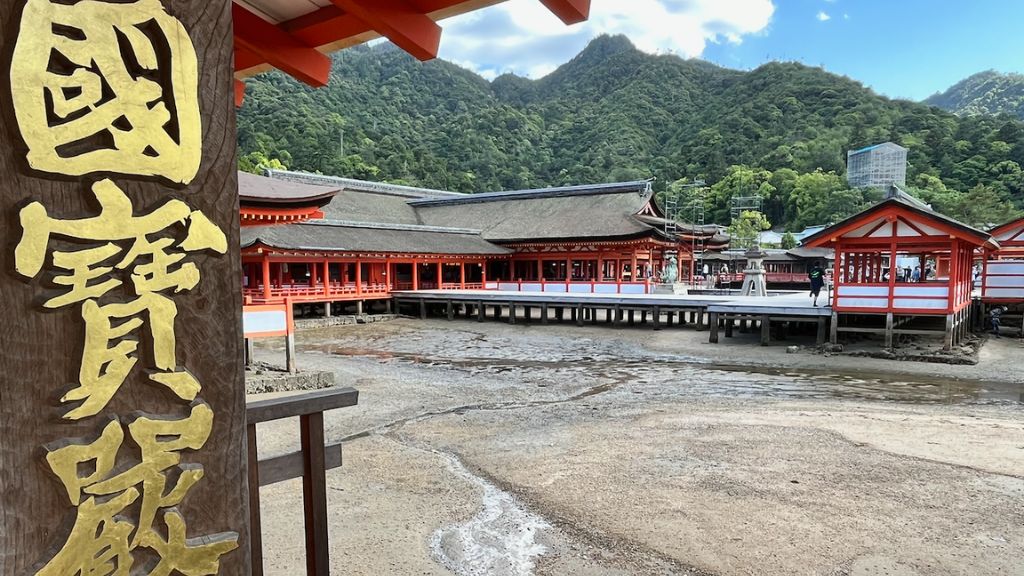
Equally magical is watching the tide slowly rise while standing on the shrine’s wooden walkways, with the gentle sensation of floating above the water.
The Gods’ Messengers… on Four Legs
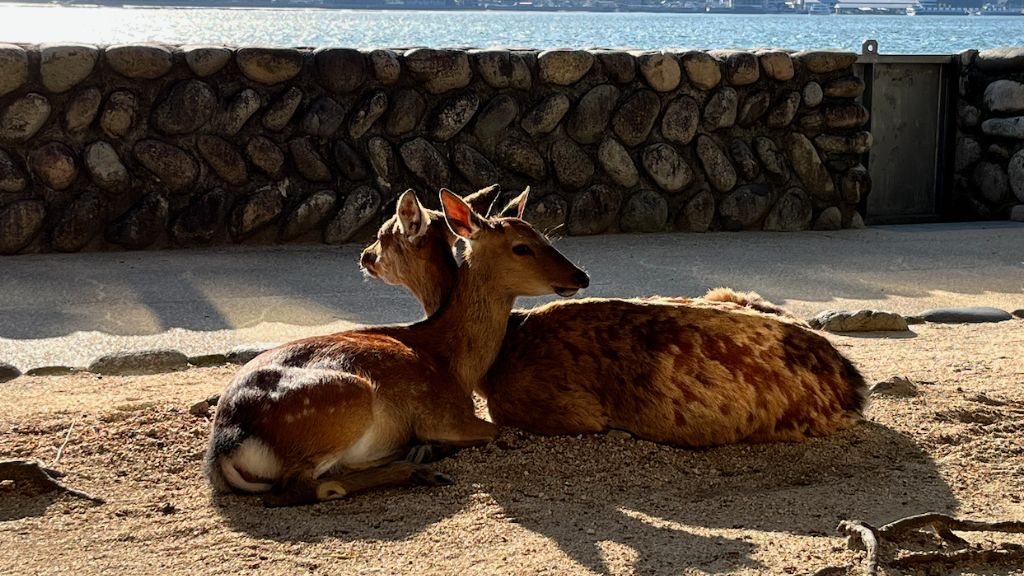
In Shinto belief, deer are sacred animals believed to act as messengers between humans and the gods.
They may look adorable—but don’t be fooled by their innocent eyes!
After generations of interacting with visitors, they’ve learned that they rule the island… and won’t hesitate to check your pockets for snacks.
Itsukushima Shrine: A Masterpiece of Architecture
Listed as a UNESCO World Heritage Site, this Shinto shrine is dedicated to the three daughters of Susanoo-no-Mikoto, the god of storms.
Why is it built on water?
To respect the sacred nature of the island, the shrine was constructed on stilts within the tidal zone—allowing worshippers to “float” above the divine ground without setting foot on it.
The floating torii:
Rather than being anchored deep into the seabed, it stands purely under its own weight (around 60 tons), a true feat of traditional engineering.
Mount Misen: The Spiritual Heights
While the lower part of the island is deeply rooted in Shinto, the upper slopes tell a different story—one of Buddhism.
In 806, the monk Kukai (also known as Kobo Daishi), founder of the Shingon school, established a spiritual training center here.
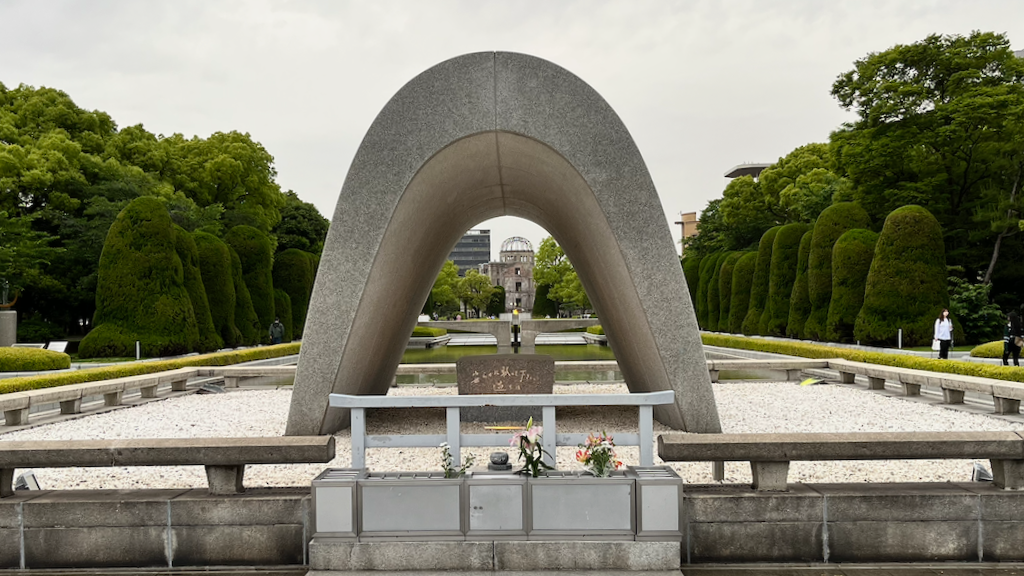
Near the summit of Mount Misen burns an eternal flame, said to have been alive for over 1,200 years and this flame was used to ignite the Flame of Peace in Hiroshima’s Peace Memorial Park.
If you want to know more, do not hesitate to listen the dedicated episode on Liomugai’s podcast :