
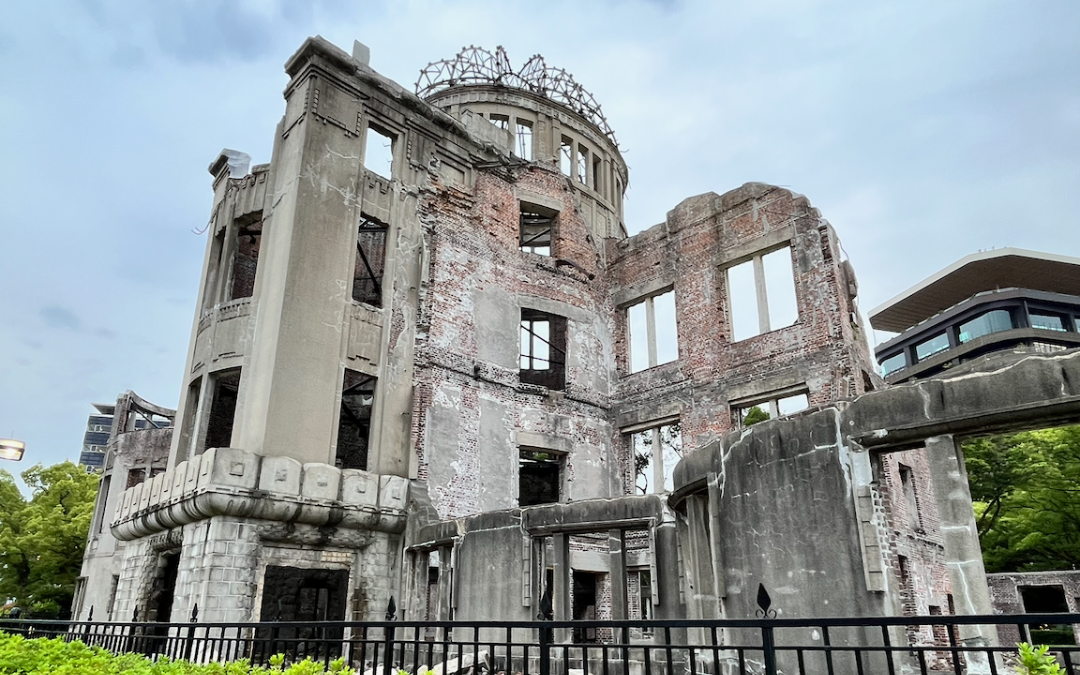
Most travelers visit Hiroshima to witness the scars of history—an essential pilgrimage for anyone visiting Japan.
Walking through the city is an experience beyond “emotional”; it is difficult to pin down a single feeling when the mood shifts like a tide.
Yet, as a practitioner of Budo, I found that a single day here offers something deeper: a profound lesson in Resilience (see my post on Fudōshin) and the evolution from the “Sword that Kills” to the “Sword that Gives Life.” If you have 24 hours in this rebuilt metropolis, here is how to navigate its complex emotional and historical layers.
If you have 24 hours in this rebuilt metropolis, here is how to navigate the emotional and historical layers of Hiroshima.
1. The Genbaku Dome: A Frozen Moment in Time
I started my journey at the A-Bomb Dome. It is a heavy, visceral sight. This structure—the former Prefectural Industrial Promotion Hall—was nearly at the epicenter of the 1945 explosion. Though the rest of Hiroshima was flattened, these columns refused to fall. Eighty years later, the Dome remains frozen in time: a stark reminder of total destruction and an icon of human resilience.
My Tip: Arrive early (before 8:30 AM). The morning light hitting the exposed red bricks against the quiet flow of the Motoyasu River creates a space for silent contemplation before the crowds arrive.
2. The Peace Memorial Park: The Heart of Remembrance
Crossing the bridge from the Dome, you enter the Peace Memorial Park. This isn’t just a park; it’s a sacred space designed by the legendary architect Kenzo Tange.
The Cenotaph and the Flame of Peace
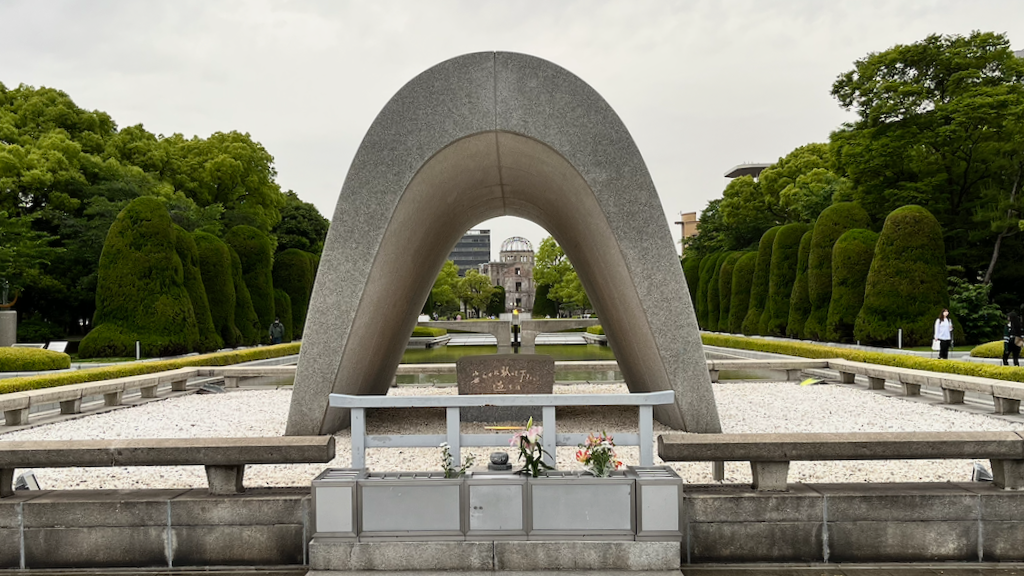
I spent a long time at the Cenotaph for the A-Bomb Victims.
Its saddle-like shape is designed to shield the souls of the deceased. If you stand at the center, you can look through the arch to see the Flame of Peace.
The Vow: This flame will burn until every nuclear weapon on earth has been dismantled.
As a martial artist, this site resonates with the concept of Katsujinken (活人剣)—the “Life-Giving Sword.” It reminds us that the ultimate goal of mastery is not conflict, but the preservation of peace.
3. Lunch: Hiroshima-style Okonomiyaki
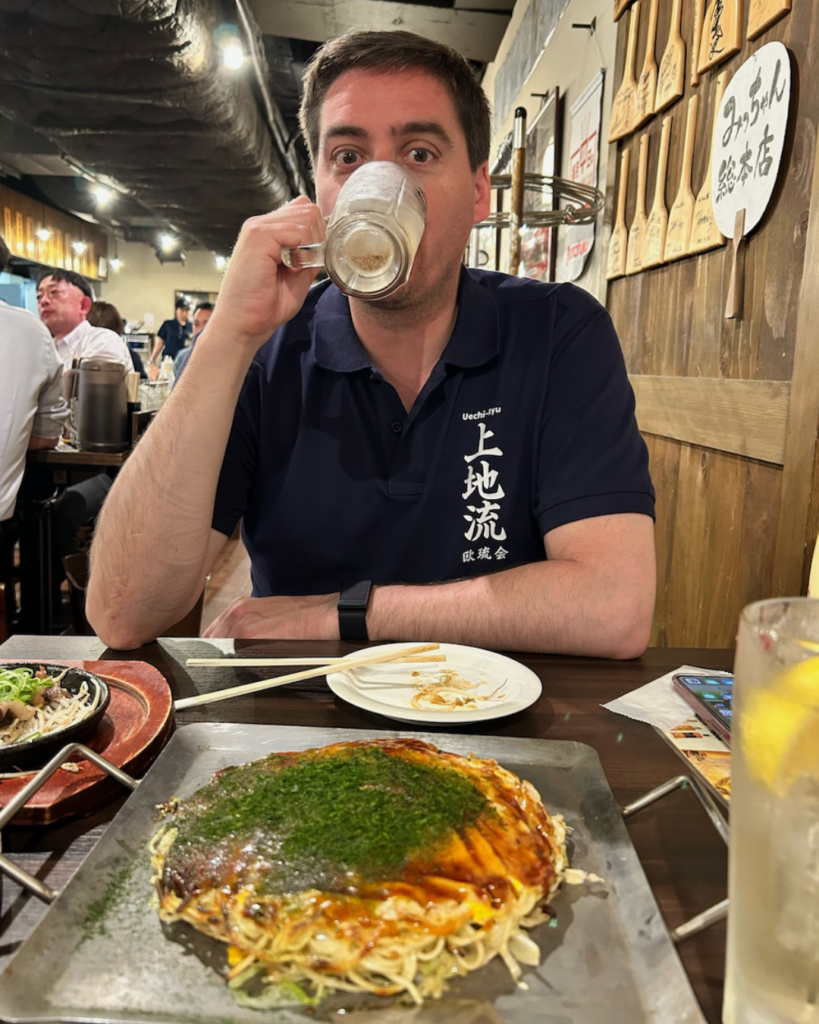
You cannot visit Hiroshima without trying their soul food. Unlike the Osaka version, Hiroshima Okonomiyaki is layered, featuring noodles (soba or udon) and a generous portion of cabbage.
My Tip: Head to Okonomimura (Okonomi Village), a building with three floors of small stalls. It’s the perfect “Ha” (break) in your day to refuel.
4. Hiroshima Castle: The Return of the Carp
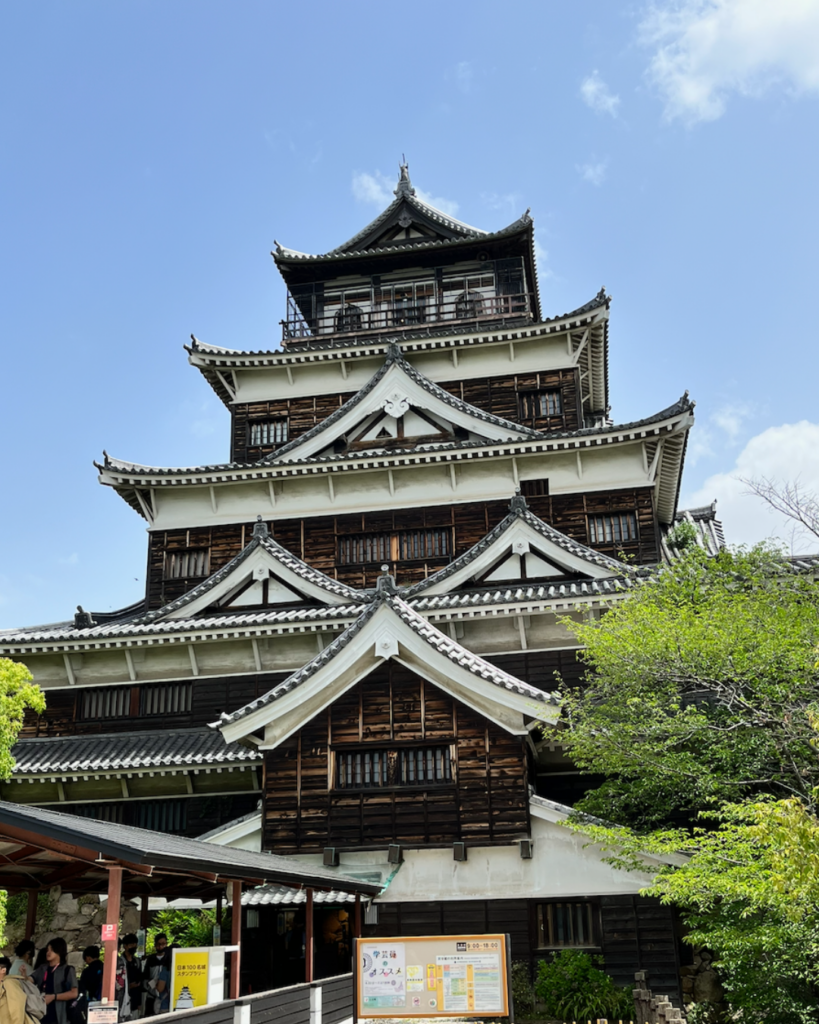
After the emotional weight of the morning, I walked 15 minutes north to Hiroshima Castle (Rijō or “Carp Castle”).
Originally built in 1589, the castle was a total loss in 1945. However, its 1958 reconstruction is a stunning tribute to the city’s samurai origins.
What to Look For:
- The Survival Trees (A-Bombed Trees): Inside the castle walls, look for the Eucalyptus and Willow trees. Despite being charred by the heat of the blast, they survived and continue to grow today. They are living symbols of the samurai spirit—unyielding and rooted.
- The Museum: The interior of the keep houses an excellent collection of Edo-period armor and katanas. For an Iaidoka, seeing the local craftsmanship and the history of the Asano clan is a must.
- The View: Climb to the 5th floor for a panoramic view of the city. Seeing the modern skyline from a traditional fortress gives you a true sense of Japan’s ability to honor the past while embracing the future.
Practical Information for Your Visit
| Location | Suggested Time | Entry Fee |
| Genbaku Dome | 30 mins | Free |
| Peace Museum | 2 hours | 200 JPY |
| Hiroshima Castle | 1.5 hours | 370 JPY |
How to get around: Use the Hiroden (the iconic streetcars). They are a living piece of history—some of the trams running today actually survived the 1945 bombing and were back on the tracks just three days later.
My day in Hiroshima followed the rhythm of Jo-Ha-Kyū:
- Jo (Begin): The somber, slow realization at the Dome.
- Ha (Break): The movement through the park and the vibrant energy of the city streets.
- Kyū (Fast/End): The ascent to the top of the Castle, looking out over a city that refused to die.
If you are intreseted in the Budo Jo Ha Kyū concept, please have a look on my dedicated post.
Hiroshima is more than a tragic history; it is a vibrant, green, and welcoming city that embodies the very essence of Budo: the strength to remain calm and kind, no matter what storms have passed.
If you want to know more do not hesitate to listen Liomugai’s podcast :