
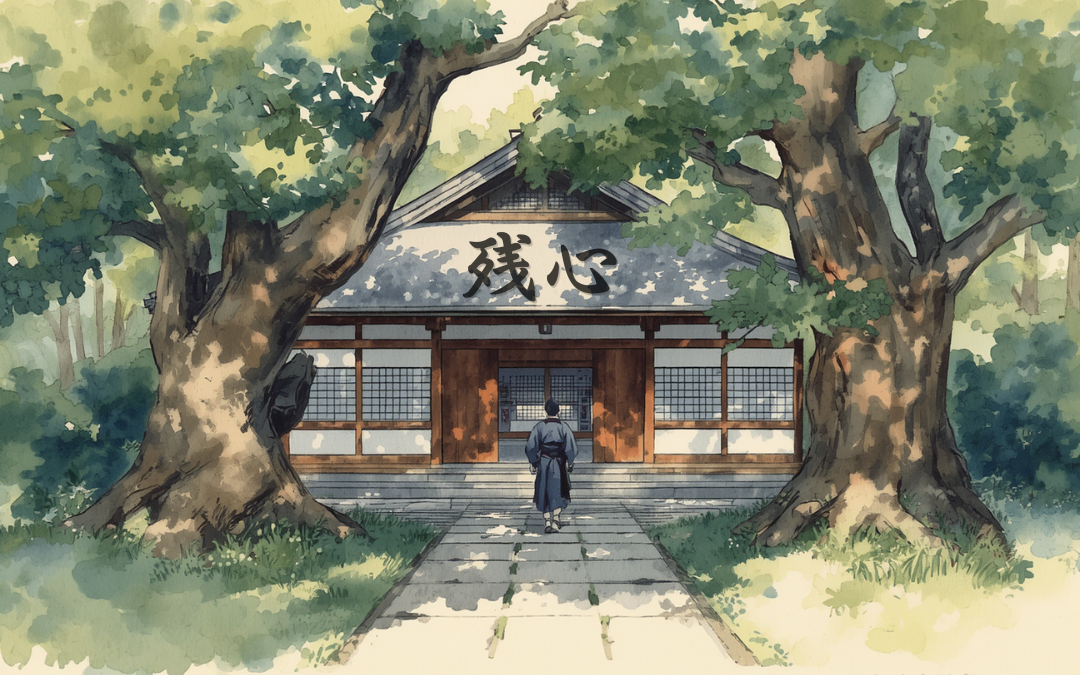
The Moment After the Cut
In the world of Japanese swordsmanship, the moment the blade completes its cut is not the end of the technique. It is, in many ways, the beginning of something far more profound. This is the realm of Zanshin (残心), often translated as the “lingering mind” or “remaining heart.” It is the awareness that persists after the action is complete—the state of total presence that ensures you are never caught off guard, physically or spiritually.
For a practitioner of Mugai-ryū Iaido or Battōdō, Zanshin is not just a technical requirement; it is a way of being. It is the difference between a swordsman who merely performs kata and one who embodies the essence of the art in every movement, every breath, and every thought.
Zanshin in the Dojo
In the dojo, Zanshin is most visibly expressed in the moments following a kata. After the final cut, the practitioner does not immediately relax. Instead, they maintain a state of alert stillness—the sword remains extended, the body poised, the mind sharp. This is not a pause; it is a continuation of the action, a silent declaration that the fight is not over until the opponent is truly neutralized and the environment is secure.
The Three Dimensions of Zanshin in Training:
- Physical Zanshin
- The body remains in a state of readiness. The feet are grounded, the posture upright, and the eyes continue to scan for potential threats. Even after the last cut, the practitioner does not drop their guard. This is the most tangible aspect of Zanshin, and it is often what beginners focus on first.
- Mental Zanshin
- The mind stays fully engaged. There is no mental “switching off” after the technique. Instead, the practitioner remains aware of their surroundings, their opponent (real or imagined), and their own internal state. This mental clarity is what allows a swordsman to respond instantly to any change in the situation.
- Spiritual Zanshin
- This is the deepest layer. It is the understanding that Zanshin is not just about physical or mental readiness, but about a **state of being**. It is the recognition that true mastery comes from a place of inner stillness, where the mind is free from distraction and the spirit is unshaken by fear or doubt.
Zanshin Beyond the Dojo
The beauty of Zanshin is that it is not confined to the dojo. The principles of lingering awareness and total presence can be applied to every aspect of life. In a world filled with distractions, Zanshin offers a way to move through life with intention and clarity.
Zanshin in Everyday Life:
- In Conversations
How often do we truly listen to the person in front of us? Zanshin teaches us to be fully present in conversations, to listen not just with our ears but with our entire being. It is the difference between hearing and understanding. - In Work
Whether you are an artist, a teacher, or a business professional, Zanshin can transform how you approach your tasks. It is the ability to stay focused on the present moment, to give your full attention to the task at hand, and to remain aware of the broader context. It is the difference between working on autopilot and working with purpose. - In Relationships
Zanshin reminds us to be present with our loved ones. It is the awareness that every interaction matters, that every word and gesture carries weight. It is the practice of showing up fully, without distraction, for the people who matter most. - In Moments of Stress
Life is unpredictable, and challenges often arise when we least expect them. Zanshin is the ability to remain calm and centered in the face of adversity, to respond rather than react, and to maintain clarity even in the midst of chaos.
The Paradox of Zanshin
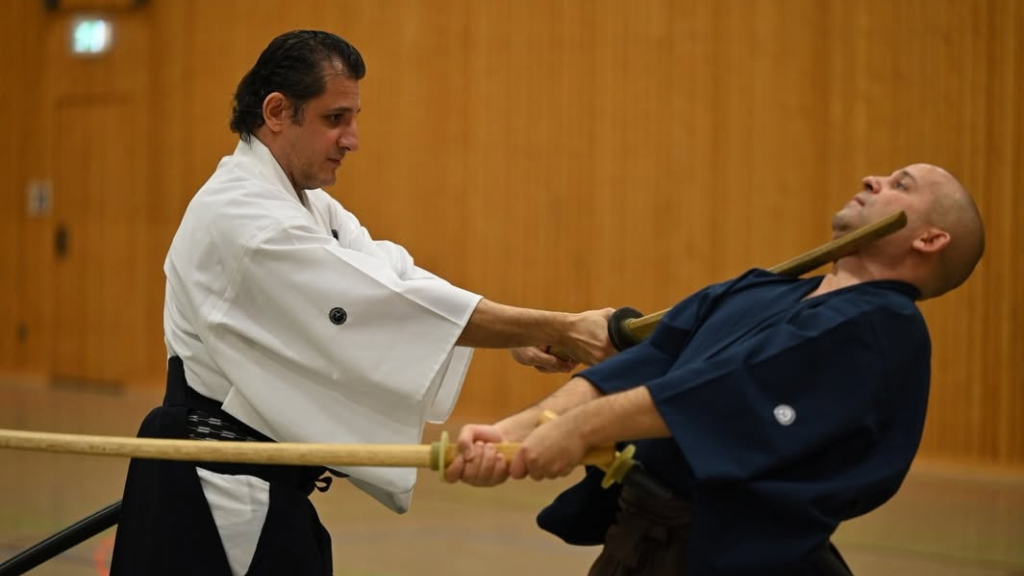
Zanshin is often described as a state of relaxed awareness. This might seem like a contradiction—how can one be both relaxed and alert? The answer lies in the nature of true presence. When the mind is free from tension, it is able to perceive more clearly. When the body is relaxed, it is able to move more efficiently. Zanshin is not about being on edge; it is about being fully alive in the present moment.
In the words of the great swordsman Miyamoto Musashi:
“Perceive that which cannot be seen with the eye.”
This is the essence of Zanshin. It is the ability to see beyond the obvious, to sense the unseen, and to remain connected to the world around you, even in stillness.
Cultivating Zanshin
So how does one develop Zanshin? Like all aspects of martial arts, it begins with practice—both on and off the mat.
Practical Exercises:
- Mindful Breathing
- Before and after training, take a few moments to focus on your breath. Inhale deeply, exhale slowly, and allow your mind to settle. This simple practice can help you cultivate the mental clarity that is essential for Zanshin.
- Slow Kata Practice
- Perform your kata at half-speed, paying close attention to every movement, every transition, and every breath. This helps to ingrain the habit of maintaining awareness throughout the entire sequence.
- Meditation
- Sit in *zazen* (seated meditation) for a few minutes each day. Focus on your breath and observe your thoughts without judgment. Over time, this practice will help you develop the inner stillness that is the foundation of Zanshin.
- Daily Awareness Drills
- Throughout the day, take a moment to pause and check in with yourself. Ask: *Am I fully present in this moment?* If not, gently bring your attention back to the here and now.
Zanshin as a Way of Life
Ultimately, Zanshin is more than a martial arts concept. It is a philosophy—a way of moving through the world with awareness, intention, and grace. Whether you are holding a sword, sitting in a meeting, or spending time with loved ones, Zanshin reminds you to be fully present, to stay connected to the moment, and to approach life with an open heart and a clear mind.
As you continue your journey in Mugai-ryū Iaido or Battōdō, I encourage you to explore Zanshin not just as a technical requirement, but as a guiding principle. Let it shape how you train, how you live, and how you interact with the world around you. In doing so, you will find that the lingering mind becomes not just a part of your practice, but a part of who you are.
What does Zanshin mean to you? How do you cultivate awareness in your own life? Share your thoughts in the comments below—I’d love to hear from you.
Follow my journey on YouTube and Instagram for more insights into the Way of the Sword.