
If you have ever watched a Mugai-ryū master perform a kata, or if you have attended a tea ceremony (Chanoyu), you have likely sensed an invisible progression. It isn’t a constant speed, but rather a wave that builds, breaks, and stops dead.
This ternary rhythm is Jo-Ha-Kyū (序破急).
Far more than a simple technical instruction, it is an aesthetic and spiritual law that governs almost all traditional Japanese arts. Let’s dive into this essential concept to understand the dynamics of the sword and Japanese culture.
What is Jo-Ha-Kyū?
The term is composed of three kanji that define the phases of a movement or an event:
- Jo (序) – The Introduction: Begin slowly, with restraint. This is the moment of concentration, setting the posture, and grounding the breath.
- Ha (破) – The Rupture: The movement develops and accelerates. One “breaks” the initial calm. This is where the action takes shape and unfolds.
- Kyū (急) – The Culmination: A sudden, lightning-fast acceleration—the peak of the movement that ends sharply and decisively.
Did you know? This concept was theorized by Zeami Motokiyo, the founder of Noh theater, in the 14th century. He believed that everything in the universe—from a bird’s song to an entire play—followed this natural rhythm.
Jo-Ha-Kyū in Mugai-ryū Iaihyōdō
In Iaido, and particularly in the minimalist style of Mugai-ryū, Jo-Ha-Kyū is what distinguishes a mechanical execution from a demonstration of life (Sei).
The Art of Nukitsuke (Drawing the Sword)
Watch a Nukitsuke closely:
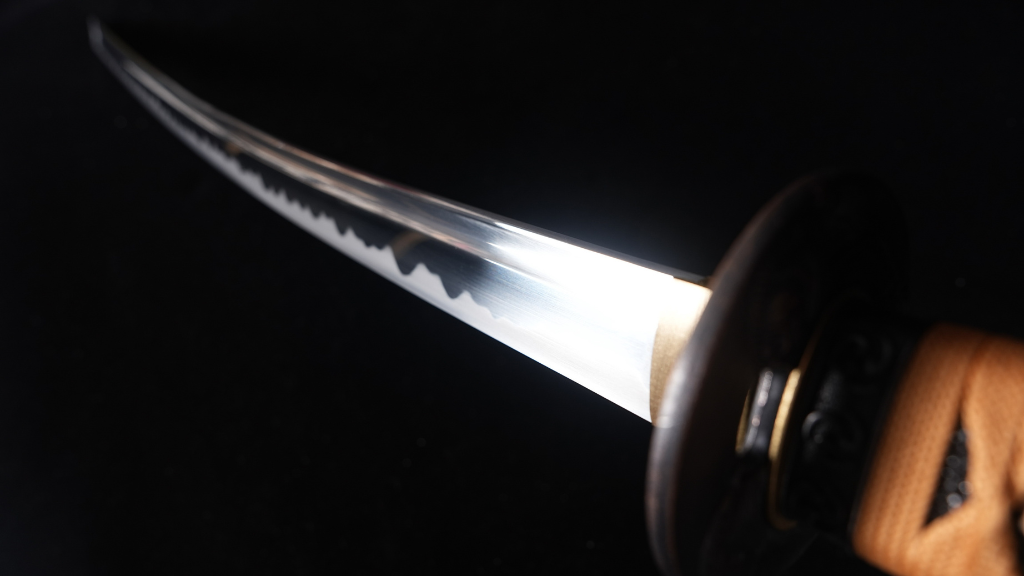
- Jo: The hand grasps the Tsuka, the thumb releases the Tsuba (Koiguchi no kirikata). It is an internal movement, almost invisible.
- Ha: The sword exits the scabbard (Saza-muchi), speed increasing as the blade glides.
- Kyū: The tip clears the scabbard and strikes in a flash. The stop is instantaneous, charged with energy (Zanshin).
If you maintain the same speed from start to finish, your movement becomes predictable. Jo-Ha-Kyū allows you to surprise your opponent by shattering their own rhythm.
A Universal Aesthetic: From Noh Theater to the Tea Ceremony
The genius of this concept is that it applies to fields that seem polar opposites to combat.
In Noh Theater
A Noh play begins with slow, solemn gestures. Gradually, the movements become more complex, the music intensifies, finally ending in a fast, percussive dance before the final silence. Without this rhythm, the audience would lose focus; with it, they are transported into a trance.
In the Way of Tea (Sado)
Even when serving a bowl of matcha, the master follows this curve:
- Jo: The slow and meticulous cleaning of the utensils.
- Ha: The preparation of the tea, with more fluid and dynamic movements.
- Kyū: The final gesture of presenting the bowl, precise and without hesitation.
Why is it important for your practice?
Mastering Jo-Ha-Kyū means learning to manage your energy.
In our modern lives, we are often in permanent “Kyū” mode (urgency, speed). Practicing Iaido forces us to rediscover “Jo” (preparation, conscious slowness).
Dojo Tips:
- Don’t rush: A start that is too fast often ruins the end of the movement.
- Breathe: Use the inhale for Jo, the breath-hold or controlled exhale for Ha, and the explosive exhale for Kyū.
- Observe nature: Think of a water droplet gathering on a leaf (Jo), beginning to slide (Ha), and falling abruptly (Kyū).
Jo-Ha-Kyū is the heartbeat of Budo. By seeking this rhythm in your katas, you are no longer just working your muscles, but your presence in the world. The sword then becomes an extension of this universal pulse.
Enjoyed this article? Check out my previous post on The Concept of ‘Mu’ (無) or follow my training sessions on my YouTube channel.