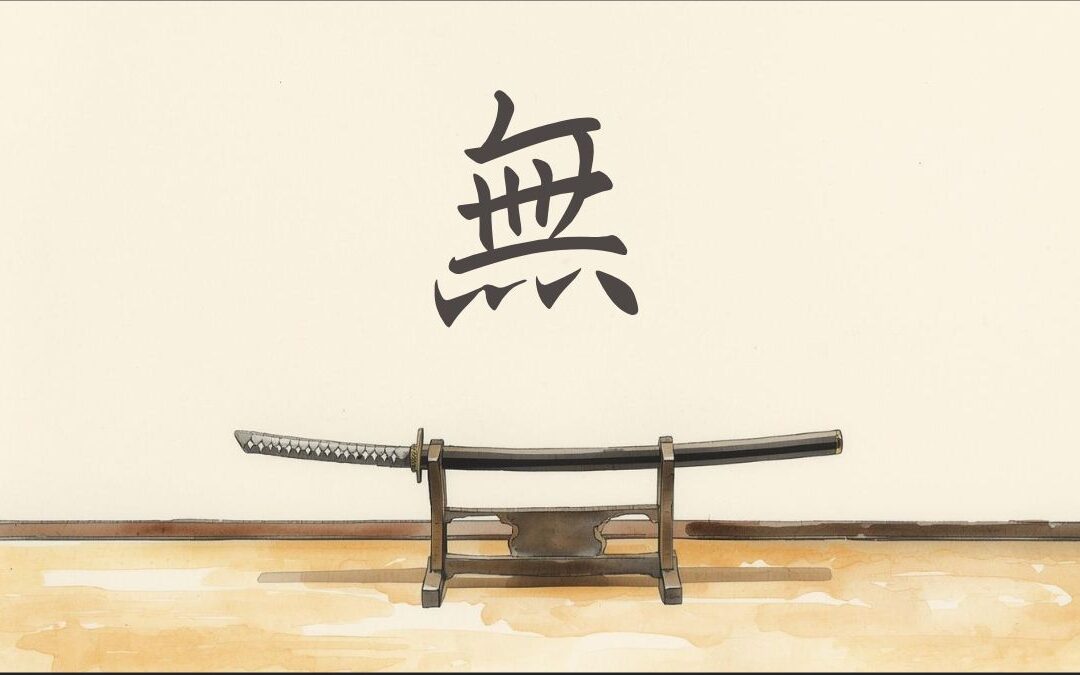
In the name Mugai-ryu, the first character is Mu (無). It is a word that echoes through the halls of Zen temples and the history of Japanese swordsmanship, yet it remains one of the most elusive concepts for a practitioner to grasp.
In 1693, when the founder Tsuji Gettan Sukemochi attained enlightenment at the Zen temple of Azabu-Kyukonji, he composed a poem that gave the school its name. The core of that realization was Mu—the “Great Nothingness.”
But for the modern martial artist, Mu is not just a philosophical abstraction; it is a tactical necessity.
What is ‘Mu’?
In Western thought, “nothingness” often implies a vacuum or a lack of value. In Zen and Mugai-ryu, Mu is the opposite. It is a state of boundless potential. It is the “emptiness” of a bowl that allows it to be useful, or the silence between notes that makes music possible.
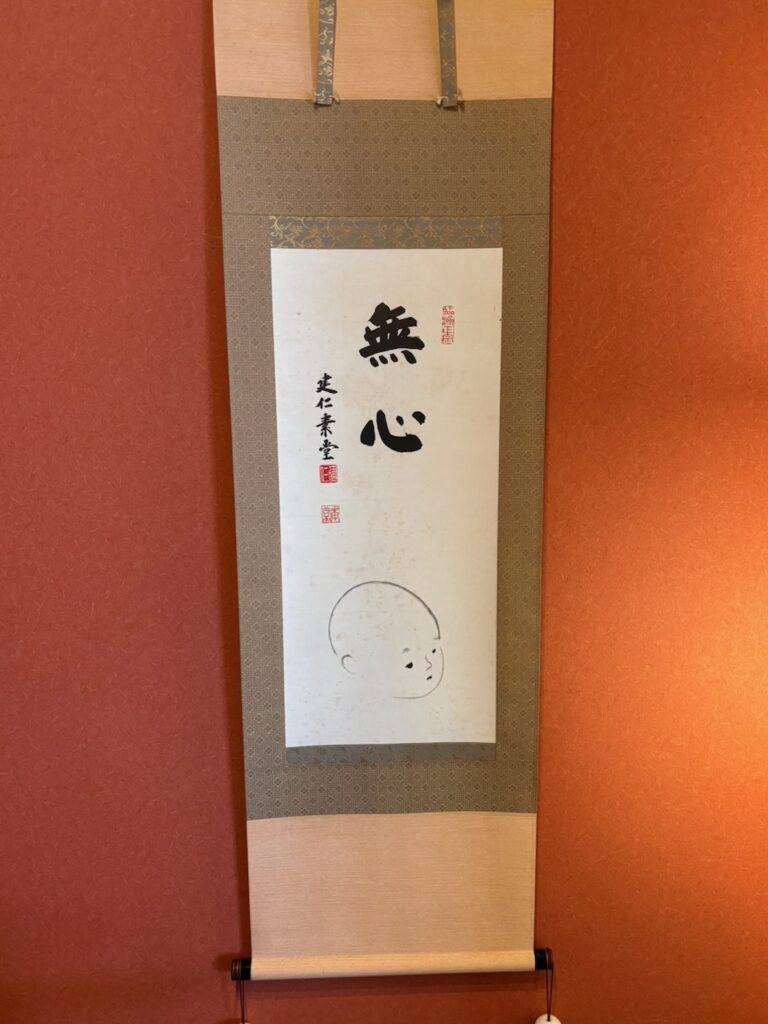
In the context of the sword, Mu refers to Mushin (無心), or “No-Mind.”
In Zen philosophy and the Japanese martial arts (Budo), Mushin (無心) is often described as the pinnacle of mental training. While the literal translation is “No-Mind,” it does not imply a state of brain-dead emptiness or unconsciousness. Instead, it refers to a mind that is unfiltered, unattached, and fully present.
The Core Definition: Mind Without “Stopping”
In ordinary life, our minds are “sticky.” We see something we like, and our mind stops to dwell on it. We experience fear, and our mind stops to worry about it. Zen masters describe this as Tomaru (stopping).
Mushin is a state where the mind flows like a river. It reflects the surroundings perfectly but does not “grab” onto any single reflection.
Fixed Mind: A mind that is occupied by a single thought or emotion, leaving it blind to everything else.
Mushin: A mind that is “empty” of specific thoughts, making it capable of perceiving everything simultaneously.
The Mirror Analogy
The most common way to understand Mushin is through the Mirror Analogy:
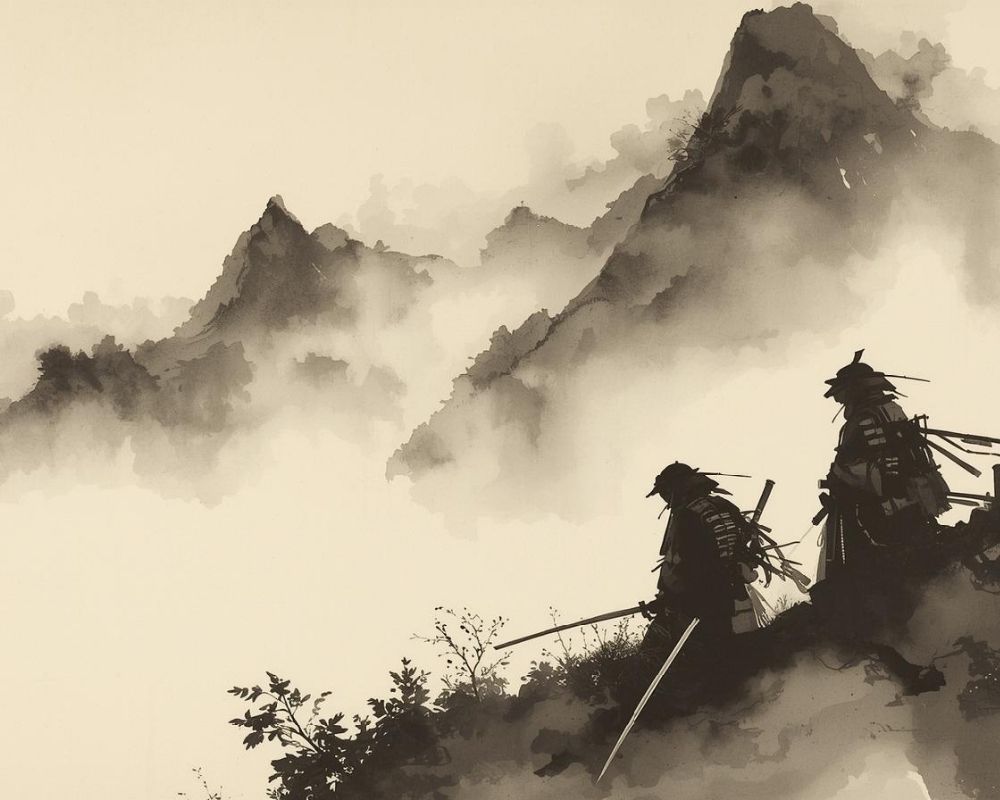
A mirror does not choose what to reflect. It reflects a mountain as a mountain and a valley as a valley. It does not judge the mountain for being too high or the valley for being too deep. When the object moves away, the mirror does not try to hold onto the image; it remains empty and ready for the next reflection.
In Mugai-ryu, if your mind is in a state of Mushin, you do not “plan” your response to an opponent. Your mind simply reflects their movement, and your body responds without the delay of conscious thought.
The Mechanics: How Mushin Works in Combat
In his famous treatise The Unfettered Mind, the Zen monk Takuan Soho explained Mushin to the great swordsman Yagyu Munenori using the concept of the “place where the mind stops.”
- The Calculation Trap: If you think, “He is going to strike my head,” your mind stops on his sword. You are now frozen.
- The Technical Trap: If you think, “I must move my lead foot at a 45-degree angle,” your mind stops on your own feet. You are now slow.
When you achieve Mushin, the “calculation” happens at a subconscious level.
Because you aren’t “thinking” about the technique, there is no “gap” between the opponent’s movement and your reaction. This is often described as Spark and Stone: as soon as the flint is struck, the spark flies.
There is no interval.
The Path to Mushin: Discipline and Repetition
You cannot simply “decide” to have No-Mind. If you think, “I will now empty my mind,” you have just filled your mind with the thought of emptying it.
Mushin is the result of limitless repetition.
- Conscious Effort: You learn the kata of Mugai-ryu with intense focus on every detail.
- Internalization: The movements move from the prefrontal cortex (thinking brain) to the cerebellum and basal ganglia (muscle memory).
- Transcendence: Once the body knows exactly what to do, the conscious mind is “fired” from its job. It can finally sit back and watch, entering the state of Mushin.
Mushin in your Daily Life
While Mushin is a weapon in a duel, it is a sanctuary in daily life. It allows a person to:
- Respond to Stress: Instead of panicking (the mind stopping on a problem), you see the situation clearly and act.
- Total Presence: Whether drinking tea or writing a blog post, you are 100% there.
- Freedom from Ego: Since Mushin is “No-Self,” the anxieties of the ego (pride, shame, embarrassment) lose their power over you.
Mushin in a duel
Imagine standing before an opponent. If your mind is filled with thoughts, you have already lost.
The mind “stops” (tobu) on various distractions:
- The Ego: “I must look skilled.”
- The Fear: “What if I am hit?”
- The Technique: “I must remember to rotate my hips.”
- The Opponent: “He looks faster than me.”
Each of these thoughts acts as an anchor.
In a duel where life and death are decided in a fraction of a second, any “stopping” of the mind results in a delayed reaction.
Mushin is the state where the mind is like water—reflecting everything but grasping nothing.
It is a state of flow where the body moves spontaneously, responding to the opponent’s intent before they even realize they’ve moved.
Mushin during Iaido Training
In Iaido, we often practice “cutting” as an act of purification.
Every strike is not just an attack on an imaginary foe, but a strike against our own internal distractions. By focusing intensely on the “Now” of the cut, the “Yesterday” and “Tomorrow” vanish.
Even after the sword is returned to the scabbard (Noto), the state of Mu must remain. This is Zanshin. If you finish a kata and immediately relax or start thinking about lunch, you have lost the “emptiness.” True Mu is a continuous state of readiness that exists whether the sword is drawn or sheathed.
Mushin : Be like a mirror my friend
A swordsman with an empty mind is unpredictable. If you have no “intent” (Satsujin-ken), your opponent has nothing to read. You become like a mirror; if the opponent moves, you move. If they stay still, you are a mountain.
In the words of the Zen masters:
“When the mind is empty, it is free from the ‘self.’ When it is free from the ‘self,’ it becomes a vessel for the universe.”