
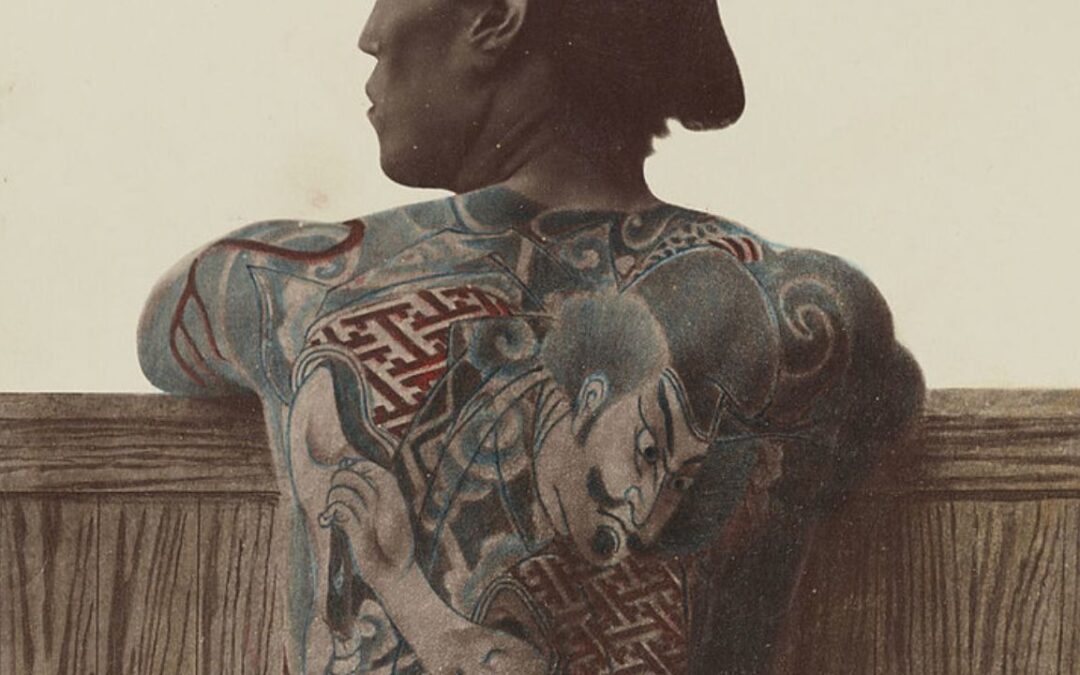
Beyond the Surface of Japanese Body Art
In Western culture, traditional Japanese body art is commonly referred to as Irezumi. However, among traditional Japanese tattoo masters (horishi), the practice is more respectfully called Horimono (彫物, “carved thing”) or Wabori (和彫り, “Japanese carving”). While Irezumi translates literally to “inserting ink” and historically carries penal connotations, Horimono signifies a dedicated craft of full-body etching rooted deeply in cultural heritage, spirituality, and artistic mastery.
During the Edo period (1603–1868)—a prolonged era of peace, economic growth, and urban cultural flourishing—Japan witnessed a dramatic transformation in body art. What began as punitive markings imposed by the ruling elite evolved into a magnificent form of secret armor, expressing personal conviction, spiritual protection, and working-class pride.
From Penal Markings to Pledges of Devotion
The historical trajectory of Edo-period tattooing is marked by a fascinating paradox. In 1720, the Tokugawa Shogunate codified the use of tattoos as a formal criminal penalty (Irezumi or Bokkei). Criminals were marked with broad black bands around their arms or specific kanji characters etched onto their foreheads, making them immediately recognizable across society.
This punitive system aligned with the Neo-Confucian philosophy that dominated Edo sociopolitical life. Under the principle of filial piety, one’s body was regarded as a sacred gift inherited from parents and ancestors. Altering or disfiguring the skin was seen not only as a public mark of lawbreaking, but as a profound act of disrespect toward one’s lineage.
Simultaneously, a very different tattooing subculture was emerging in the pleasure quarters. Courtesans, geishas, and their favored clients began exchanging small pledge tattoos known as irebokuro (“insertion of a mole”)—a small tattooed dot between the thumb and forefinger—or kishobori (“vow tattoos”), which featured written pledges of everlasting love along the inner arm. These romantic marks demonstrated that ink on skin could signify deep emotional commitment rather than crime.
The Ukiyo-e Revolution and the Suikoden Explosion
The transition from modest marks to grand full-body compositions took place during the late 18th and early 19th centuries. This artistic leap was driven primarily by the popularity of Ukiyo-e (woodblock prints depicting the “floating world”) and the translation of the classic Chinese novel Shui Hu Zhuan, known in Japan as Suikoden (The Water Margin).
In 1827, the master woodblock printmaker Utagawa Kuniyoshi published a groundbreaking print series depicting the 108 outlaw heroes of the Suikoden. These martial heroes fought against corrupt government officials to defend social justice. To emphasize their legendary bravery, Kuniyoshi depicted them with intricate full-body tattoos featuring mythical dragons, tigers, fierce deities, and vibrant botanical designs.
The Suikoden prints created an unprecedented sensation among the urban working classes. Inspired by Kuniyoshi’s heroic imagery, everyday artisans and laborers sought out woodblock carvers and tattoo masters to reproduce these dynamic full-body suits (horimono) directly on their own skin.
Who Wore Horimono? The Social Fabric of Edo
Far from being restricted to outlaws, Horimono became an integral element of urban identity in Edo (modern-day Tokyo). Specific occupational groups embraced body art for distinct practical and spiritual reasons:
- Firefighters (Shouboushi): In a city constructed largely of timber, fires were a constant threat. Firefighters wore full-body tattoos as spiritual talismans to protect them against flames, frequently choosing aquatic motifs such as dragons, water currents, and crashing waves.
- Couriers (Hikyaku) and Construction Workers: These men performed strenuous physical labor dressed only in loincloths (fundoshi). Elaborate tattoos served as a form of spiritual clothing, shielding them from embarrassment while showcasing physical stamina.
- Street Knights (Kyōkaku): Organized groups of chivalrous street knights protected commoners against abusive authorities and thugs. Identifying strongly with the rebellious Suikoden heroes, they adopted body suits as pledges of group loyalty and courage.
The Samurai vs. Commoner Divide
High-ranking samurai generally rejected tattoos, viewing them as barbaric and incompatible with Neo-Confucian decorum. While samurai could demonstrate ultimate devotion through ritual suicide (seppuku), working-class artisans (shokunin) were barred from such rites. For the commoner, enduring the intense pain of Horimono was a way to prove quiet resilience, physical fortitude, and defiance against rigid class hierarchies.
Sacred Symbolism: Decoding Traditional Motifs
Every motif chosen for a Horimono body suit is deeply intentional, drawing from Shintoism, Buddhism, classical literature, and natural folklore.
| Category | Symbol | Spiritual Meaning & Cultural Context |
|---|---|---|
| Mythological Beasts | Dragon (Ryu) | Supreme wisdom, power, good fortune, and mastery over water; benevolent guardians. |
| Tiger (Tora) | Physical courage, combativeness, and protection against evil spirits and disease. | |
| Koi Fish | Perseverance and determination; references the legend of a koi transforming into a dragon. | |
| Serpent (Hebi) | Health, wisdom, regeneration, and protection against illness. | |
| Phoenix (Hō-ō) | Immortality, rebirth, triumph over adversity, and new beginnings. | |
| Botanical Imagery | Cherry Blossoms (Sakura) | The fleeting nature of life (mono no aware) and awareness of mortality. |
| Lotus Flower | Spiritual awakening, purity, and rising clean out of muddy waters. | |
| Chrysanthemum (Kiku) | Symbol of the Emperor; represents high status, perfection, and determination. | |
| Peony (Botan) | Prosperity, self-confidence, wealth, and good fortune. | |
| Deities & Figures | Hannya Mask | A female demon consumed by grief and anger; acts as a fierce protective talisman. |
| Fudō Myō-ō & Kannon | Immovable wisdom, spiritual discipline, and Buddhist compassion. | |
| Framing Elements | Gakubori (Waves & Wind) | Water currents, clouds, and wind framing central figures into a cohesive suit. |
The Craftsmanship: Tebori and the Path of Gaman
Traditional Horimono is executed using tebori (手彫り, “hand-carving”). Master craftsmen (horishi) attach fine steel or bamboo needles to handheld rods, rhythmically inserting ink beneath the skin at precise depths.
During the Edo period, tattooists relied exclusively on natural Nara black ink (sumi)—which ages to a characteristic blue-green hue under the skin—and vermilion red pigment. Completing a full-body suit (donburi or munewari) required between 200 and 300 hours of painful labor spread over several years.
This demanding process transformed body art into a spiritual discipline centered on gaman (我慢)—the virtue of patience, quiet endurance, and self-control.
Prohibition, Secrecy, and Modern Resurgence
With the Meiji Restoration in 1868, Japan embarked on rapid westernization. In 1872, eager to present an image of modern civilization to Western nations, the government banned tattooing nationwide.
Paradoxically, while native Japanese were prohibited from getting tattooed, foreign visitors—including Western sailors and royalty such as Prince George (later King George V of the United Kingdom)—flocked to Japanese masters to receive Horimono.
To survive, horishi operated underground behind discreet storefronts, passing down their lineages within master-apprentice guilds like the historic Edo Choyukai, founded over 140 years ago.
Although the prohibition was officially lifted in 1948, 20th-century cinema heavily associated full-body tattoos with yakuza syndicates, entrenching a social stigma that persists today in places like public hot springs (onsen).
However, scholars, art historians, and international enthusiasts increasingly celebrate Horimono for what it truly is: a masterwork of textile-like composition, profound folklore, and extraordinary physical dedication—a living canvas of Japanese art history.