
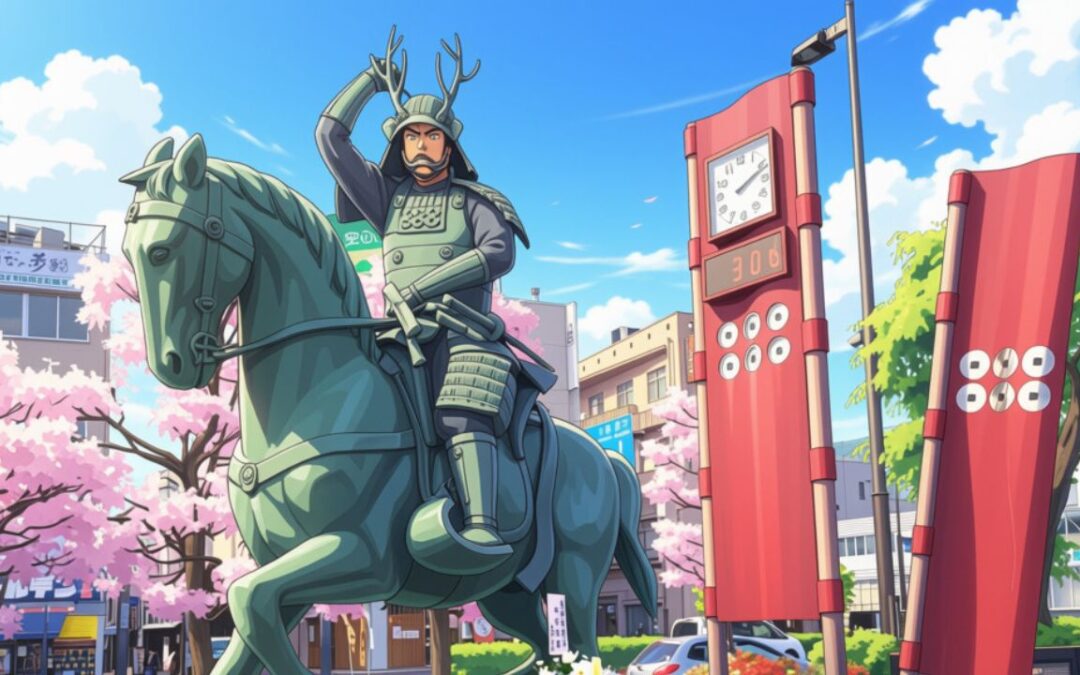
Four centuries after his death at the Siege of Osaka, Sanada Yukimura remains one of the most celebrated figures in Japanese military history. Recognized in historical records as the “Number one warrior in Japan” (Nihon-ichi no mohei), the “Crimson Demon of War,” and “A Hero who may appear once in a hundred years,” he was lauded even by rival commanders such as Shimazu Tadatsune for his supreme martial valor. Although he never governed the nation or won an overarching war, his enduring legacy rests upon his extraordinary tactical intellect, resilience, and unwavering adherence to the samurai code of bushidō.
1. From Nobushige to Yukimura: Early Life and Family Lineage
Historical documents confirm that the warrior known to modern popular culture as Yukimura was actually named Sanada Nobushige. The name “Yukimura” emerged decades after his death through Edo-period military novels, theatrical plays, and folk chronicles that dramatized his exploits.
Born in 1567 in Shinano Province (modern-day Nagano Prefecture), Nobushige was the second son of Sanada Masayuki, a master military strategist who originally served Takeda Shingen and Takeda Katsuyori. Raised during the turbulent Sengoku period (Warring States era), young Nobushige received comprehensive instruction in swordsmanship, archery, horsemanship, military strategy, and Chinese classical texts. His father instilled a foundational rule of war: patience, observation, and strategic positioning can allow a smaller force to defeat a vastly superior opponent.
Following the collapse of the Takeda clan in 1582, the Sanada clan maneuvered through shifting regional alliances. To secure political backing, Masayuki sent Nobushige as a political hostage to Uesugi Kagekatsu in 1585, and later to Toyotomi Hideyoshi. Nobushige subsequently married Chikurin-in, the daughter of Hideyoshi’s key advisor Ōtani Yoshitsugu, establishing his position within the Toyotomi retainer network.
2. Sekigahara and the Defense of Ueda Castle
The geopolitical landscape of Japan shifted dramatically in 1600 with the Battle of Sekigahara, which pitted Tokugawa Ieyasu’s Eastern Army against the Western Army supporting the Toyotomi administration. To guarantee the survival of the Sanada lineage regardless of the outcome, the family divided its loyalties:
- Sanada Nobuyuki (the elder brother) joined Tokugawa Ieyasu’s Eastern Army.
- Sanada Nobushige and his father Masayuki aligned with the Western Army.
Prior to the main confrontation at Sekigahara, Masayuki and Nobushige fortified Ueda Castle against Tokugawa Hidetada’s advancing army. Utilizing strategic deception, terrain advantages, and surprise counter-attacks, the Sanada garrison of approximately 2,000 to 2,500 warriors successfully delayed Hidetada’s force of 38,000 to 40,000 men. This delay prevented Hidetada from reaching Sekigahara in time for the decisive battle.
Despite the defensive success at Ueda, the Western Army was defeated at Sekigahara. Through the political intervention of his pro-Tokugawa brother Nobuyuki, Nobushige and his father were spared execution and sentenced to exile at Kudoyama, near Mount Kōya.
3. Fourteen Years of Exile at Kudoyama
Nobushige spent nearly fourteen years (1600–1614) in confinement at Kudoyama. Lacking financial resources, he lived in poverty, and his father Masayuki died in exile in 1611 without receiving a pardon.
Letters written during these years record Nobushige lamenting his deteriorating health, failing teeth, and aging appearance. Nevertheless, he maintained his martial mindset, continuously studying past military campaigns and awaiting an opportunity to fulfill his allegiance.
4. The Siege of Osaka and the Sanada-maru
In 1614, open conflict erupted between Tokugawa Ieyasu and Toyotomi Hideyori. When Hideyori issued a call for masterless samurai (rōnin) to defend Osaka Castle, the 49-year-old Nobushige escaped surveillance at Kudoyama and joined the garrison.
Identifying the southern perimeter of Osaka Castle as its most vulnerable sector, Nobushige designed and constructed an earthwork barbican attached to the outer moat: the Sanada-maru.
Structural and Tactical Features of the Sanada-maru:
- Defensive Earthworks & Moats: Protected by dry moats (karabori) and wooden palisades to canalize attacking infantry.
- Concentrated Firepower: Fitted with wooden watchtowers (seirō) matted for arquebusiers to unleash organized volley fire.
- Garrison Force: Defended by approximately 6,000 to 7,000 troops under Nobushige’s direct command.
During the Winter Siege of Osaka (1614), Tokugawa forces under Maeda Toshitsune, Ii Naotaka, and Matsudaira Tadanori launched heavy assaults against the position. Nobushige’s forces repeatedly repelled force contingents totaling 10,000 to 30,000 men, inflicting severe casualties while executing sorties that broke through the siege lines three times.
Unable to breach the fortification by ground assault, Tokugawa Ieyasu employed artillery bombardments to force peace negotiations. Under the resulting truce conditions, Tokugawa forces systematically filled in Osaka Castle’s outer moats and dismantled the Sanada-maru.
5. The Crimson Charge of 1615 and Death
Deprived of defensive earthworks, the Toyotomi forces faced the Summer Siege of Osaka in May 1615.
On June 3, 1615 (Battle of Tennōji), Nobushige rode into combat at the head of 3,000 to 3,500 elite troops uniformly outfitted in crimson armor (Sanada Red Armor). Recognizing that a prolonged defense was impossible, Nobushige spearheaded an aggressive charge directed straight at Tokugawa Ieyasu’s central command post at Chausuyama.
The crimson vanguard penetrated multiple enemy lines, throwing the Tokugawa central command into disarray, repelling troops three times, and knocking down Ieyasu’s personal command banner. Exhausted after hours of continuous fighting, Nobushige withdrew to rest at Awa Shrine, where he was killed by enemy soldiers after declaring his identity.
6. Myth vs. Reality: The Sanada Ten Braves
Legendary accounts frequently associate Sanada Yukimura with the Sanada Ten Braves (Sanada Ten Ninja), a mythic group of ten ninja warriors—including figures such as Sarutobi Sasuke and Kirigakure Saizō—who allegedly conducted superhuman espionage during the Osaka campaign.
- The Myth: The named Ten Braves are fictional characters created in Edo-period literature and popularized in Taishō-era comic books.
- The Historical Reality: The Sanada clan did maintain a highly effective secret intelligence and scout network—functioning similarly to ninjas—to gather strategic field intelligence on enemy troop movements.

7. The Six Coins (Rokumonsen) and the Philosophy of Bushidō
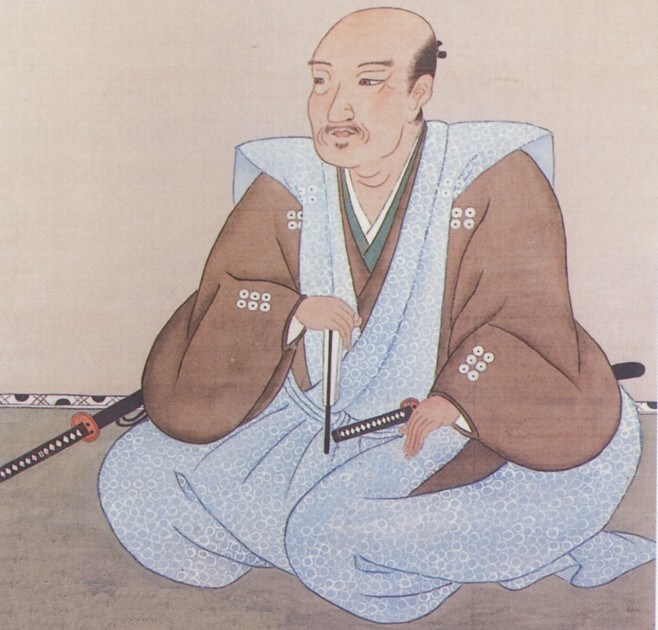
The Sanada family crest featured the Rokumonsen—six mon coins arranged horizontally in two rows.
In Japanese Buddhist tradition, six coins were placed alongside the deceased to pay the ferryman across the Sanzu River to the afterlife. Wearing this emblem signified that a warrior had accepted death prior to entering battle, allowing him to act without fear or hesitation.
Sanada Yukimura’s life exemplifies core samurai virtues that continue to be studied in Japanese martial history:
- Strategic Intellect: Demonstrating that tactical analysis, composure, and terrain preparation can negate numerical superiority.
- Perseverance in Adversity: Maintaining mental discipline and focus through long years of hardship and exile.
- Unwavering Loyalty: Remaining faithful to a cause despite overwhelming odds and certain defeat.
Listen our dedicated podcast episode