TAMESHIGIRI
Tameshigiri: the art of the real cut (試し斬)
History, tradition and mastery: confronting the technique, the blade and the spirit to the test of the cut.
What is Tameshigiri?
The term Tameshigiri (試し斬り or 試し切り) literally means “cutting test”. Originating from the martial traditions of feudal Japan, Tameshigiri originally designated the rigorous process intended to evaluate the cutting efficiency (Chikara) and the resistance of a sword (Katana).
Today, within Mugai-ryu and traditional Budo schools, the objective of Tameshigiri has evolved: it is no longer solely about evaluating the quality of the forged metal, but to test the technique, the posture and the state of mind of the practitioner. It is then also referred to as Suemono-giri (the cut on fixed targets).
Origins and history of Tameshigiri
1. The Sengoku period (1467 – 1603): the test of combat During the warring states period (Sengoku Jidai), swords were tested directly on the battlefields. The quality of the blade and the precision of the cut were a matter of immediate survival. Blacksmiths sought to design weapons capable of incising with fluidity without chipping or bending under impact.
2. The Edo period (1603 – 1868): codification and the O-tameshi experts With the advent of the Tokugawa Shogunate and the installation of a prolonged peace, the sword test became formalized. Specialized families of expert testers (O-tameshi-yaku), such as the famous Yamada lineage (started by Yamada Asaemon), were mandated by the Shogun and the great Daimyos. Their role was to scientifically evaluate the blades created by the great master blacksmiths (Kaji).
These experts used standardized plant supports to measure the depth of the cut and inscribed the evaluation results (Mei) in the form of engravings (Origami or Tameshi-mei) directly on the tang of the blade (Nakago), thus authenticating the value of a weapon.
3. From the 20th century to the present day: the preservation of Budo During the 20th century, under the impulse of great masters of Iaido and Kenjutsu, the practice of Tameshigiri abandoned any utilitarian function of weapon manufacturing to become a discipline of personal accomplishment. It allows preserving the authenticity of the Japanese art of the sword by preventing the practice from becoming purely theatrical or abstract.
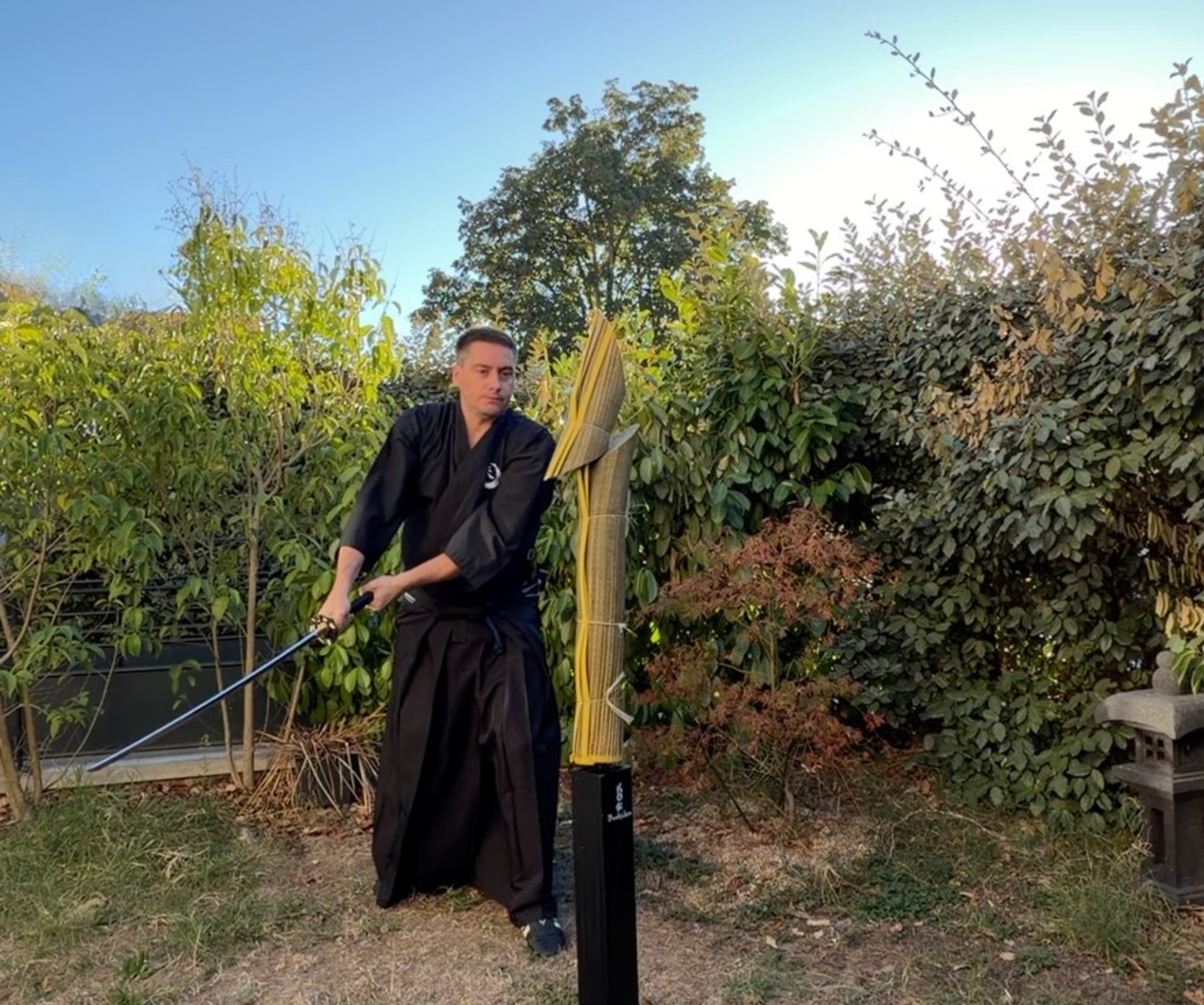
Tameshigiri by Lionel Reynaud (Mugai-ryu Meishi ha)
Why practice Tameshigiri in Mugai-ryu?
Founded in the 17th century by Tsuji Gettan Sukemochi, the Mugai-ryu school advocates a refined, direct and frill-free style. Tameshigiri is a fundamental pedagogical learning tool there:
-
The alignment of the cutting edge (Hasuji – 刃筋): during an empty cut (Suburi), an error of a few degrees in the angle of the blade is undetectable. Faced with the resistance of a target, a bad Hasuji immediately leads to a blockage, a deviation or a twisting of the blade.
-
The holding of the handle (Tenouchi – 手の内): Tameshigiri teaches the correct distribution of the pressure of the hands on the Tsuka. The grip must be flexible during the momentum and lock instantly upon impact (retraction movement Shibori).
-
The transfer of energy (Kime and Koshi): a successful cut does not rely on the muscular strength of the arms, but on the engagement of the pelvis (Koshi), the extension of the body and the centering of the breath (Hara).
The targets and traditional equipment
In order to restore a faithful resistance while respecting modern ethics, the practice relies on specific equipment:
-
The Shinken (真剣): traditional Japanese sword in high carbon steel, forged and sharpened by hand. Its handling requires extreme vigilance and is reserved for supervised practitioners.
-
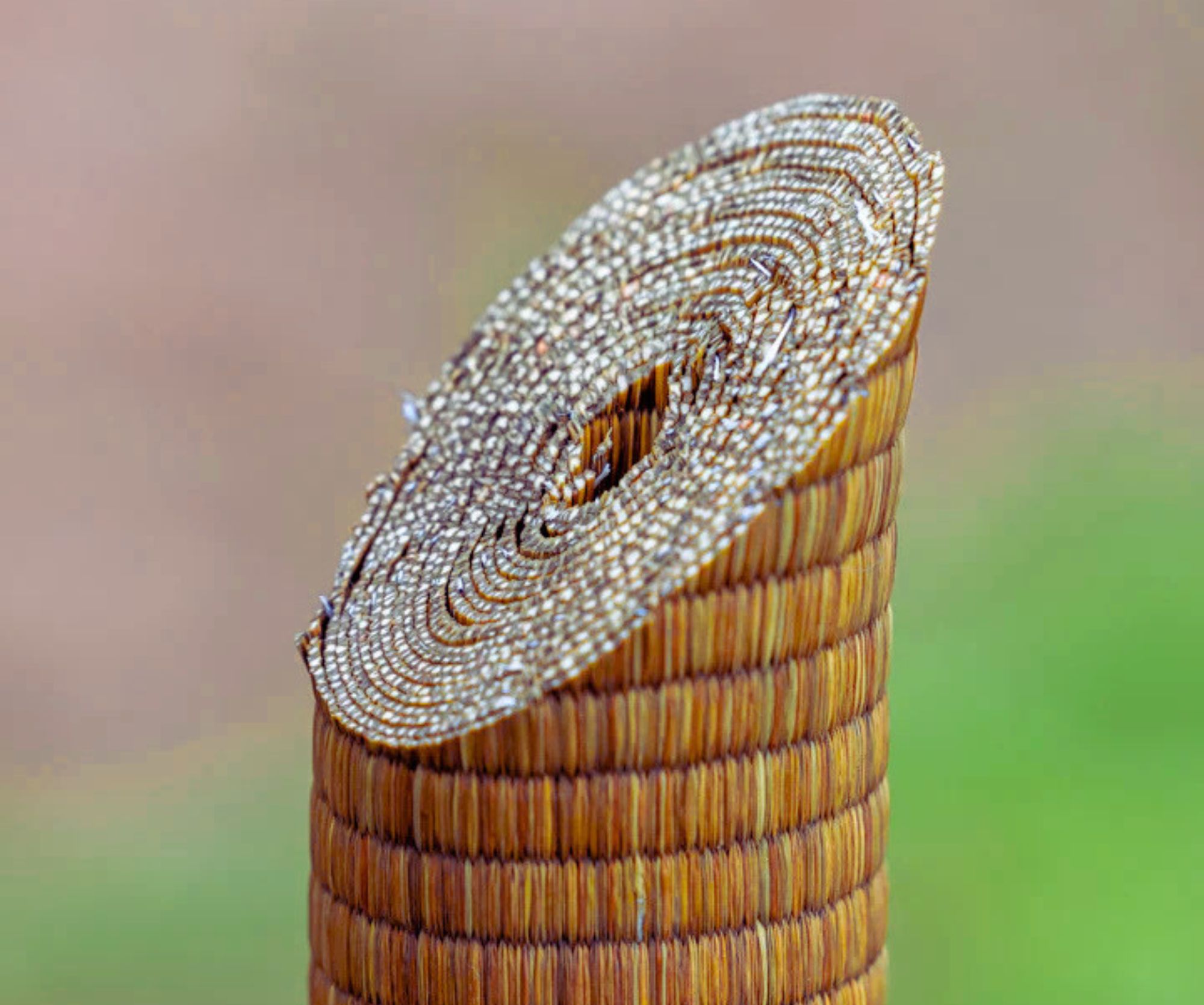
The Tatami Omote (藁): braided rice straw mats, reused after their first domestic use in Japan. Rolled tightly then immersed in water for several hours, their density and fibrous consistency offer an ideal resistance to the cut.
-
The Dotan / Sanbutsu: the wooden base of heavy structure ensuring the perfect stability of the target during the strike.
Main cutting techniques
In Mugai-ryu, Tameshigiri puts into application the fundamental cutting angles of the school:
-
Kesa-giri (斜め斬り): downward diagonal cut at 45°, inherited from the classic cutting gesture from the top of the collar to the hip.
-
Gyaku-kesa: upward diagonal cut, requiring a strict control of balance and gaze.
-
Suihei-giri (水平斬り): horizontal cut parallel to the ground, considered as one of the most difficult because requiring a perfectly flat trajectory.
-
Kumi-giri (組斬り): rapid sequence of successive cuts on the same target before the cut section falls back down.
my Instagram
Follow my adventures on Instagram!
From Japan to daily training updates, stay tuned for the latest..