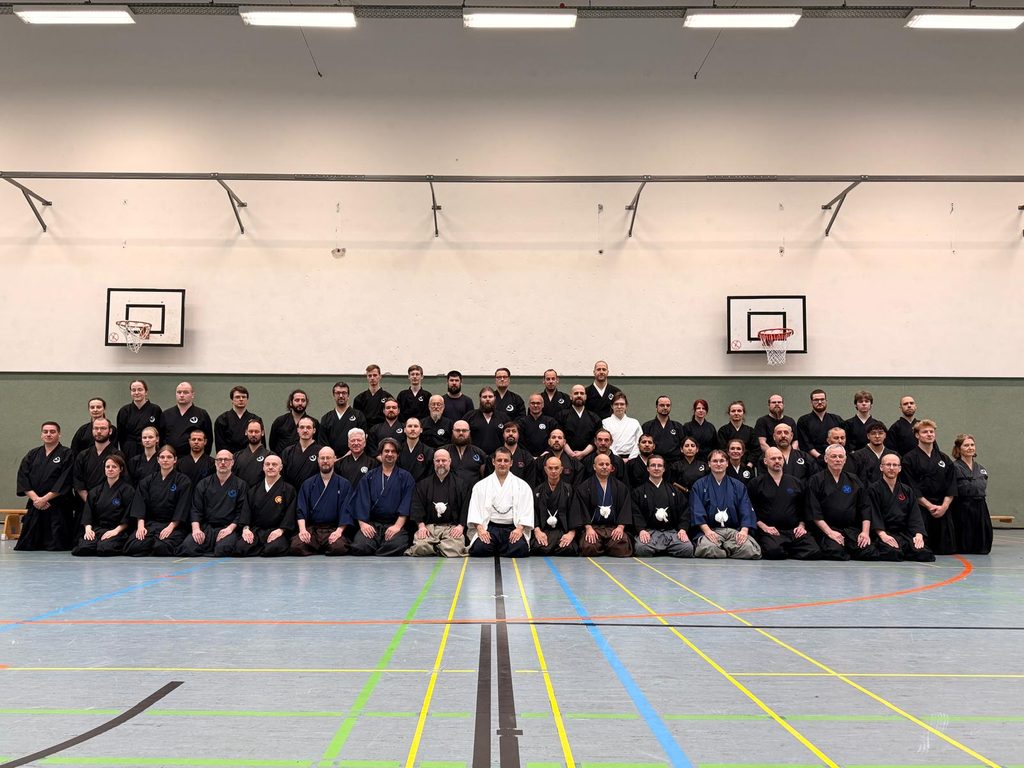
Last week, we gathered in Cologne for the 2026 Meishi-ha Winter Seminar—an incredible opportunity to train together, connect as a community, and for several dedicated students, test for their next rank.
Here is a look back at an unforgettable weekend of martial arts, tradition, and shared learning.
Friday: Exclusive Teachers’ Training Session
Even though the main seminar officially kicked off on Saturday, Friday was dedicated to a specialized training session for instructors.
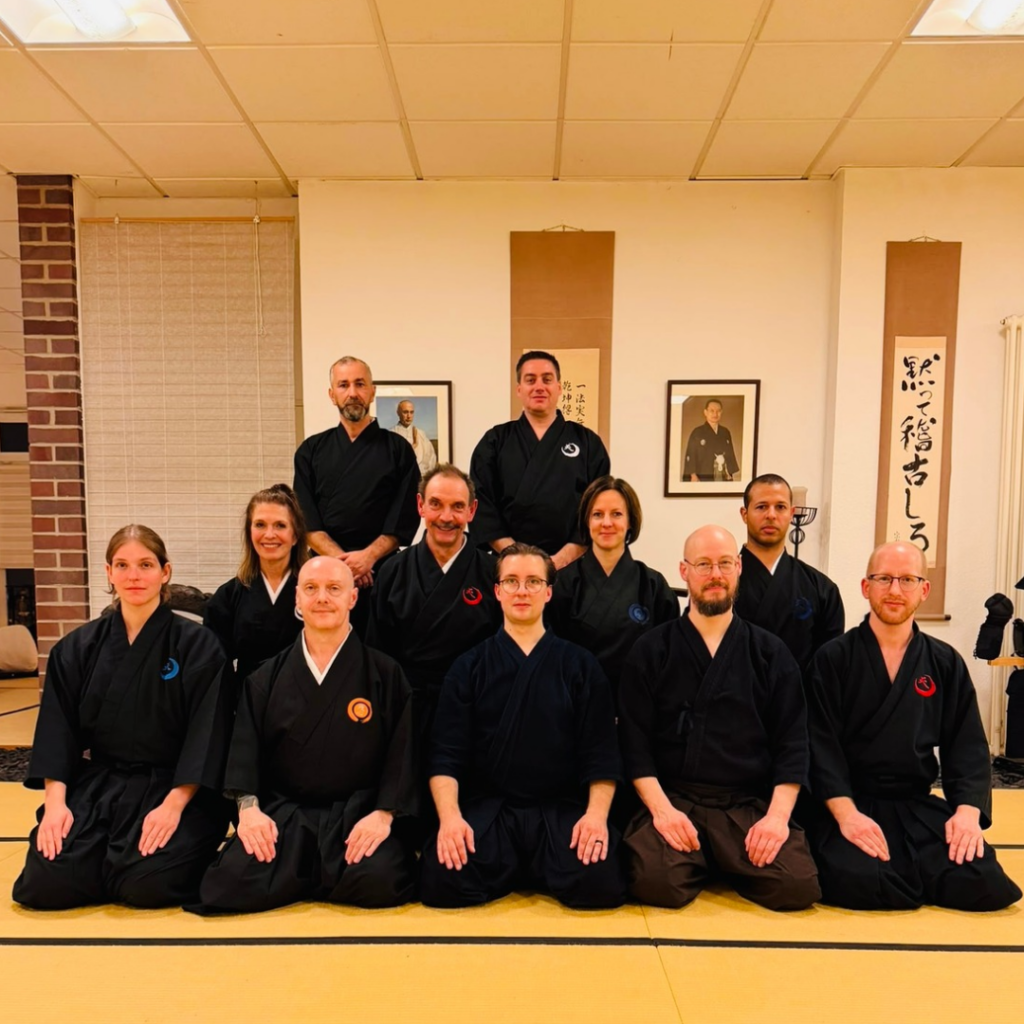
During these two hours, Sensei Simon Landsberg shared fresh updates directly from Japan. We collaborated on ways to elevate our teaching methodologies, with a special focus on how to adapt Mugai-ryu for students with physical disabilities. It was a fantastic moment of openness and knowledge transmission. I had the privilege of sharing my own approaches to teaching para-karate and my background coaching para-cycling for the London 2012 and Rio 2016 Paralympics.
It was truly a global gathering, bringing together teachers from Germany, Italy, Argentina, the USA, the Netherlands, Romania, and France, all united at the Mugai-ryu Meishi-ha Hombu Dojo.
Saturday Morning: Ceremonies and Honors
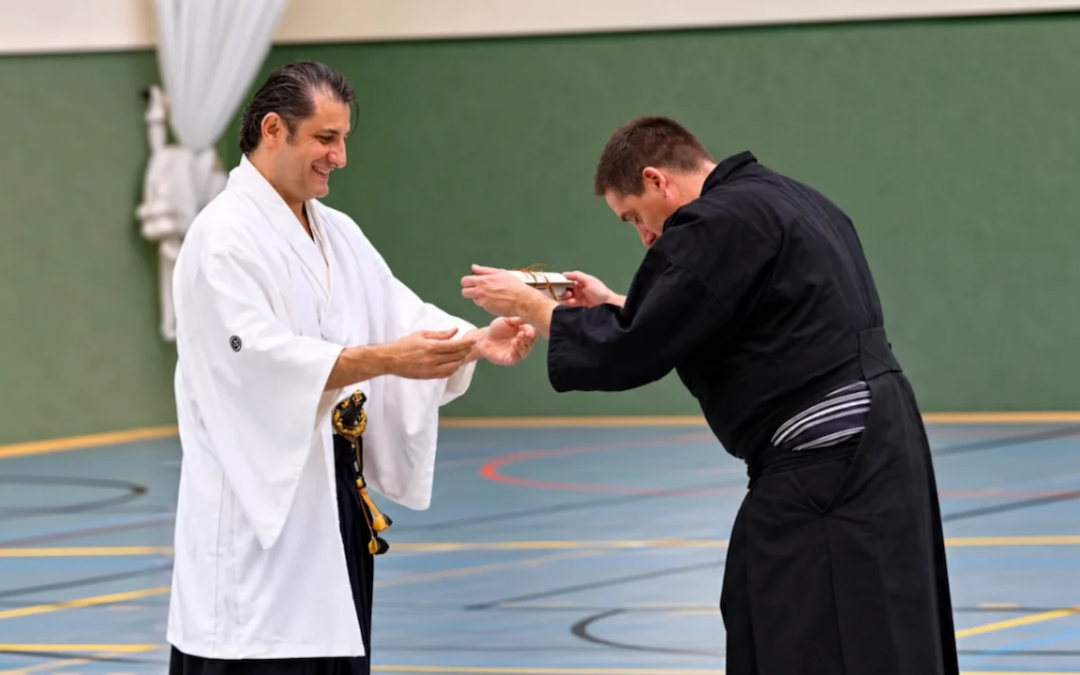
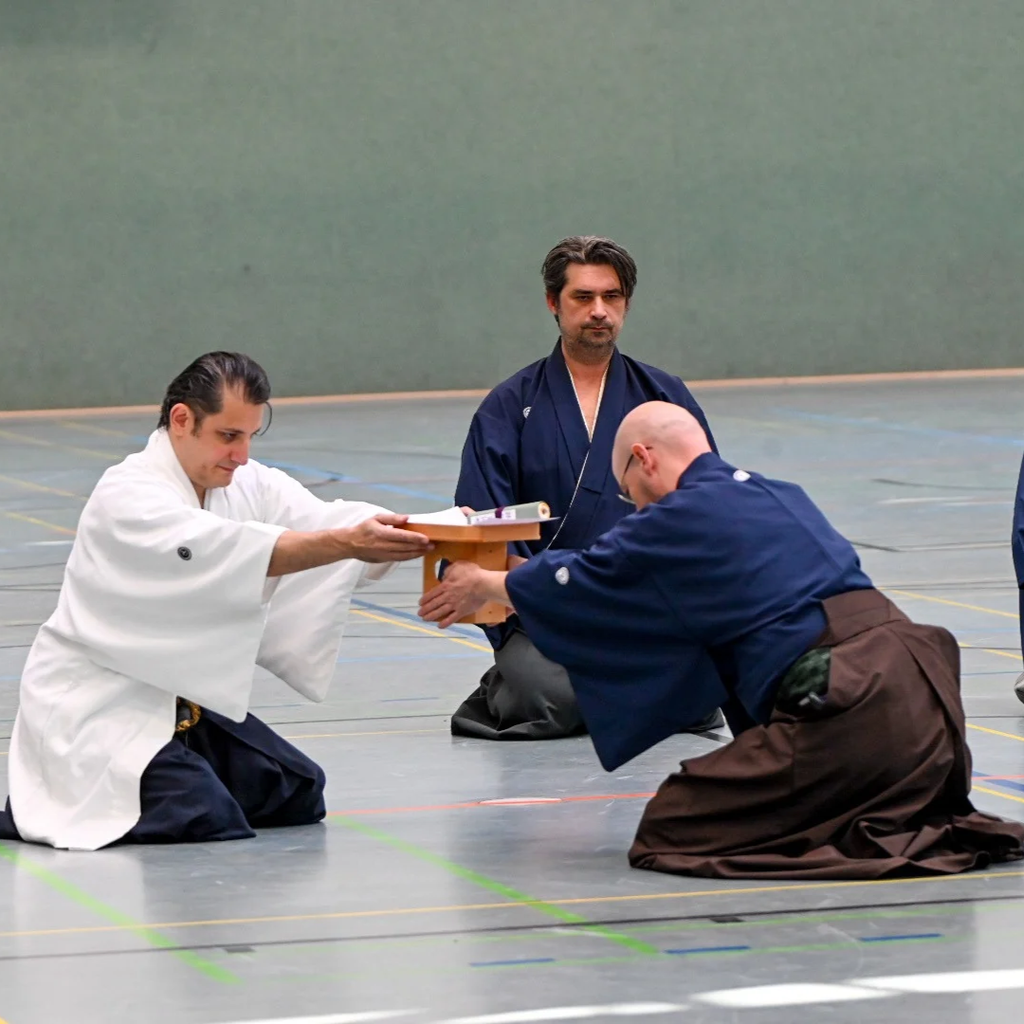
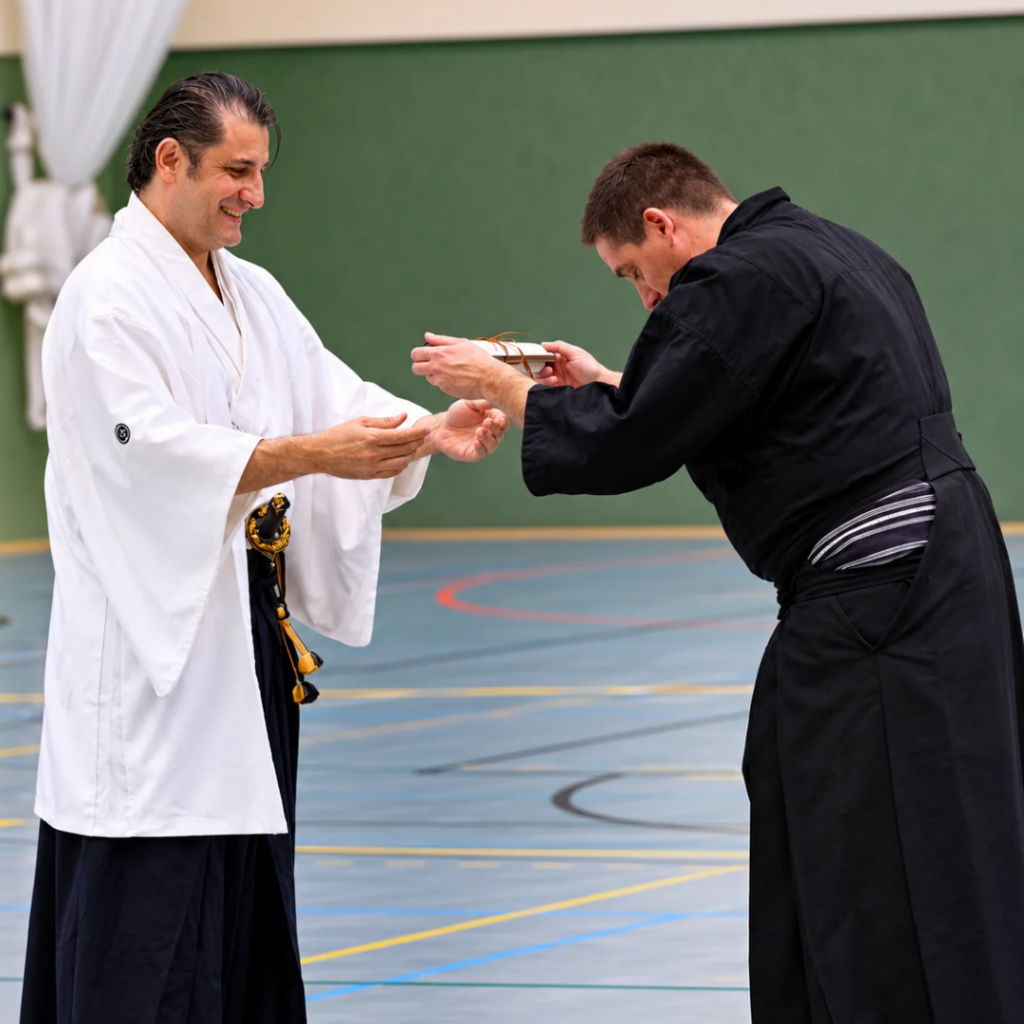
The seminar officially opened on Saturday with an intense and deeply moving ceremony where high-ranking teachers were awarded their mokuroku.
Note on Tradition: The word mokuroku (目録) literally translates to catalogue, inventory, or register. In martial arts, it is a formal document recognizing that a student has been taught and entrusted with a defined body of techniques and knowledge.
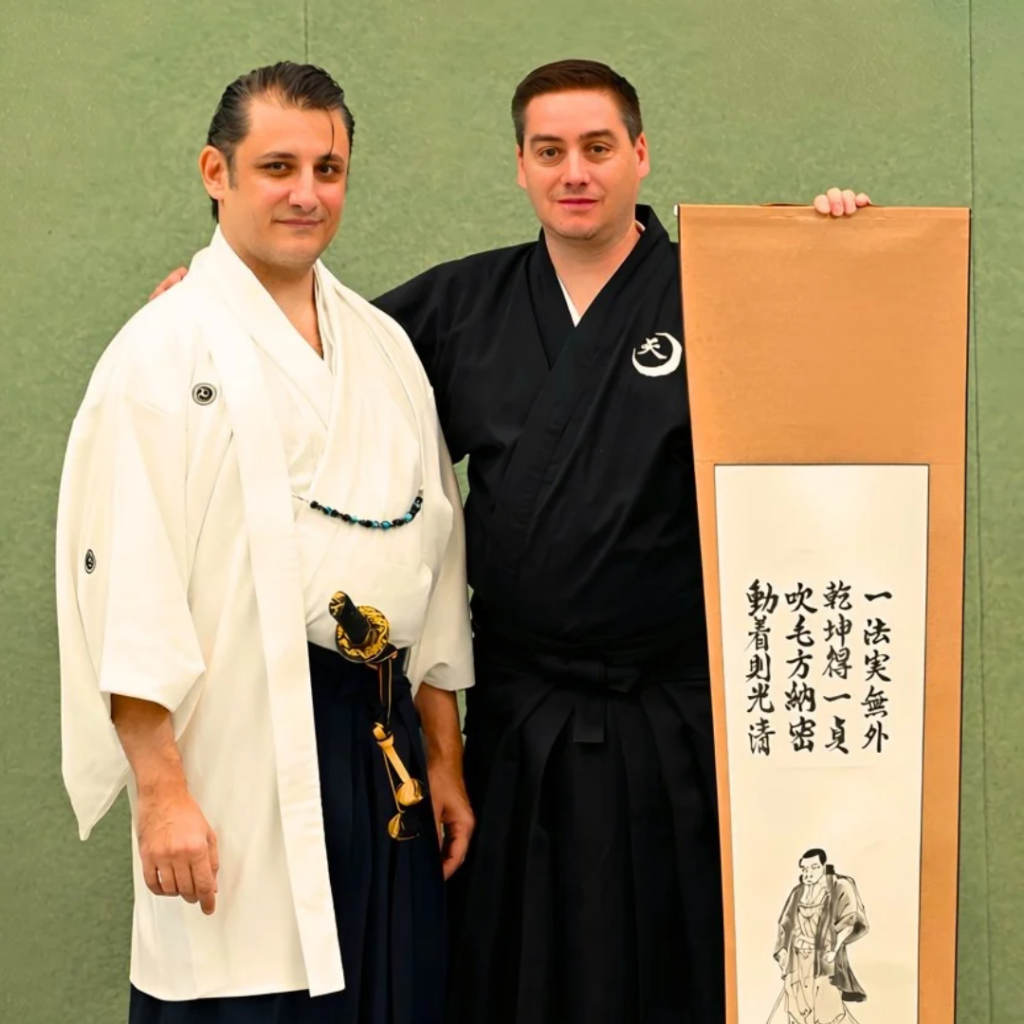
Immediately following this was the Shibucho Ceremony. During this time, the Head of Branch presented formal kakejiku (hanging scrolls) from Japan, officially recognizing individuals as teachers and Representatives for their specific countries. Standing alongside my friend from Romania as we received the scrolls for France and Romania respectively was a profound and emotional milestone.
Let’s Train: Iai Kata
After the ceremonies—which certainly tested the endurance of those holding seiza!—it was time to draw our swords.
Saturday’s physical training was entirely dedicated to Iai kata. We focused heavily on refining our technique and reinforcing our body structure to generate and deliver more power through the cut.
Sunday: Rank Tests and Kenjutsu
Sunday morning brought the pressure of rank tests. It is always a tense but rewarding environment watching students and teachers step up to demonstrate their hard work under pressure.
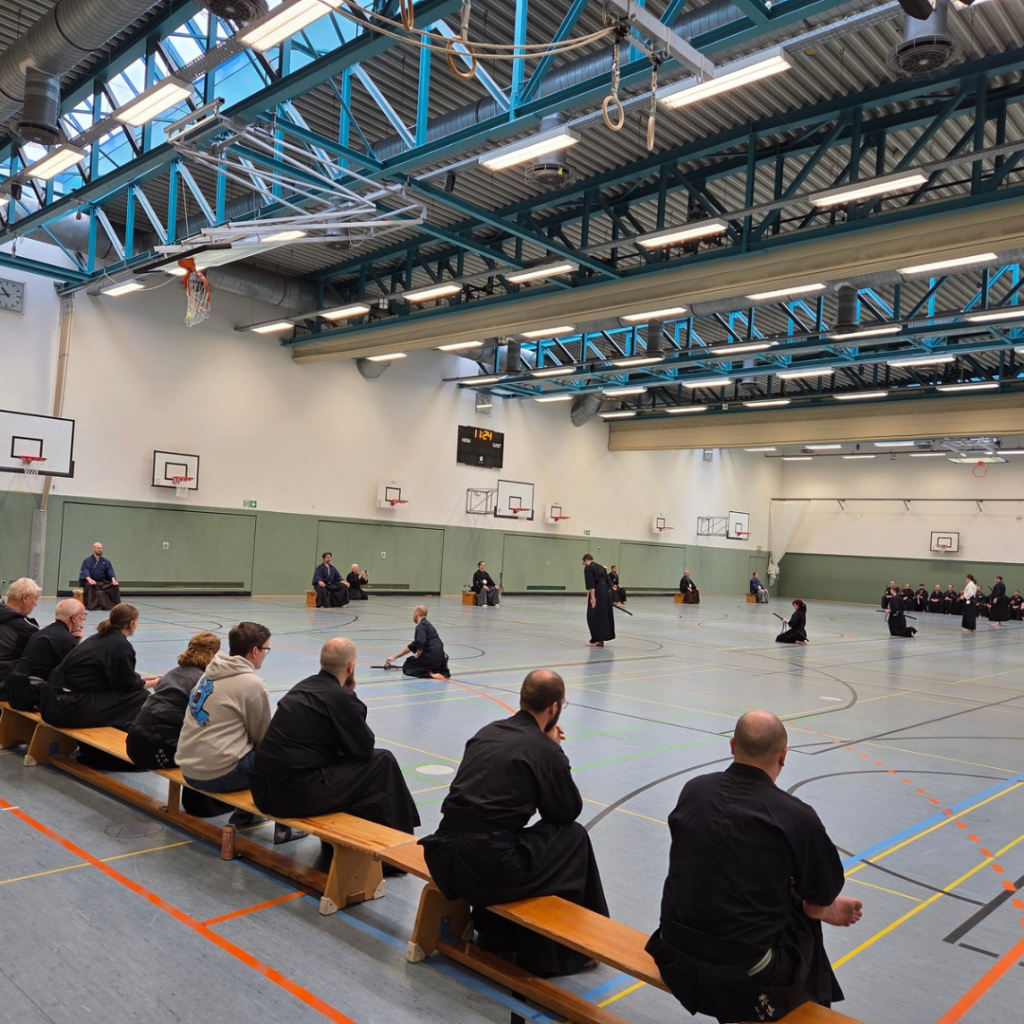
The remainder of Sunday shifted focus to Kenjutsu, where we worked extensively with bokuto (wooden swords), practicing both long and short sword techniques.
The Real Work Begins
We finished these intensive two days (three days for the instructors!) with fatigued bodies but energized minds, armed with plenty of technical tips and new goals to work toward.
To borrow the perfect closing thought from Sensei Luciano Morgenstern: “It is after the seminar that the real work starts!”